
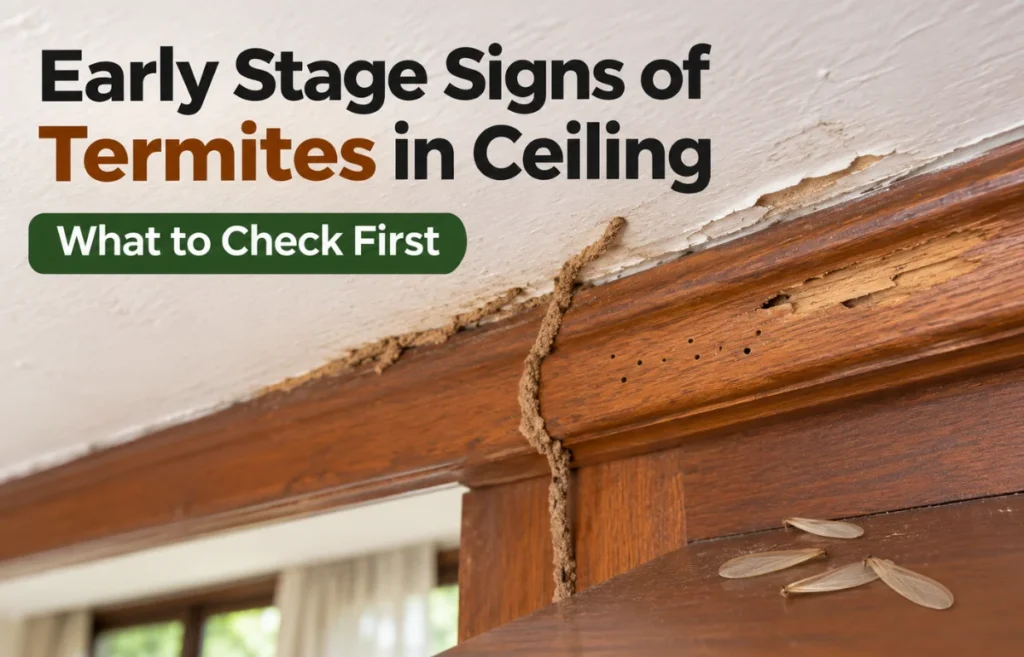
The early stage signs of termites in ceiling areas can include tiny holes in wood or drywall, small piles of hard pellets, discarded wings near lights, mud-colored tubes, and faint sunken lines beneath paint. These clues may indicate termites feeding in ceiling framing, trim, or paper-backed drywall, but none of them should be treated as a diagnosis on its own. Some stains, cracks, and debris come from leaks or other insects instead. I recommend photographing the evidence, checking nearby moisture problems, and arranging a qualified termite inspection rather than cutting open the ceiling or spraying chemicals into an unknown cavity.
Ceiling damage may be hidden above an ordinary-looking room. I would begin with observations made safely from the floor, before repairs erase any clues.
Why Termite Activity Can Appear at the Ceiling
Termites feed on cellulose, which occurs in structural wood, wooden ceiling panels, and the paper facing on drywall. They do not need to eat the gypsum core of drywall to leave a visible trail across its surface. They may feed inside roof framing or use protected passages to reach it.
Drywood termites can establish colonies directly in suitable dry wood, including some roof timbers. Subterranean termites usually maintain connections to soil and moisture, although certain species can establish aboveground nests where persistent moisture allows it. An upper-story clue does not mean entry occurred through the roof.
I also make a distinction between an early warning sign and an early infestation. A few pellets may be the first thing a homeowner notices even when insects have occupied the wood for some time. There is no reliable way to date a colony just from the size of a ceiling mark.
1. Tiny Holes in Wooden Trim or Ceiling Panels

A pin-sized opening in a wooden beam, cornice, or ceiling panel deserves a closer look, especially when a small pile of grain-like debris forms beneath it. Drywood termites sometimes push their droppings through small openings called kick-out holes. The holes may be around 1–2 millimeters wide and can be difficult to notice without good light.
Wood-boring beetles and old fastener holes can look similar. Consider the opening, debris, and other nearby clues together.
Check What Is Directly Below the Hole
Without touching the surface, look at the floor, a shelf, or furniture beneath the suspected spot. Photograph any pile before cleaning it. If debris returns, record when; this does not alone prove active termites.
Avoid inserting a screwdriver, widening a hole, or scraping a ceiling to “see what’s inside.” Such actions can disturb hidden wiring, weaken fragile material, or destroy evidence an inspector would use.
2. Dry, Gritty Pellets That Resemble Sand
One of the more distinctive drywood termite clues is frass: tiny, hard fecal pellets often found in localized piles beneath infested wood. They can range from pale tan to dark brown. Under magnification, individual drywood termite pellets have a characteristic six-sided shape.
This is different from the muddy material associated with subterranean termites. It is also different from ordinary dust, which usually has irregular particles rather than consistently shaped grains. Because the pellets can travel down cracks or fall from overhead wood, the pile may appear a short distance from the colony.
University of California’s Integrated Pest Management guidance explains that pellets can identify drywood termite activity, but pellets alone cannot establish whether a colony remains active or how far damage extends.
Don’t Decide Based on Color Alone
Paint flakes, plaster crumbs, sawdust from recent work, and insect debris can all gather near a wall. I would take a close-up photograph beside a coin for scale, then let a trained professional assess the particles. Color alone cannot identify it.
3. Mud Tubes or Small Mud-Colored Spots
Subterranean termites build sheltered passageways from soil, moisture, and other materials. These mud tubes may travel along foundations, walls, utility penetrations, and sometimes into ceiling areas. Some can even hang down from overhead structures.
You might also notice a tiny dried-mud spot on painted drywall or a narrow, irregular line just beneath the finish. Mississippi State University Extension describes soil-filled pinholes and sunken trails in wall or ceiling coverings as signs that warrant professional inspection.
Mud tubes high on a ceiling deserve attention, but they are not proof of a particular termite species. I would photograph the whole route, including connections toward walls.
Leave Tubes Intact for Inspection
Breaking a tube may reveal insects, but it can interrupt their activity and make the route harder to assess. Resist scraping it away, spraying it, or sealing the opening before a professional visit. The visible pathway may help locate a hidden entry point.
4. Discarded Wings Around Ceiling Lights and Windows
Winged reproductive termites, called swarmers, may appear indoors during certain seasons. After flying, they can shed their wings. Small, similar-looking wings near a ceiling fixture, windowsill, or spiderweb can therefore be a meaningful clue.
A single flying insect is not proof of a colony inside the house. Some swarmers enter from outdoors. Repeated indoor swarms, numerous discarded wings, or insects visibly emerging from the ceiling deserve prompt investigation.
Termite or Flying Ant?
Winged termites usually have two pairs of wings that are roughly equal in length, relatively straight antennae, and a broad waist. Winged ants generally have a pinched waist, bent antennae, and front wings longer than their hind wings.
If possible, photograph an insect without handling it. Save a dead specimen in a sealed container for identification, but do not climb onto furniture or open electrical fittings to collect one.
5. Faint Sunken Lines, Blistered Paint, or Soft Wood
A narrow, winding depression across painted drywall can sometimes mark activity beneath the paper facing. Wooden trim may look blistered or uneven where feeding has left a thin surface layer. Such clues are easy to mistake for poor plasterwork or old paint defects.
Ceiling stains and peeling paint are much more commonly discussed as moisture problems, and they should be investigated on that basis too. A leak may exist alongside termites, or there may be no termites at all. Neither a brown stain nor a bubble confirms an infestation.
I would look for supporting evidence: mud, pellet piles, shed wings, or suspect wood in the same area. If the ceiling is sagging, cracking noticeably, or shedding material, keep people away from the area and seek a building professional’s assessment rather than pressing or tapping it.
What Ceiling Clues Actually Tell You
The table below keeps visible evidence separate from a diagnosis. The best next step depends on what else is present.
| What you notice | Possible explanation | Sensible next action |
|---|---|---|
| Uniform dry pellets beneath wood | Drywood termites; occasionally look-alike debris | Photograph, preserve a small sample, request identification |
| Mud tube or dried-mud pinhole | Possible subterranean termite activity | Leave intact and arrange termite inspection |
| Several equal-looking discarded wings | Termite swarm; possibly insects entering from outdoors | Save a specimen and check where insects emerged |
| Brown ring or damp ceiling patch | Roof or plumbing leak, sometimes coinciding with wood damage | Address moisture source and check for other termite signs |
| Blistered trim or winding depressed line | Paint failure, moisture damage, or hidden insect galleries | Avoid destructive probing and obtain assessment |
A hollow sound sometimes accompanies damaged wood, but it is a poor standalone test. Cavities and fasteners change the sound; tapping cannot confirm a diagnosis.
Drywood Versus Subterranean Termites Above Your Head
The two major groups leave different patterns, and that difference can guide an inspection. It should not be used to select a treatment without proper identification.
| Feature | Drywood termites | Subterranean termites |
|---|---|---|
| Where colonies live | Inside suitable wood | Usually linked to soil; some can nest aboveground with moisture |
| Typical visible debris | Hard, dry pellets | Mud or soil-lined shelter tubes |
| Ceiling locations to check | Exposed beams, timber trim, wooden panels | Junctions of walls, framing, and concealed passages |
| Does evidence prove activity now? | Pellets alone do not | Old tubes alone may not |
| Professional approach | Identify affected wood and infestation extent | Trace access, moisture conditions, and colony activity |
Treatment differs. A localized wood infestation and a colony approaching from the ground do not necessarily require the same control strategy. This is why I would be skeptical of any company offering a full treatment price before investigating the building.
A Safe Ten-Minute Ceiling Check
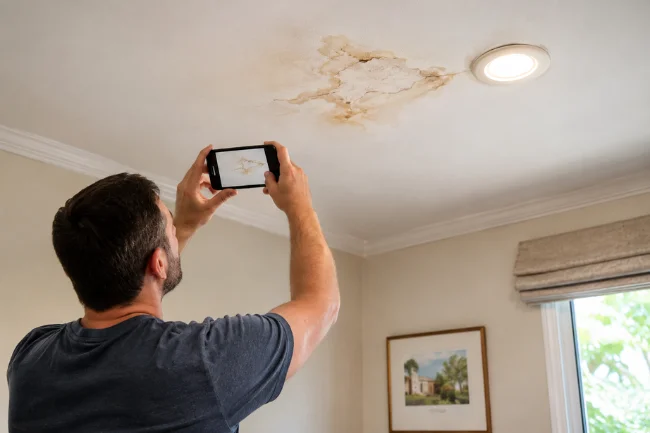
You can gather useful evidence without pulling down drywall or climbing into an unsafe attic. Start in good light, using your phone’s zoom to inspect suspicious areas while standing on a secure floor. Keep children and pets clear of debris and avoid any loose ceiling material.
First, Record the Location
Photograph the whole room, then the affected area. Note whether the spot is near an exterior wall, bathroom, skylight, roof junction, or air-conditioning line. These details can reveal a moisture source or help a technician plan access.
Next, Look for a Pattern
Check for pellets below wooden trim, wings at window corners, and mud-colored markings following wall-to-ceiling joints. Look at other accessible rooms along the same wall. You do not need to inspect every inch: a few clear observations are more useful than damaging finishes to search blindly.
Finally, Make a Short Evidence Log
Write down the date, room, location, what you found, and any recent roof leaks or repairs. Add photographs rather than long descriptions. This preserves evidence for the appointment.
Do not enter an attic with questionable flooring, exposed electrical hazards, suspected structural damage, or unsafe access. A professional can assess concealed areas with the necessary equipment.
Why Ceiling Termite Signs Get Confused With Leaks
Roof leaks, condensation around ducts, plumbing faults, and poorly ventilated cavities can stain ceilings or soften wood. Moisture can also favor certain termite species.
I like to ask two separate questions: Is water entering this area? And is there evidence of insects feeding here? Treating those as distinct investigations prevents the false assumption that every damaged patch has one cause.
Check the Building History
A stain that appears after heavy rain points toward a roofing or drainage problem. A mark near an upstairs bathroom may involve plumbing. A concentrated pellet pile beneath a timber element points toward a different line of inquiry. None proves a diagnosis by itself.
If a damp spot keeps growing, arrange appropriate repair promptly. Painting over it will not fix the moisture source or hidden damage. For later cosmetic work, my guide to preparing a room for painting explains why identifying underlying wall and ceiling problems comes first.
What to Do If You Suspect an Active Infestation
If you find mud tubes, termite-like pellets, repeated indoor swarmers, or visible damage in structural wood, arrange an inspection by a qualified, appropriately licensed pest management professional. Tell them the evidence is near the ceiling and ask how they will check the attic, framing, moisture sources, and possible entry routes.
Do not assume household bug spray solves a colony. Killing exposed insects does not establish that hidden termites have been controlled. The U.S. Environmental Protection Agency notes that termite treatments often require trained professionals and that incorrect applications can create contamination risks.
Questions Worth Asking the Inspector
Ask what evidence identifies the pest, whether activity appears current, which areas were inaccessible, and whether there may be structural damage requiring a separate contractor. Request a written inspection report with photographs when available.
Before agreeing to treatment, ask whether the proposal targets drywood or subterranean termites, what areas will be treated, what follow-up is included, and what warranty limitations apply. Comparing written scopes is more useful than comparing headline prices alone.
If significant structural damage or ceiling movement is present, seek a qualified structural or building assessment as well. Pest treatment does not restore weakened framing.
Mistakes That Can Hide the Evidence
Painting, caulking, or plastering over the suspicious area too soon can conceal clues and delay a proper diagnosis. So can cleaning away all the pellets without photographing them or removing a mud tube before a technician sees its route.
I would also avoid drilling holes for inspection, flooding a cavity with store-bought pesticides, or using heat, fuels, or improvised chemicals. Such approaches may be hazardous and may not reach the colony. They can complicate later professional work.
Another mistake is assuming a small mark means a small problem. Hidden timber cavities can make the visible footprint misleading. Not every tiny hole means termites; rely on evidence and inspection.
Reduce the Conditions That Invite Future Problems
Prevention starts beyond the ceiling. Fix roof and plumbing leaks, maintain gutters and downspouts, and keep water directed away from the foundation. Reduce wood-to-soil contact where feasible, and do not store firewood or construction scraps against the house.
The EPA also advises keeping vents unobstructed, managing vegetation close to structures, sealing relevant access gaps, and checking buildings periodically. These measures can reduce favorable conditions, but they are not a guarantee against infestation.
Keep a Practical Home Maintenance Record
I recommend storing photos of repaired leaks, previous termite inspections, and treatment paperwork in one folder. Record the date and location of any new ceiling concern. This gives future inspectors a clearer history and helps distinguish an old repair from fresh evidence.
More related household prevention topics belong in the site’s Pest Control resources, where readers can find additional guides as they are published.
Frequently Asked Questions About Ceiling Termites
What are the first visible signs of termites in a ceiling?
Look for mud-colored tubes or spots, tiny holes with pellet piles, discarded wings, and unusual sunken trails. A professional inspection is needed to confirm the cause.
Do termite droppings fall from the ceiling?
Drywood termite pellets can fall from infested overhead wood through small kick-out holes. Their presence does not by itself show whether the colony is still active.
Can termites live in drywall ceilings?
Termites can feed on drywall’s paper facing and on nearby wooden framing, but not the gypsum core itself. The visible paint surface may remain largely intact.
Does a brown ceiling stain mean termites?
No. Water leaks and other moisture problems commonly cause stains. Look for separate insect evidence and investigate the moisture source.
Should I spray termites I find in the ceiling?
Avoid spraying unknown ceiling cavities. Arrange proper identification and an inspection; effective structural termite treatment often requires a trained professional.
Take the Evidence Seriously, Not Every Mark
The early stage signs of termites in ceiling areas are worth investigating, especially when several clues appear together. I would start with photographs, a simple evidence log, and a check for moisture, then ask a qualified inspector to identify the cause before any cosmetic repair or treatment. That approach protects the building and avoids spending money on the wrong fix.