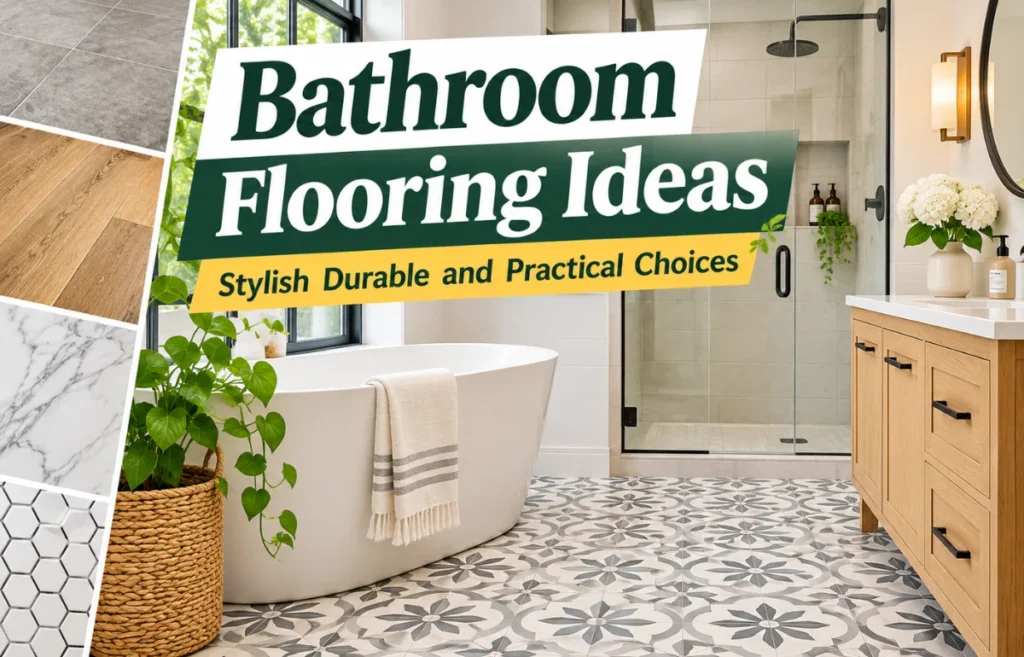
Bathroom flooring ideas are design and material choices that make a bathroom safer, easier to clean, and more attractive despite daily exposure to moisture. Popular options include porcelain and ceramic tile, waterproof-rated luxury vinyl, sheet vinyl, patterned mosaics, and natural stone. The best bathroom floor depends on how wet the room gets, who uses it, your budget, and how much maintenance you can manage.
I usually start with one question: what will this floor feel like on a busy morning, not just in a showroom? A finish that looks stunning under display lights may be slippery after a shower, cold under bare feet, or frustrating to scrub.
Below, I compare practical bathroom flooring ideas and explain where each works best, including affordable updates and choices for small bathrooms.
What Makes a Good Bathroom Floor?
For me, moisture performance comes before color. Water can reach the floor around the shower door, bathtub, toilet, and sink. Even a surface labeled “waterproof” may have seams or edges that allow water into the subfloor if installation details are wrong.
Next comes traction. The Tile Council of North America explains that a floor’s dynamic coefficient of friction (DCOF) is one measure of wet traction, not a promise that nobody will slip.
For tile, I look for a manufacturer’s appropriate wet-use classification and a finish that is comfortable under bare feet. Shower floors need their own suitability assessment.
Finally, I consider cleaning time, softness underfoot, floor height, and repairability. A busy family bathroom asks more of its flooring than a lightly used powder room. The smartest material is the one that suits the room’s actual routine.
Bathroom Flooring Materials Compared
| Flooring type | Moisture performance | Maintenance | Budget level | Best use |
|---|---|---|---|---|
| Porcelain tile | Excellent tile-body resistance; assembly needs proper detailing | Low to moderate | $$–$$$$ | Long-term family bathrooms |
| Ceramic floor tile | Good when floor-rated and correctly installed | Low to moderate | $$–$$$ | Budget-conscious tile updates |
| Luxury vinyl plank or tile | Many products resist surface water; joints remain a consideration | Low | $$–$$$ | Comfortable, quick renovations |
| Sheet vinyl | Few seams when fitted to the room | Low | $–$$ | Affordable bathrooms |
| Natural stone | Varies by stone, finish, and sealing | Moderate to high | $$$–$$$$ | Statement bathrooms |
| Mosaic tile | Varies by tile and grout; wet-use rating matters | Moderate to high | $$–$$$$ | Accents and suitable shower floors |
The dollar symbols show relative cost tiers, not fixed installed prices. Subfloor repairs, demolition, waterproofing, and local labor can change the total substantially.
12 Bathroom Flooring Ideas Worth Considering
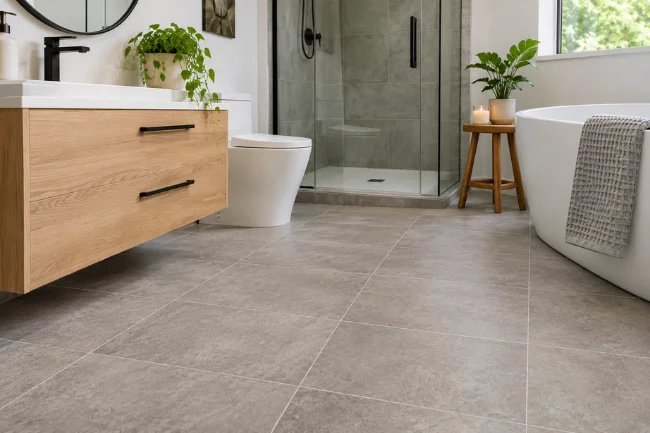
1. Matte Porcelain Tile for Everyday Durability
If I had to choose one versatile option for a frequently used bathroom, matte porcelain would be high on my list. It comes in stone, concrete, and solid-color designs, resists everyday wear, and doesn’t demand the maintenance of natural stone.
Porcelain is defined by a water absorption rate of 0.5% or less under the relevant test, but that figure describes the tile, not the entire floor installation. I would pair it with suitable grout, movement joints, and moisture protection wherever the assembly requires it.
Warm beige or soft gray tiles are particularly forgiving when a bathroom has limited natural light. Choose a surface specifically approved for the intended wet conditions rather than assuming every matte finish is slip-resistant.
2. Ceramic Tile for a Classic Look on a Sensible Budget
Ceramic tile is often an accessible route to a traditional bathroom floor. Small squares, simple rectangles, and understated patterns work with almost any vanity style.
I would check that the chosen ceramic tile is floor-rated; a pretty wall tile isn’t automatically suitable underfoot. Its glaze and wear characteristics matter as much as its color.
For an economical update, I like off-white ceramic with medium-gray grout. The contrast gives the floor definition without making every stray hair or splash mark obvious.
3. Hexagon and Penny Mosaics for Texture and Character
Small-scale mosaics can make an ordinary bathroom feel thoughtfully designed. White hexagons have vintage appeal, while black penny rounds or muted sage mosaics feel more contemporary. Their repeating shapes work especially well in compact spaces.
More grout joints can help interrupt a slick, continuous surface, but they also mean more lines to clean. I wouldn’t assume a mosaic is safe for a shower simply because the pieces are small; its wet-use suitability and drainage still need checking.
My favorite trick is to keep the mosaic to one area, such as the shower floor or a small bathroom, and use calmer surfaces elsewhere.
4. Patterned Tile That Adds Personality Without Extra Decor
Patterned bathroom floor tiles can do the decorating for you. Think faded blue geometrics, restrained floral motifs, or encaustic-look porcelain with a handmade appearance. They’re especially effective with plain walls and simple fixtures.
I prefer porcelain or ceramic versions of traditional cement-tile patterns when easy maintenance is a priority. Genuine cement tiles are more porous and may need careful sealing and approved cleaning products.
Before ordering, I lay out four or nine sample tiles together. A single tile rarely reveals how busy a repeating pattern will look across the whole room.
5. Wood-Look Porcelain for Warmth Without Real-Wood Worries
Wood-look porcelain delivers much of the visual warmth of oak or walnut while avoiding the moisture sensitivity of ordinary hardwood. Its long plank shapes also suit modern farmhouse, Scandinavian, and relaxed coastal bathrooms.
For a small room, I’d choose a narrow-to-medium plank with subtle grain. Extremely dramatic knots can overwhelm limited floor space, while a slightly varied plank layout looks more natural than a perfectly repeated print.
Keep the tiles aligned with the room’s main sightline, but review the doorway transition before committing. Tile can raise the floor, affecting door clearance.
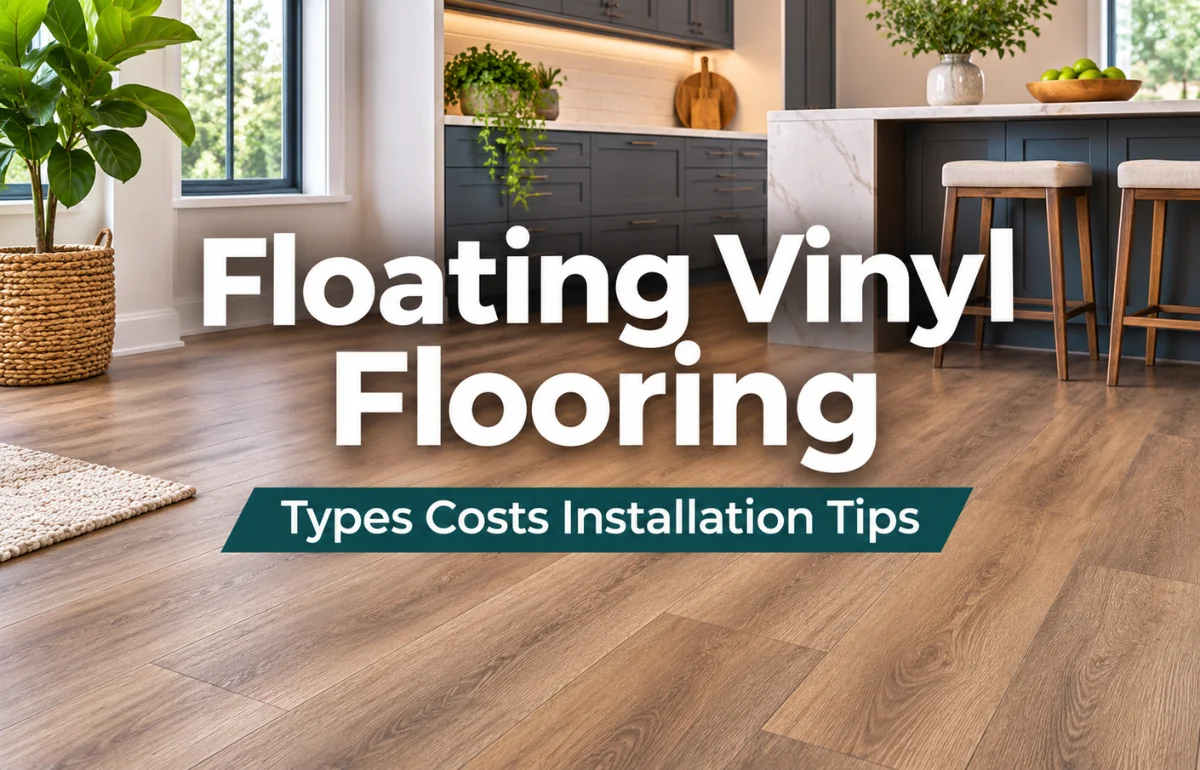
6. Waterproof-Rated Luxury Vinyl Plank for Comfort
Luxury vinyl plank (LVP) is a strong contender when I want a softer, warmer-feeling floor without the cost of a full tile project. Stone-look designs are available, too.
“Waterproof” usually describes the product’s resistance to water, not a guarantee that liquid can’t travel through perimeter gaps or between boards. I check the product’s bathroom approval, installation instructions, and requirements for sealing edges around tubs or showers.
Floating vinyl also needs a suitable flat, dry subfloor and the expansion space specified by its manufacturer. It is not a replacement for a properly waterproofed shower base, and I wouldn’t use it inside a shower unless a specific system expressly permits that application.
7. Sheet Vinyl for a Low-Cost, Low-Seam Makeover
Modern sheet vinyl deserves more attention than it gets. It comes in surprisingly convincing stone, terrazzo, and tile patterns, and one carefully fitted sheet can reduce the number of exposed seams in a small bathroom.
I see it as a practical option for rentals, guest bathrooms, or modest renovation budgets. It feels softer than tile and is easy to clean.
The weak points are cuts, edges, and poorly prepared subfloors. A bump or damaged patch can show through the material, so the surface underneath must be smooth. Ask the installer how the floor will be finished around the toilet, doorway, and tub.
8. Black-and-White Checkerboard for a Timeless Statement
Checkerboard bathroom flooring can feel vintage, playful, or elegant depending on tile size and the surrounding finishes. Small black-and-white squares suit a period-style bathroom; larger cream-and-charcoal squares feel less formal.
I like a softened contrast when the bathroom is narrow. Cream and taupe can provide the same graphic rhythm without making the floor dominate the room. Diagonal layouts may require more cuts and waste.
Before choosing this look, I check the view from the doorway. If the pattern’s centerline looks awkward against the vanity or tub, a small layout adjustment can make a big difference.
9. Terrazzo-Look Tile for Color That Hides Everyday Debris
Terrazzo-look porcelain offers scattered flecks and chips without the maintenance or expense of some traditional terrazzo installations. It’s a smart middle ground when plain flooring seems dull but intricate patterns feel too busy.
I particularly like warm white backgrounds with tan, gray, and muted green flecks. Those small variations can make everyday dust and water spotting less noticeable than on a perfectly uniform dark surface.
Scale matters. Fine speckles often read as texture from a distance; oversized chips become a stronger design statement. Check a sample in daylight and evening light.
10. Honed Natural Stone for a Soft, Luxurious Finish
Marble, limestone, and travertine offer variation that manufactured products can only imitate. Honed stone has a quieter finish than high-polish slabs, making it appealing in traditional and spa-inspired bathrooms.
But I wouldn’t recommend natural stone without discussing care. Some stones absorb stains and require an appropriate impregnating sealer; marble, limestone, and travertine can also etch when exposed to acidic cleaners. Sealer helps resist staining but doesn’t prevent acid damage.
For easier cleaning, stone-look porcelain may be better. If authentic stone is the priority, ask about the exact stone, finish, suitable wet locations, cleaning products, and long-term maintenance before buying.
11. Concrete-Look Tile for a Calm, Modern Bathroom
Concrete-look porcelain creates the clean, understated appearance of poured concrete without requiring a site-poured slab. Its gray and greige tones complement wood vanities.
I would choose this look when the bathroom already contains several textures. The quiet floor gives tile walls, woodwork, or a bold mirror room to stand out. A subtle surface variation keeps it from looking flat.
Actual concrete floors are another possibility in suitable buildings, but they introduce questions about cracking, moisture control, finish compatibility, and sealing. For most remodels, a concrete-look tile is the more predictable choice.
12. Heated Tile Flooring for Cold-Morning Comfort
If cold floors are the main complaint, radiant floor heating may be worth considering during a renovation. An approved electric warming system beneath compatible tile can take the chill off porcelain or ceramic without changing the design.
I would plan it before ordering materials because the heating assembly, thermostat location, electrical work, and floor build-up all affect installation. Use products listed as compatible with the particular heating system, and have electrical connections completed according to local requirements.
Floor warming is not necessarily a substitute for room heating. In a modest bathroom, heating the main standing area may be more sensible than covering every inch.
Which Bathroom Flooring Style Fits Your Space?
I find it more useful to match a floor to the room’s constraints than to follow a trend. This quick pairing chart helps narrow the choices before collecting samples.
| Your bathroom | Flooring direction I’d consider | Why it works |
|---|---|---|
| Small, windowless bathroom | Light matte tile with subtle grout | Creates a calm, less fragmented look |
| Busy family bathroom | Wet-rated porcelain or suitable vinyl | Balances durability and easy upkeep |
| Older home with character | Small hexagons or restrained checkerboard | Feels appropriate to traditional details |
| Modern minimalist bathroom | Concrete-look or large-format porcelain | Keeps the visual lines simple |
| Spa-inspired bathroom | Warm stone-look tile or honed stone | Adds an earthy, relaxed atmosphere |
Large-format tile can make a small floor look more continuous because it reduces visible grout lines. However, bigger isn’t always better: awkward cuts around a toilet or narrow doorway may spoil the effect. I would ask the installer to sketch the tile layout first.
Three Checks I Make Before Choosing Any Flooring
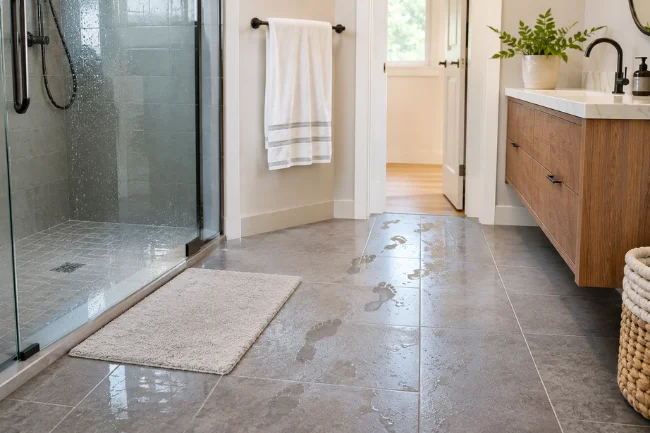
Map the Real Water Path
I imagine someone stepping out of the shower, reaching for a towel, then walking toward the sink. That route tells me where wet feet actually travel. If water regularly reaches the doorway, I give moisture management and wet traction more weight than decorative detail.
A shower needs a correctly designed waterproofing and drainage assembly. Tile and grout alone don’t make one waterproof.
Count the Cleaning Lines
A floor covered in tiny tiles may be charming, but every joint adds cleaning work. I compare the total grout area, not just tile price. If the bathroom is used by several people every day, larger tiles or sheet flooring can reduce routine scrubbing.
For tile, I ask about grout options, joint width, and how to clean the chosen finish without damaging it.
Test Samples in the Actual Room
I put two or three samples on the floor, not on the countertop, and check them in morning light, artificial light, and when slightly damp. Colors shift under warm bulbs, and a finish that feels pleasant dry may behave differently when wet.
I also check finished floor height at the door. A surprisingly common renovation headache is selecting a beautiful new floor before accounting for the thickness of its underlayment, heating system, or waterproofing layers.
Common Bathroom Flooring Mistakes to Avoid
The biggest mistake is choosing by appearance alone. I would avoid high-gloss flooring in regularly wet walking areas unless the specific product is suitable for that use. For hard surfaces, look beyond marketing terms such as “non-slip” and request the manufacturer’s intended-use information.
Another mistake is treating waterproof flooring as a cure for existing leaks. Water-damaged subfloors, loose tiles, soft spots, and persistent odors need investigation before new flooring goes down. Covering them only hides the cause.
Finally, allow for the full project cost. Demolition, leveling, moisture protection, trims, toilet removal and resetting, and labor can exceed the price difference between two flooring options. Compare full installed quotes, not sticker prices.
My Final Recommendation
For most busy bathrooms, I’d start by comparing matte porcelain tile with bathroom-approved luxury vinyl. Porcelain suits homeowners who prioritize longevity and design flexibility; vinyl appeals when warmth, comfort, and a simpler renovation matter more. For the tightest budget, sheet vinyl deserves a serious look.
Choose three samples, check their wet-use guidance, and request an itemized installation estimate before committing. A beautiful bathroom floor should look right on day one and remain practical on an ordinary Tuesday.
Frequently Asked Questions
What is the best flooring for a bathroom?
Porcelain tile is a versatile long-term choice; bathroom-approved luxury vinyl and sheet vinyl are strong alternatives when comfort or cost matters more.
What is the cheapest way to update bathroom flooring?
Sheet vinyl is often an affordable option, especially in small rooms, but subfloor repairs and installation costs can change the final price.
Is vinyl plank flooring good for bathrooms?
Yes, many luxury vinyl planks are approved for bathroom floors. Follow the product’s moisture, perimeter-sealing, and subfloor instructions.
What flooring makes a small bathroom look bigger?
Light, low-contrast tile or larger-format flooring with fewer visible seams can make the room feel more open, provided the layout avoids awkward cuts.
Can I put the same flooring inside the shower?
Not automatically. Shower floors need materials approved for that use, appropriate wet traction, proper drainage, and a complete waterproofing system underneath.