Yes, most modern luxury vinyl plank (LVP) flooring sold as waterproof can withstand everyday water exposure without the planks swelling or falling apart. But is vinyl plank flooring waterproof once it covers an entire room? Not necessarily. Waterproof describes the flooring material; it does not automatically mean water cannot pass through plank joints, travel around the edges, or damage the subfloor underneath. A waterproof floor covering and a waterproof floor assembly are two different things.
That distinction matters in kitchens, bathrooms, laundry rooms, and basements. I would confidently consider properly installed waterproof LVP for routine spills and wet footprints. I would not rely on it to contain a dishwasher leak or protect a damp concrete slab. Here’s how to tell what the label really promises—and where the risks remain.
What Does “Waterproof” Mean for Vinyl Plank Flooring?
A waterproof vinyl plank is designed to resist damage when water touches the plank itself. Unlike traditional wood-based flooring, its vinyl or composite construction generally does not absorb ordinary spills and swell in the same way.
Many manufacturers make that claim explicitly. Armstrong Flooring’s luxury vinyl FAQ, for example, says its waterproof rigid-core and luxury vinyl products resist swelling and loss of integrity from water. It also warns that moisture or flooding can damage the substrate beneath them.
That second sentence is the catch I look for. Product testing, waterproof marketing, and a homeowner’s expectation of a watertight room aren’t interchangeable. A plank can remain perfectly intact while moisture harms something hidden below it.
“Water-resistant” is a less sweeping claim: it usually means the product tolerates limited exposure under specified conditions. Neither term replaces the manufacturer’s actual installation instructions or warranty.
The Whole Floor Has More Parts Than the Plank
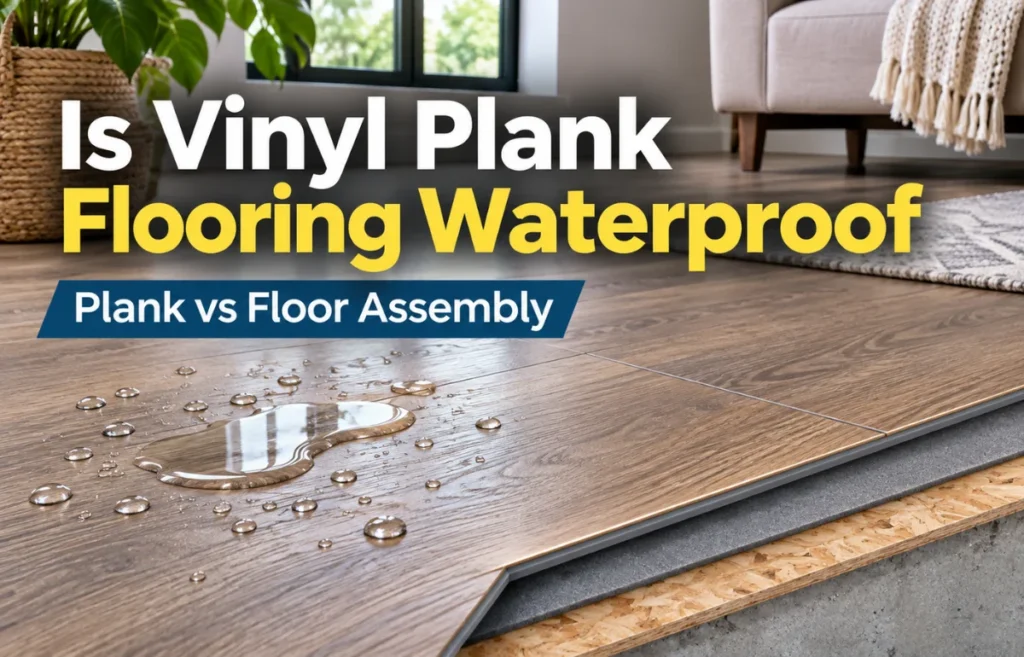
Picture a typical floating vinyl installation from the top down. You see the wear layer and decorative surface, then the waterproof core. Beneath that may be an attached pad or an approved underlayment. Under everything sits plywood, oriented strand board (OSB), concrete, or an existing approved floor.
The vinyl surface may be waterproof, but these other components have different moisture limits. Wood subfloors can swell or deteriorate. Adhesives can lose their bond. Moisture trapped against a substrate can lead to odor and microbial growth if conditions allow.
This is why I separate two questions before recommending flooring: “Will the plank be damaged by water?” and “Will the installation keep water away from vulnerable materials?” The answer to the first can be yes, it’s protected, while the second remains no.
Even a tight click-lock joint is not automatically a permanently sealed joint. Some systems offer specific watertight joint warranties; others do not. The exact product, installation method, and conditions decide what protection you really have.
Where Can Water Get Beneath Waterproof Vinyl Planks?
Water does not need to pass through the middle of a plank. It can take a route around the material instead. I think of this as a water-path audit: look for openings at the surface, the room boundary, and below the floor.
| Water entry point | Why it matters | What to check |
|---|---|---|
| Plank joints | Poorly engaged or damaged locks may allow seepage | Flat subfloor and properly locked seams |
| Walls and doorways | Water can travel through perimeter and transition gaps | Manufacturer-approved edge details |
| Pipes and fixtures | Cutouts create potential paths to the substrate | Toilet, vanity, and appliance penetrations |
| Below the floor | Moisture vapor or leaks can originate underneath | Subfloor testing and required moisture controls |
A tiny splash that is wiped up may never reach any of these routes. A larger volume of water left standing has more time and opportunity to find one. The point isn’t to treat every spill as a crisis; it’s to recognize that the floor has several possible weak links.
How Waterproof Vinyl Performs in Real-Life Water Situations
Everyday Spills and Wet Footprints
For a dropped glass of water, muddy shoes, or a few splashes beside a sink, waterproof LVP is usually an excellent choice. Its surface is easy to wipe, and the plank itself generally doesn’t need special treatment after brief exposure.
I would still clean spills promptly. Fast cleanup protects cabinets, baseboards, and joints, and it reduces slipping risk. “Waterproof” is permission to worry less about normal accidents, not permission to leave puddles indefinitely.
Repeated Bathroom Splashes
Bathrooms bring a different pattern: small amounts of water landing in the same spots day after day. The floor beside a bathtub, the toilet base, and the vanity plumbing deserve more attention than the middle of the room.
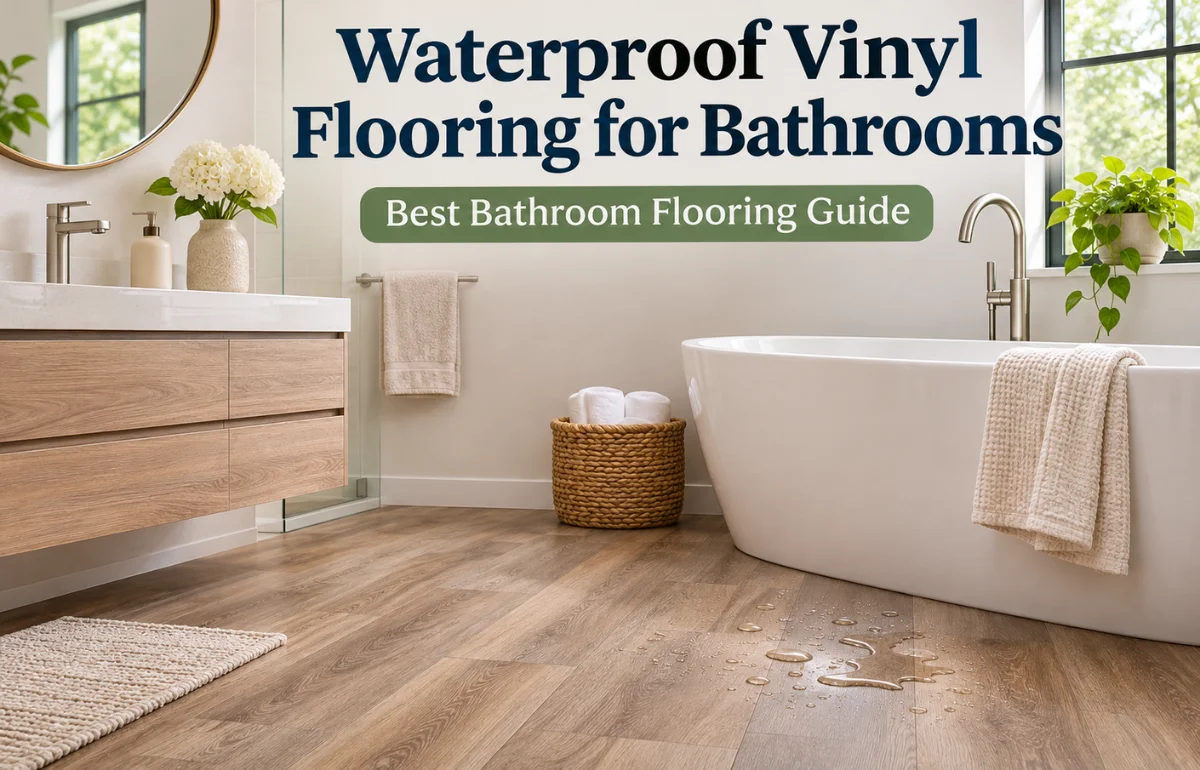
Vinyl plank flooring can be suitable for bathroom floors if the specific product is approved for that use. However, it isn’t a substitute for a shower pan, wet-room waterproofing membrane, or properly detailed fixture connections. Follow the product’s wet-area edge requirements rather than assuming ordinary trim makes the room watertight.
Appliance Leaks, Flooding, and Standing Water
A leaking dishwasher, washing machine hose, or supply pipe can push water across the floor and beneath surrounding finishes. During a flood, moisture may also reach wall cavities and subfloor materials from several directions.
The planks might survive while the installation fails. That’s the critical distinction. Provenza’s MaxCore guidelines specifically state that its waterproof flooring is not intended as a moisture barrier, and its limited warranty excludes flood-related damage.
For anything beyond a small, quickly cleaned spill, inspect the affected area instead of judging the situation only by how dry the top looks.
Does SPC or WPC Vinyl Plank Offer Better Waterproof Protection?
You’ll often see two types of rigid-core luxury vinyl flooring: SPC (stone-plastic composite) and WPC (wood-plastic or polymer composite). Both are commonly sold with waterproof cores. Their differences are more about feel, rigidity, and product construction than about making a room leakproof.
| Flooring type | General characteristic | Waterproof limitation |
|---|---|---|
| SPC rigid-core LVP | Dense, firm core; often feels harder underfoot | Joints and room edges still need attention |
| WPC rigid-core LVP | Typically a more cushioned feel | A waterproof core does not seal the subfloor |
| Glue-down LVP | Bonded to a prepared substrate | Seams, adhesive, and moisture conditions still matter |
| Sheet vinyl | Fewer seams in many room layouts | Edges, cuts, and substrate moisture still matter |
I wouldn’t pick SPC over WPC solely because one salesperson calls it “more waterproof.” Compare the specific installation instructions, joint design, wear layer, comfort, and warranty. A thicker wear layer can improve resistance to surface wear, but it does not turn plank seams into waterproof seals.
Five Installation Details That Matter More Than the Waterproof Label
1. Check the Subfloor Before Buying
A flat, sound, dry substrate is the foundation of a successful installation. Uneven spots can stress locking joints, while existing moisture can become a problem even before the first household spill.
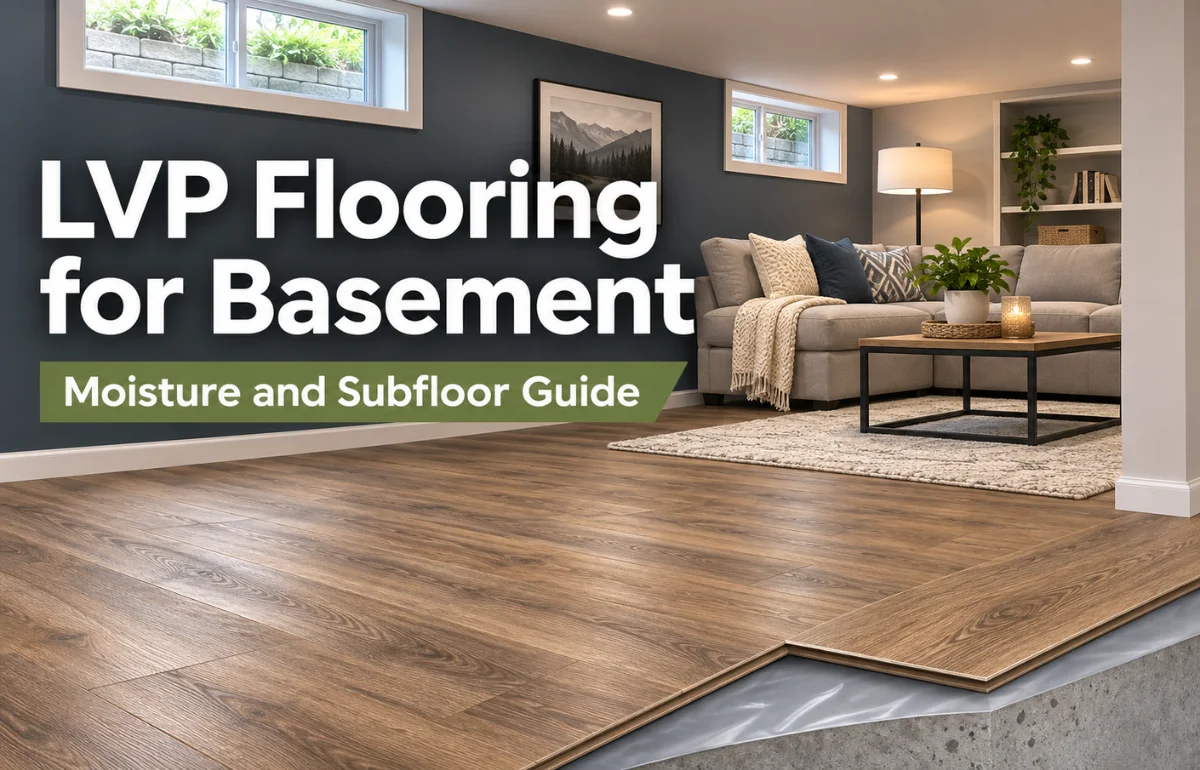
Concrete deserves particular attention because moisture can move through a slab. Ask the installer which moisture tests the product requires and what readings are acceptable. Don’t assume a slab is dry because it looks pale or feels dry to the touch.
COREtec’s installation guidance calls for subfloors to be clean, flat, dry, and structurally sound, with moisture issues addressed before installation.
2. Use the Correct Moisture-Control Layer
Some products require a specified polyethylene film or other approved vapor retarder over concrete; others have different requirements. An attached pad is not automatically a substitute for that layer.
For instance, Provenza’s published MaxCore instructions specify additional moisture protection in certain on-grade and below-grade installations. That is a product-specific requirement, not a universal instruction to put plastic beneath every vinyl floor.
I would ask to see the exact manufacturer detail before adding any underlayment. Extra cushioning or an incompatible barrier can interfere with locking joints or violate the installation rules.
3. Protect Seams Without Improvising
Click-lock planks must engage fully, and the subfloor must meet the product’s flatness limits. A small piece of debris or a damaged tongue can prevent a clean connection.
But don’t pour sealant into every seam “just in case.” Many floating systems need their joints to work as designed, and improvised adhesives or caulk may cause problems. If watertight joints are advertised, check what the manufacturer actually warrants and which installation conditions apply.
The strongest approach is careful preparation, correctly joined planks, and the approved accessories—not a homemade waterproofing treatment.
4. Detail the Perimeter, Pipes, and Transitions
Floating floors typically need an expansion gap at walls and fixed objects. Covering that gap with baseboard is a finishing detail, not necessarily a water seal.
In wet areas, some manufacturers specify flexible sealant, backer rod, or particular trims at selected edges. Others set different rules. Follow those details exactly, especially near tub aprons, door thresholds, toilets, and plumbing cutouts.
Never fill every expansion gap with rigid material. The floor may need space to move, and blocking that movement can create a separate failure.
5. Match the Floor to the Room’s Actual Water Risk
A kitchen with occasional spills is not the same as a basement that floods each spring. Before installing LVP, fix plumbing leaks, drainage problems, groundwater entry, or recurring condensation.
If water exposure is continuous or the room is designed as a wet room, choose a flooring and waterproofing system specifically approved for that situation. Vinyl planks should not be asked to perform the job of a building waterproofing membrane.
I would spend money correcting the water source before paying extra for a premium plank. Otherwise, the same problem can return underneath the new finish.
What Should You Do If Water Gets Under Vinyl Plank Flooring?
First, stop the water source if it is safe to do so. Remove standing water, document the damage, and check adjoining baseboards and cabinets. With electrical hazards, sewage, or major flooding, involve the appropriate professionals before entering or disturbing the area.
For a small surface spill, wiping and drying may be enough. For suspected water beneath the floor, however, a dry surface proves very little. A qualified flooring or water-restoration professional can assess moisture in the subfloor and determine whether part of the installation must be lifted for drying.
The U.S. Environmental Protection Agency advises drying water-damaged materials and areas within 24–48 hours to help prevent mold growth. That is a response goal, not a guarantee that every wet plank or subfloor can be saved.
Some floating planks may be reusable after safe removal, cleaning, thorough drying, and inspection, if the manufacturer allows reinstallation. Damaged locking edges, contaminated materials, or a compromised subfloor can change that decision.
Does the Warranty Cover Water Damage?
This is where the wording deserves as much attention as the flooring sample. A “lifetime waterproof warranty” may cover the structural integrity of the plank but exclude damaged cabinets, underlayment, labor, flooding, or moisture coming from below.
Some warranties also limit coverage to normal surface spills and installations that meet exact temperature, moisture, and accessory requirements. For example, Shaw’s published LVP warranty information identifies flood damage and certain subfloor-moisture problems among its exclusions, even while addressing watertight joints in covered floating products.
Before paying, I would look for three distinct promises: protection of the plank, protection at the joints, and protection of the surrounding structure. If only the first appears in writing, do not assume the other two are included.
Keep the product name, installation instructions, receipt, and photos of subfloor preparation. Those records may matter if a claim becomes necessary.
How to Choose Waterproof Vinyl Plank Flooring With Confidence
Instead of buying the box with the loudest “100% waterproof” badge, start with the room. Is water most likely to arrive as a spill from above, a leak at a fixture, or moisture rising from below? Each path calls for a different solution.
Ask the retailer which specific planks are approved for your room and subfloor. Request the installation PDF and warranty for the exact product, not just the brand. Confirm whether the joint system has a water-tightness claim, whether a moisture barrier is required, and how wet-area edges must be finished.
Also consider daily use. A tough wear layer, comfortable underfoot feel, slip resistance, and easy cleaning all matter, even though none by itself proves waterproof performance.
My rule is simple: buy the plank for how it handles everyday life, but plan the installation for what happens when water takes an unexpected route.
Frequently Asked Questions
Is vinyl plank flooring completely waterproof?
The waterproof plank material generally resists water damage, but a full installation may allow water beneath it through joints, edges, or penetrations.
Can water seep through vinyl plank flooring seams?
Yes, depending on the joint design, installation, condition, and exposure. Some manufacturers warrant specific watertight joints; check your product’s terms.
Can I put waterproof vinyl plank flooring in a bathroom?
Usually yes, when the product is approved for bathrooms and installed correctly. It does not replace shower or wet-room waterproofing.
Will vinyl plank flooring grow mold underneath?
The vinyl itself isn’t the main concern; moisture trapped against subfloors, pads, or nearby building materials can support mold growth.
Does waterproof vinyl plank flooring need a vapor barrier?
Sometimes. The need depends on the product, substrate, and installation location; follow the manufacturer’s moisture-control requirements.
The Bottom Line
So, is vinyl plank flooring waterproof? The plank often is; the complete floor may not be. For kitchens, bathrooms, and busy households, that can still make LVP a practical, forgiving choice. The smart move is to protect the vulnerable layers below it, not just trust the surface above.
Before choosing a color or finish, download the installation guide and warranty for your exact flooring product. Check the subfloor, identify likely water-entry points, and ask your installer how each one will be handled. That’s how a waterproof claim becomes a floor you can rely on.