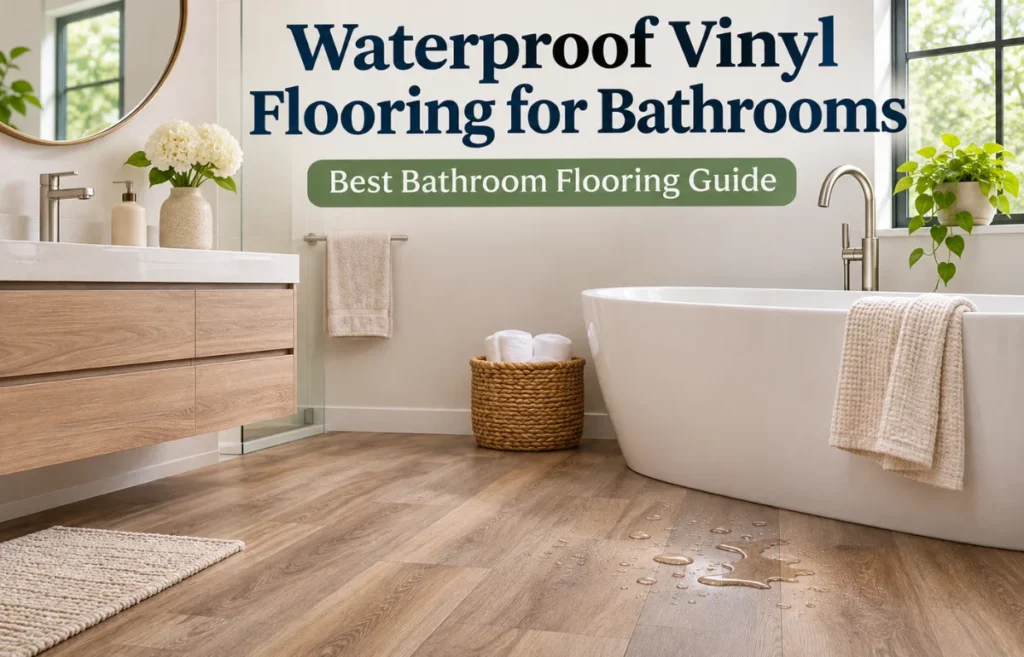
Waterproof vinyl flooring for bathrooms is a resilient floor covering designed to resist water damage from everyday splashes, wet feet, and routine cleaning. It comes as luxury vinyl planks (LVP), luxury vinyl tiles (LVT), or sheet vinyl, often with realistic wood or stone designs. The vinyl material itself can resist moisture without swelling like untreated wood, but that does not automatically make the entire installed bathroom floor watertight. Water may still reach the subfloor through edges, openings, damaged joints, or plumbing leaks.
That distinction shapes every recommendation I make. I would choose a bathroom vinyl floor based not only on its waterproof label, but also on how the pieces join, what lies underneath, and how water is managed around the toilet and shower. Here is what deserves attention before you buy.
Is Waterproof Vinyl Flooring Really Waterproof?
Yes, many modern vinyl products are waterproof as materials. Their vinyl surfaces and cores do not absorb ordinary bathroom splashes the way some wood-based floors do. But I separate three claims that marketing often bundles together: a waterproof product, a water-resistant joint, and a waterproof floor assembly.
A plank can survive a spill while water finds its way between planks or around the perimeter. If that moisture remains trapped over plywood or an improperly prepared surface, the material below can deteriorate even while the visible vinyl looks fine.
Armstrong Flooring’s own FAQ makes this distinction: the flooring material may be waterproof, yet moisture or flooding can still damage the substrate and compromise the installation.
Waterproof Does Not Mean Suitable for Every Wet Space
A regular bathroom floor is different from the floor inside a curbless shower or a dedicated wet room. In the latter, the surface receives direct, repeated water flow and needs a purpose-designed waterproofing and drainage system.
I would never substitute ordinary click-lock vinyl planks for a shower pan simply because the box says “100% waterproof.” Check the exact product’s approved locations; Karndean, for example, says its standard luxury vinyl is not suitable for wet rooms.
Which Type of Vinyl Flooring Works Best in a Bathroom?
There is no universally best format. Comparing waterproof vinyl flooring for bathrooms means weighing how often the floor gets wet, the condition of the subfloor, the room’s shape, and the installation work involved.
| Vinyl flooring type | Why I would consider it | Main bathroom limitation | Best fit |
|---|---|---|---|
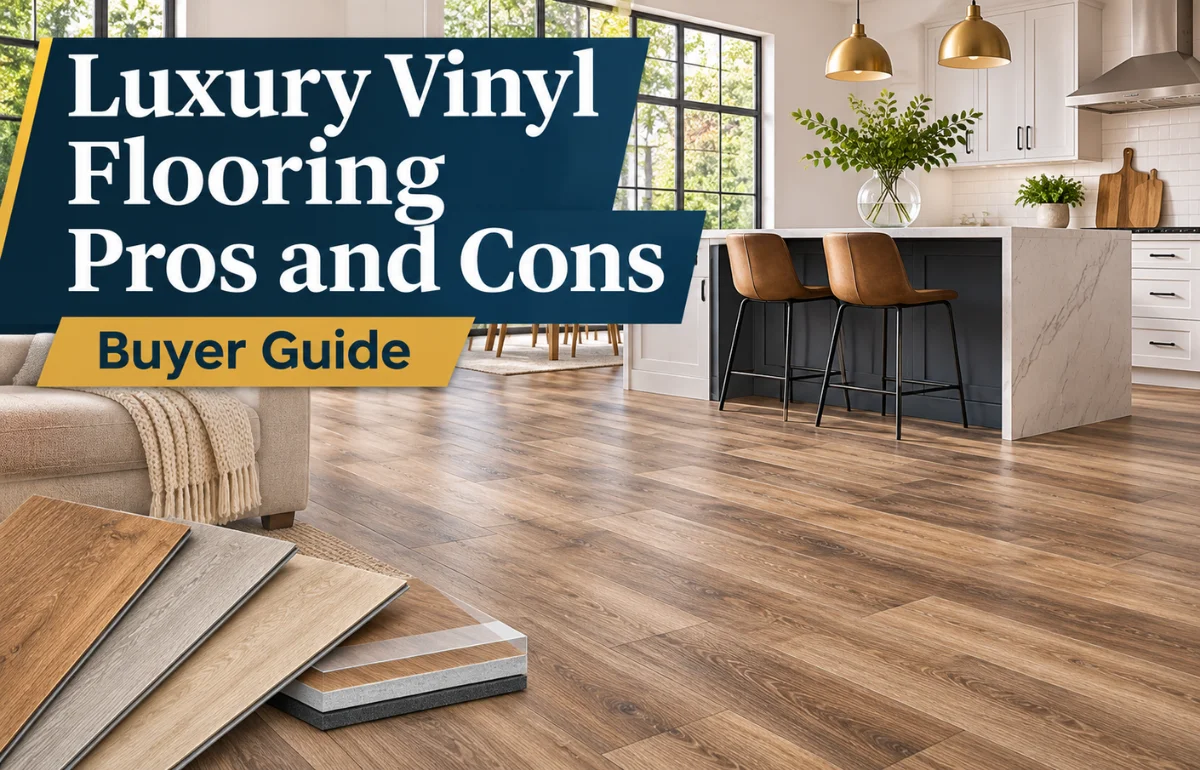
| Waterproof rigid-core LVP | Convincing wood look, click-lock installation, easy plank replacement in some systems | Many joints and a floating perimeter need careful detailing | Family bathrooms with ordinary splashes |
| Luxury vinyl tile (LVT) | Stone or tile appearance without traditional grout maintenance | Joints remain potential water paths; installation rules vary | Small bathrooms and modern tile-look designs |
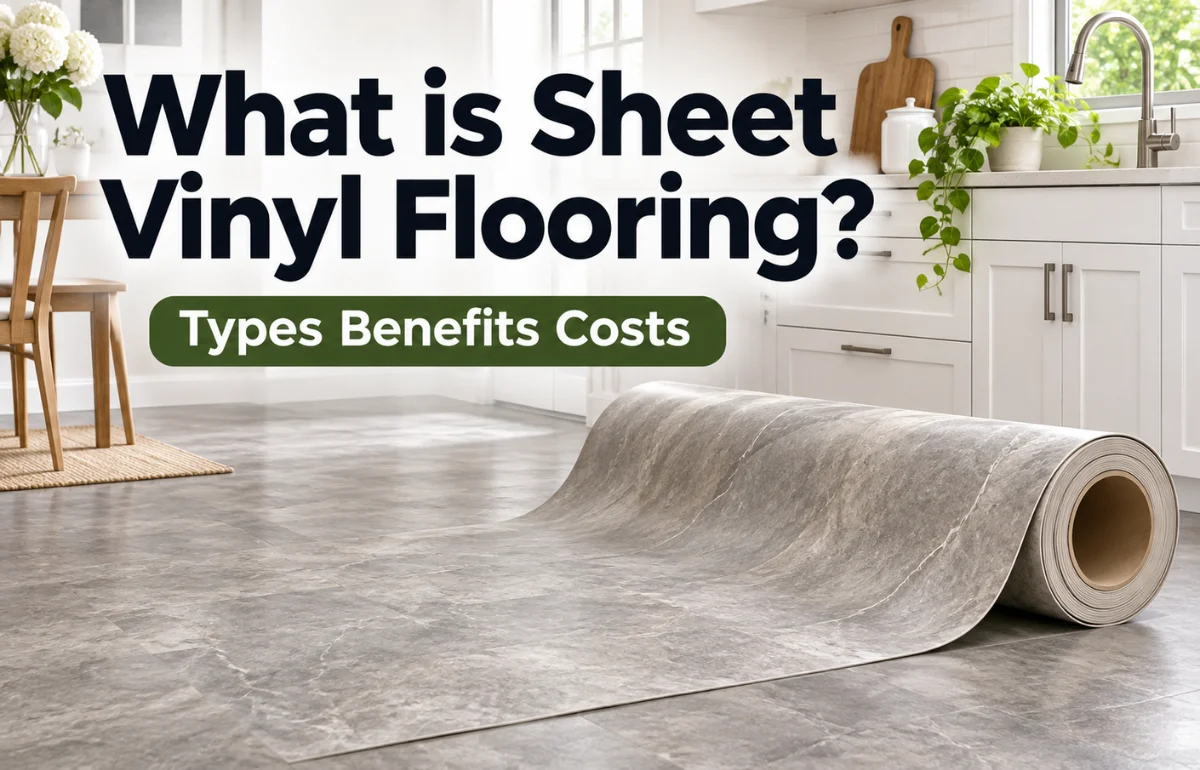
| Sheet vinyl | Can cover a compact bathroom with few or no field seams | Edges, penetrations, and any seams still need correct treatment | Bathrooms where reducing seams is the priority |
| Glue-down luxury vinyl | Low-profile floor with no floating movement gap in the field | Needs a very smooth, dry substrate and compatible adhesive | Renovations with height restrictions or complex layouts |
SPC Versus WPC: What the Core Actually Changes
Rigid-core vinyl commonly uses an SPC (stone-polymer composite) or WPC (wood-polymer composite) construction. Both can be sold as waterproof flooring, but they feel different underfoot.
SPC is typically denser and firmer. I tend to favor it where a stable, relatively thin floor is useful, provided the base meets the manufacturer’s flatness requirements. WPC generally feels somewhat warmer and more cushioned, although construction varies by brand.
Neither core solves a leaking toilet seal or damp subfloor. I would compare the complete product specification rather than assuming that three letters guarantee better bathroom performance.
What I Check Before Buying Bathroom Vinyl Flooring
1. Bathroom Approval in Writing
First, I look for installation instructions that explicitly allow the product in residential bathrooms. A display label saying “waterproof” is not enough. The instructions should describe acceptable subfloors, wet-area edge treatment, required gaps, and any exclusions involving standing water.
I would also save the installation guide and warranty before ordering. If the manufacturer updates its website or a problem arises later, that document makes it easier to confirm what was required for your exact model.
2. A Wear Layer That Matches the Household
The wear layer is the transparent protective surface above the design. It helps resist everyday scratches and scuffs; it is not a waterproofing membrane for gaps between boards.
You may encounter products with 12-mil or 20-mil wear layers, where one mil means one-thousandth of an inch. A thicker layer can be useful in a busy household, but finish quality and warranty terms matter too. I would not pay extra for thickness alone if a less expensive product already suits the bathroom’s traffic.
3. Slip Resistance When Wet
A floor that feels grippy in a dry showroom can behave differently after a shower. Glossy finishes and slick socks are not a great combination.
I look for a lightly textured surface, then ask the seller whether wet-slip test results are available for that exact product. No vinyl surface is slip-proof. A washable, non-staining bath mat placed outside the shower still makes sense, especially for children or anyone with limited mobility.
4. Edges, Backing, and Indoor Air Quality
Inspect sample joints, not just their printed pattern. Weak or damaged locking edges can create visible openings. Also check whether the floor comes with attached padding; adding another underlayment without permission may change its performance or void coverage.
For indoor air quality, I prefer verifiable low-emission credentials such as FloorScore certification. That certification addresses volatile organic compound emissions, not every possible chemical concern, so it should be one part of the decision rather than a blanket safety promise.
The Hidden Moisture Risks Most Buyers Overlook
My most useful way to assess a bathroom is to trace where water could travel, rather than simply asking whether a plank is waterproof. I call it a water-path check: look for the entry point, the material beneath it, and whether trapped moisture could ever dry.
The Toilet Is a Higher-Risk Area Than It Looks
A failed wax ring or other toilet seal can leak slowly underneath a beautiful new floor. The top surface may stay clean and dry while the subfloor becomes wet.
If you are replacing the floor, I would have the toilet removed and the flange checked for height, stability, and damage. The toilet should be reset with the correct seal rather than relying on a bead of caulk to hide a plumbing problem. Plumbing details should follow local requirements.
The Tub and Shower Exit Take Repeated Splashes
Water tends to collect where people step out of the bath, especially along the tub apron or shower threshold. Those interfaces deserve careful attention even if the rest of the bathroom rarely gets wet.
Manufacturer-specified flexible sealant may be needed at these edges. However, silicone should not be applied indiscriminately in a way that traps a floating floor or conceals a leak. The product’s installation drawing should control the detail.
Doorways, Vanity Pipes, and Walls Matter Too
A supply line through the floor, a poorly sealed threshold, or an unprotected wall edge can provide a route for water. Floating vinyl must also retain room to expand and contract.
That combination creates a practical design challenge: manage splashes without fastening the floor so tightly that it cannot move. It is one reason I read the wet-area instructions before choosing a particular click-lock product.
Moisture Coming Up From Below Is a Different Problem
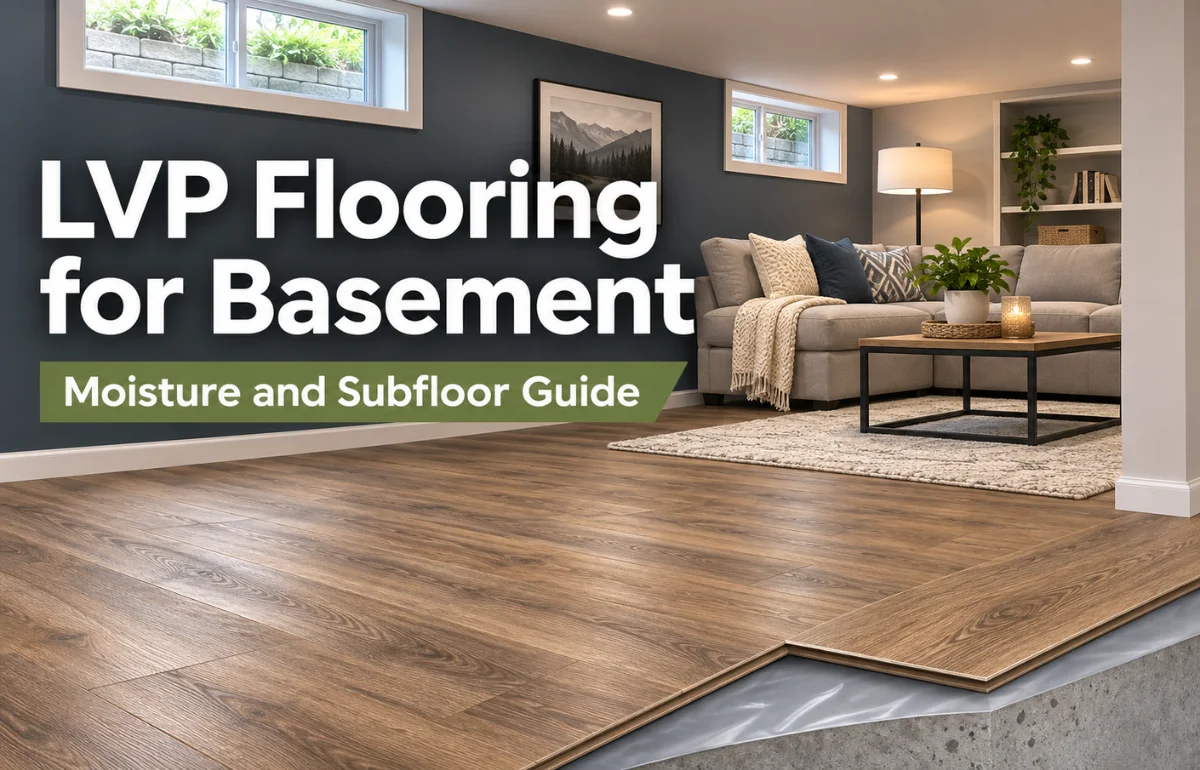
Waterproof vinyl does not correct moisture rising through concrete or a damp crawl space. Some products specify concrete moisture-testing limits and particular vapor-control materials; others have different requirements.
If the bathroom has musty smells, stained subflooring, soft spots, or a history of leaks, fix the cause before installing anything new. The EPA’s moisture guidance recommends addressing water problems promptly and drying affected materials quickly to reduce mold risk.
How I Would Plan a Bathroom Vinyl Installation
A successful installation begins before the first plank or sheet is cut. Here are the details I would discuss with an installer or verify before taking on a DIY job.
Inspect and Prepare the Subfloor
Remove damaged materials and check for softness, movement, old adhesive, or raised fasteners. Vinyl needs a structurally sound, appropriately smooth, dry surface. Rigid-core planks can bridge small imperfections, but they do not repair a sagging floor.
For concrete, follow the product’s required moisture testing and limits. For wood, confirm that any underlayment is approved. Do not assume a plastic vapor barrier belongs over plywood; some installation systems expressly prohibit that approach.
Follow the Correct Expansion and Sealing Details
Click-lock products usually require space around walls and fixed objects. That gap is not an optional shortcut for bathroom work.
For example, Shaw’s resilient SPC installation guidance calls for perimeter expansion spacing and flexible silicone caulk at wet-area perimeters. Other flooring systems may require different dimensions or sealing methods, so the exact product instructions always take priority.
Baseboards and transitions should cover exposed edges without pinning a floating floor to the subfloor. Heavy fixed fixtures and cabinets also need to be handled as specified, rather than installed indiscriminately over a floating system.
Treat the Toilet as a Plumbing Installation, Not Just a Cutout
Cutting vinyl neatly around a toilet is only half the job. A correct flange height, secure toilet, functioning seal, and appropriate finishing detail matter more than a perfectly curved cut.
I would ask the installer how the toilet area will be handled before work starts. That conversation is cheaper than discovering a slow leak after the bathroom has been put back together.
Keep Water Management in the Plan
Ventilation is not glamorous, but it affects the whole room. Run an exhaust fan during and after showers according to its instructions, wipe recurring puddles, and investigate persistent condensation.
Even a properly installed floor is not a substitute for good ventilation or leak maintenance. The goal is to keep ordinary splashes ordinary, rather than letting them become long-term moisture exposure.
Choosing the Right Vinyl for Your Bathroom’s Actual Use
For a frequently used family bathroom, I would prioritize durable surface finish, manageable slip risk, clear bathroom approval, and a reliable joint system. A subtle stone-look LVT can also disguise small water spots better than an extremely dark, high-gloss finish.
For a tiny powder room with little shower-related moisture, the visual design and easy cleaning may matter more. Sheet vinyl can be especially practical where one piece covers the floor without a field seam.
For an older bathroom with an uneven or previously wet subfloor, I would spend money on investigation and preparation before upgrading the decorative flooring. No premium plank compensates for damaged plywood or unresolved plumbing leaks.
If the space is a true wet room or open shower, I would stop shopping for standard bathroom LVP and investigate flooring systems specifically approved for that environment.
How Much Should You Budget Beyond the Vinyl?
When budgeting for waterproof vinyl flooring for bathrooms, the shelf price is only one part of the total. Your quote may also need to cover old-floor removal, subfloor repairs, leveling, trims, sealants, toilet removal and resetting, and labor.
I would measure the floor area, then allow roughly 5–10% additional material for cutting waste on a straightforward layout, with more for complicated patterns or awkward shapes. Follow the product’s ordering guidance, especially when matching patterned sheet vinyl.
Ask for an itemized estimate that separates flooring from preparation and plumbing work. That makes two quotes much easier to compare and reduces the temptation to choose a cheap product while overlooking the work that protects it.
Keeping Waterproof Vinyl Clean Without Damaging It
Routine care is refreshingly simple. Sweep or vacuum with a suitable hard-floor setting to remove grit, then use a damp mop and the cleaner recommended by the manufacturer. Clean up standing water instead of letting it sit against joints and edges.
I avoid abrasive pads, harsh solvents, and steam mops unless the flooring maker expressly permits them. Too much heat, water, or chemical exposure can affect finishes, adhesives, and installation details even when the vinyl itself is waterproof.
Check the caulked tub edge and toilet area periodically for gaps, discoloration, or a recurring odor. Those signs do not automatically mean the floor has failed, but they deserve investigation.
If water from a leak gets underneath the floor, surface mopping is not sufficient. Stop the source, assess the subfloor, and arrange appropriate drying or removal as needed. Trapped moisture should never be dismissed because the top layer still looks normal.
Common Mistakes I Would Avoid
I would not buy flooring based solely on a “waterproof” sticker, cover a damp subfloor, or assume that every click-lock joint is watertight. I would also avoid using extra padding without approval or filling every expansion gap with a hard-setting material.
Another mistake is using bathroom-grade vinyl in the shower itself without an approved wet-room system. Finally, I would never regard waterproof vinyl as protection against a burst pipe or a long-running toilet leak. It makes routine bathroom life easier; it does not replace waterproof construction or plumbing maintenance.
Is Waterproof Vinyl Flooring Worth It for a Bathroom?
For most conventional bathrooms, I think it is a strong choice. It offers a comfortable surface, convincing designs, straightforward cleaning, and good resistance to everyday splashes—often with less maintenance than traditional grouted flooring.
The sensible purchase is the one that pairs an approved product with a dry, stable subfloor and carefully handled wet edges. Before ordering, request samples, read the installation instructions, and ask exactly how your bathroom’s toilet, tub, and perimeter will be treated. That is how I would turn an appealing floor into a dependable renovation.
Frequently Asked Questions
Is waterproof vinyl flooring good for bathrooms?
Yes. Bathroom-approved vinyl handles normal splashes and routine cleaning well, provided the subfloor is sound and the installation follows the manufacturer’s wet-area instructions.
Can water get underneath waterproof vinyl plank flooring?
Yes. Water may enter at joints, edges, pipe openings, or leaks; waterproof planks do not guarantee a watertight floor assembly.
Is sheet vinyl better than vinyl plank for bathrooms?
Sheet vinyl may reduce exposed seams in small rooms, while planks offer different designs and replacement options. Installation quality matters with either choice.
Do you need to seal waterproof vinyl flooring around a toilet?
Many products require specific sealing at the toilet flange or nearby edges, but methods vary. Follow the flooring instructions and fix plumbing leaks rather than masking them with caulk.
Can waterproof vinyl flooring be used inside a shower?
Ordinary bathroom LVP or LVT generally should not be used as a shower floor. Choose a specifically approved wet-room or shower-floor system instead.