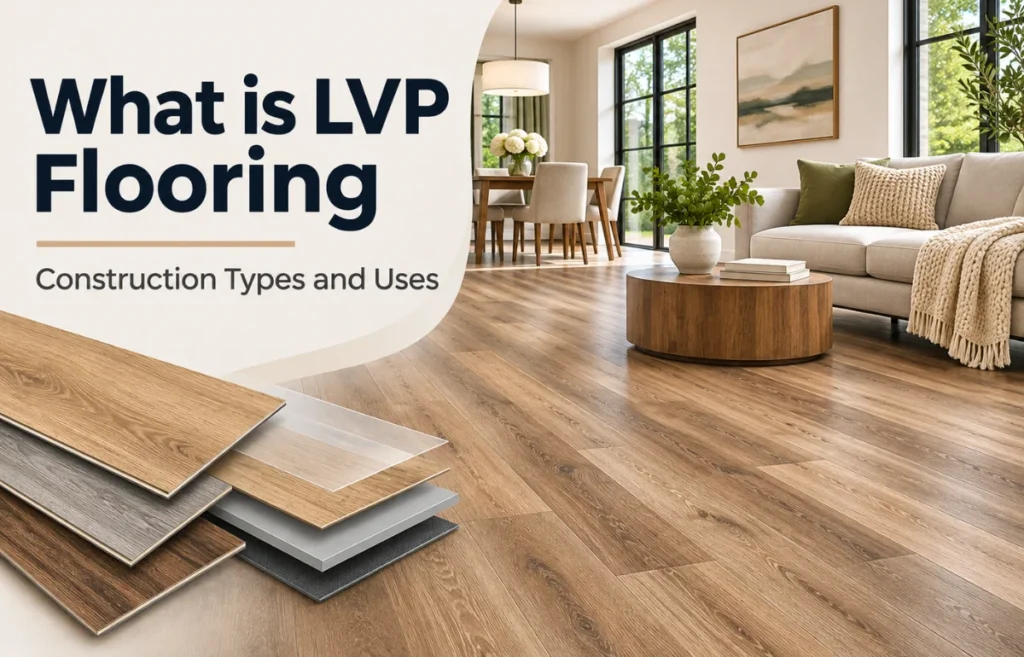
If you’re wondering what is LVP flooring, the short answer is luxury vinyl plank flooring: a manufactured, multilayer floor covering made in long, narrow pieces that resemble hardwood boards. Most LVP has a protective top surface, a printed wood-look design, a vinyl-based body or core, and sometimes an attached cushioning pad. Unlike real wood, it does not have a solid timber surface. Many products are waterproof at the plank level, and they can be installed using click-lock joints or adhesive, depending on the design. I find it most useful to think of LVP as a family of flooring systems rather than one identical product.
What Does LVP Stand For in Flooring?
LVP stands for luxury vinyl plank. “Luxury” distinguishes layered products from basic vinyl, not necessarily superior quality. “Plank” means a long, wood-look rectangle.
LVP is resilient flooring, meaning it has some give compared with ceramic tile. It commonly contains polyvinyl chloride (PVC), fillers, and stabilizers, in formulations that vary by product.
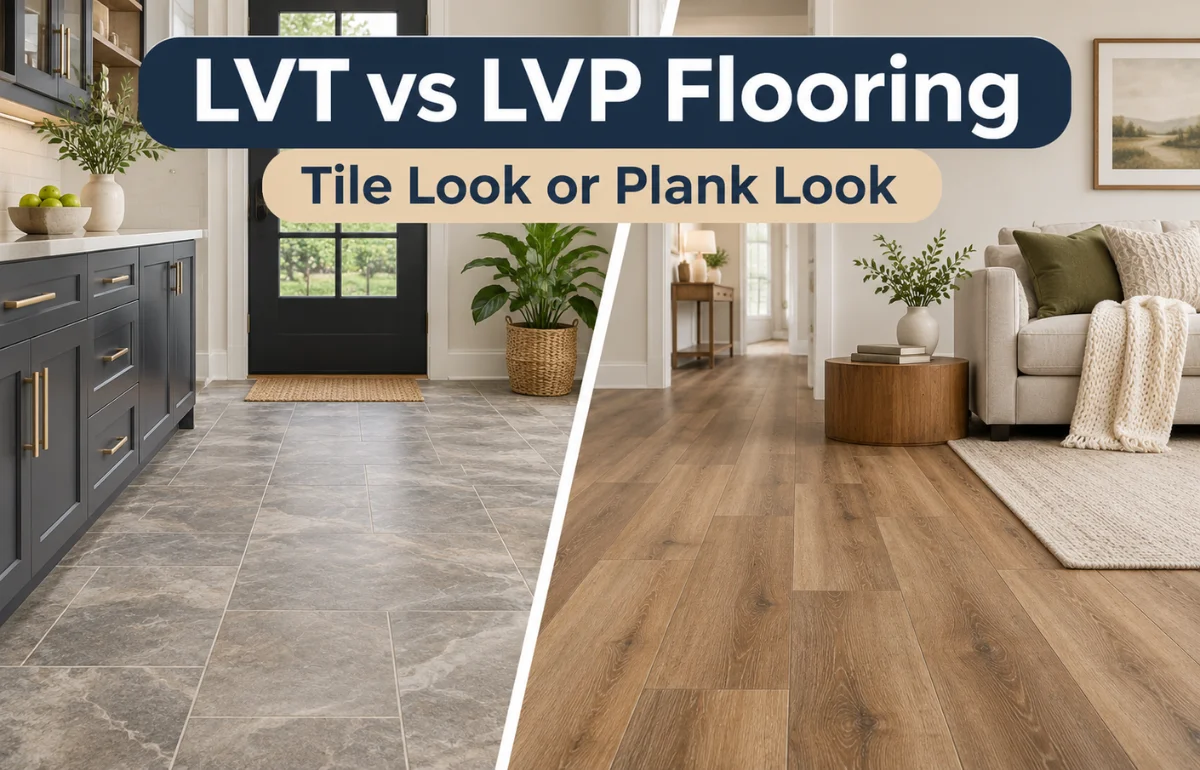
You’ll also see LVT, or luxury vinyl tile. Retailers sometimes use LVT as an umbrella term for both shapes, but the everyday distinction is simple: LVP generally mimics wood planks, while LVT is commonly sold in tile formats for stone or ceramic looks. Sheet vinyl is different again: it comes in rolls rather than individual planks.
The Resilient Floor Covering Institute describes both flexible vinyl and rigid-core products within this broader flooring category.
What Is LVP Flooring Made Of? Understanding the Layers
LVP is built like a sandwich, with layers performing different jobs. Manufacturers sometimes combine components or add proprietary coatings.
1. Surface coating: the first line of defense
At the top, many planks have a factory-applied urethane or similarly engineered finish. This helps resist everyday staining and scuffing, making the floor easier to clean.
The finish is not scratchproof. Grit and dragged furniture can still leave marks, and coating quality varies.
2. Wear layer: protection for the printed design
Below the finish sits a transparent wear layer designed to protect the decorative image. Manufacturers usually describe its thickness in mils. One mil equals one-thousandth of an inch, so a 20-mil wear layer is approximately 0.5 millimeters thick.
Common specifications include 6, 12, and 20 mil, although other thicknesses exist. In broad terms, I would consider a thicker wear layer for busy hallways or homes with pets, provided the rest of the product is suitable. A 20-mil plank is not automatically scratchproof or better in every respect than a well-made 12-mil plank.
3. Design film: where the wood appearance comes from
A printed photographic film provides the visible oak, walnut, maple, or other wood-grain pattern. It may show knots, color variation, saw marks, and grain lines without containing actual wood veneer.
Some designs use embossed-in-register texturing, so the raised surface follows the printed grain. I also look for distinct plank images: repeating knots can make a large floor look artificial.
4. Core or vinyl body: the structural layer
The core influences how rigid, dense, and comfortable the plank feels. Flexible LVP bends relatively easily. Rigid-core versions use engineered polymer-based cores, commonly classified as SPC or WPC.
That helps explain different performance under furniture or temperature changes, although installation still matters.
5. Backing or attached underlayment
The underside stabilizes the plank and may include a bonded foam, cork, or other acoustic pad. The pad can soften footsteps and reduce some impact noise, depending on the entire floor assembly.
An attached pad does not automatically mean the floor needs extra underlayment. Adding an unapproved second pad may cause excessive movement at click-lock joints or violate the warranty. I always check the product instructions before assuming more cushioning is better.
What Are the Main Types of LVP Flooring?
The three construction types homeowners are most likely to encounter are flexible LVP, SPC, and WPC. The Resilient Floor Covering Institute identifies SPC and WPC as the two principal rigid-core constructions.
Flexible LVP
Flexible luxury vinyl plank has a pliable vinyl body rather than a thick rigid core. Many versions are glued directly to a prepared subfloor, although other installation formats exist.
Because it follows the surface beneath it closely, poor subfloor preparation can allow bumps, seams, or other imperfections to show. Its relatively low profile can be useful in renovations where floor height and door clearance are tight.
SPC luxury vinyl plank
SPC stands for solid polymer core, often called stone-plastic composite. Its dense construction commonly contains calcium carbonate, also known as limestone, combined with polymers.
SPC typically feels firm underfoot and offers good resistance to indentations. It’s a practical option for active households and rooms where furniture stability matters. However, a stiff plank is not permission to install over an uneven subfloor; unsupported areas can strain the locking edges.
WPC luxury vinyl plank
WPC stands for expanded or wood-polymer composite, depending on the terminology used. Modern WPC flooring generally features a foamed polymer core; the name does not mean it is made from solid wood.
Its core tends to be lighter and more cushioned than SPC. I would examine WPC for bedrooms or living spaces where foot comfort and sound are priorities. That softer construction may be less resistant to concentrated indentation than a comparable SPC product.
| LVP type | Core characteristic | Typical feel | Often suits |
|---|---|---|---|
| Flexible LVP | Pliable vinyl-based body | Thin and close to the subfloor | Glue-down areas and low-height renovations |
| SPC | Dense, mineral-filled rigid core | Firm and solid | Busy rooms and areas with heavier furniture |
| WPC | Expanded, foamed rigid core | More cushioned and quieter | Bedrooms, living rooms, and comfort-focused spaces |
These are tendencies, not guarantees; finishes and installation also matter.
How Does LVP Flooring Actually Perform?
Water resistance versus a waterproof room
Many LVP planks do not swell or disintegrate when exposed to water the way certain wood-based flooring materials can. That’s why LVP is widely used in kitchens, laundry rooms, and some bathrooms.
But a waterproof plank does not create a waterproof building assembly. Water may pass through joints, collect along the perimeter, or reach a vulnerable subfloor. A leaking appliance or flooding still requires prompt cleanup and inspection. I would never use a “100% waterproof” label as a reason to ignore a persistent moisture problem.
Durability, dents, and everyday wear
LVP can handle ordinary foot traffic, spills, and routine cleaning well. Its weakest point depends on the product: a finish may scratch, a soft core may dent, or a thin locking edge may break when stressed.
A thicker wear layer helps resist abrasion but cannot prevent a heavy cabinet foot from compressing the core. For rolling office chairs, check caster and mat requirements.
Appearance and comfort
LVP offers convincing wood visuals without wood’s natural grain variation through its full thickness. Wide planks can make a room feel less visually busy, while narrower boards may suit small or traditional spaces.
Underfoot, flexible vinyl generally reflects the firmness of the subfloor. SPC is relatively hard, and WPC can feel warmer or softer. Acoustic comfort also depends on the underlayment, subfloor, ceiling below, and furniture, not only on plank thickness.
Cleaning and maintenance
Maintenance is straightforward: sweep or vacuum grit with a floor-safe setting, wipe spills promptly, and damp-mop with a cleaner approved for the product. Use suitable furniture pads and non-staining rugs.
I would avoid abrasive scrubbers, wax unless explicitly recommended, and steam cleaning unless the flooring manufacturer allows it. LVP does not need sanding or periodic wood-floor refinishing, but damage to its printed surface usually cannot be sanded away.
Where Can You Use LVP Flooring?
One reason LVP appeals to homeowners is its versatility. I find the best approach is to match a room’s moisture, traffic, temperature, and sound requirements to the actual flooring specification.
| Room or setting | Why LVP may work | What to verify first |
|---|---|---|
| Living room | Wood appearance and easy upkeep | Comfort, sound, and sunlight exposure |
| Kitchen | Spill-resistant surface | Appliance leaks, furniture loads, and installation restrictions |
| Bathroom | Water-tolerant plank material | Perimeter sealing and whether the product is approved for that room |
| Basement | Many products suit below-grade spaces | Concrete moisture and vapor-control requirements |
| Bedroom | Soft visual appearance and manageable cleaning | Footfall sound and underfoot feel |
| Home office | Easy maintenance | Chair caster requirements and point-load resistance |
Kitchens, entryways, and laundry rooms
LVP makes sense where small spills and tracked-in dirt are frequent. A textured, matte finish can also help disguise minor dust and everyday scuffs better than a highly glossy surface.
In kitchens, I check restrictions on fixed cabinets and islands. Floating floors should not be pinned by heavy built-ins unless permitted.
Bathrooms and basements
In bathrooms, LVP can be a good floor covering, but it is not a substitute for a proper shower waterproofing system. Around toilets, tubs, and doors, follow the manufacturer’s guidance for moisture protection and expansion space.
Basements require another check: the slab. Even when the plank itself tolerates water, excessive moisture vapor beneath it can create problems. Test concrete as required by the flooring and adhesive manufacturers before installation.
Bedrooms, apartments, and upstairs rooms
For rooms where sound matters, compare the full acoustic assembly rather than relying on a marketing phrase like “quiet core.” Apartment rules may require specific impact-sound performance. Attached padding helps, but results depend on the structure underneath.
I would check the test conditions behind any advertised acoustic rating.
How Is Luxury Vinyl Plank Installed?
LVP is not one installation system. According to RFCI’s explanation of flexible luxury vinyl flooring, manufacturers offer glue-down, floating, and loose-lay methods.
Click-lock floating installation
Interlocking edges connect planks into a floating floor that is not normally bonded to the subfloor. This method is common with rigid-core SPC and WPC.
The subfloor still needs to be clean, dry, stable, and flat within the product’s specified tolerances. Expansion gaps, transitions, large-room limits, and heavy-fixture restrictions should follow the exact installation document.
Glue-down installation
Glue-down LVP is adhered to a properly prepared surface using an approved flooring adhesive. It can be useful in some commercial areas, complicated layouts, or projects where a low overall floor height is desirable.
The trade-off is more demanding surface preparation and adhesive-related requirements. Moisture, temperature, and curing time matter.
Loose-lay installation
Loose-lay planks are designed to remain stable through their construction, backing, and contact with the floor; some installations still require perimeter or area-specific adhesive.
Loose-lay planks are not interchangeable with floating planks; suitability depends on the room and manufacturer instructions.
How to Read an LVP Flooring Label Without Getting Misled
Two packages may both say “waterproof luxury vinyl” yet offer very different specifications. Instead of choosing by thickness alone, I would inspect five details:
- Total plank thickness: Often given in millimeters, it affects height and sometimes the feel, but is not a standalone durability score.
- Wear-layer thickness: Given in mils, not millimeters; compare it with the intended traffic and the surface finish.
- Core construction: Flexible, SPC, or WPC tells you more about density and underfoot feel than a vague “premium core” claim.
- Installation requirements: Check subfloor flatness, moisture limits, compatible underlayment, room temperature, and whether radiant heating is allowed.
- Warranty and testing: Read exclusions for commercial use, direct sunlight, heavy loads, standing water, and improper installation.
For indoor air quality, I also check whether a specific product is independently certified for low VOC emissions. FloorScore certification, for example, addresses defined emission criteria; it does not mean a floor contains no chemicals or that every adhesive used with it is certified.
At a showroom, I would ask for installation instructions and technical data for the exact product code, not just a brand-wide claim.
What Are the Main Limitations of LVP Flooring?
LVP is practical, but I would not treat it as an all-purpose replacement for natural materials. It cannot be refinished like solid hardwood. Sharp objects and dragged furniture can damage the surface, and some products may discolor or expand when exposed to excessive heat or prolonged direct sunlight.
It also cannot correct structural defects, water intrusion, or severely uneven subfloors. Thin locking edges can be vulnerable when the floor flexes over low spots. Replacing a damaged click-lock plank in the middle of a room can be difficult.
Most conventional LVP contains PVC and is not biodegradable. Recycling options vary locally. For sustainability, I’d compare verified product declarations and end-of-life options rather than “eco-friendly” marketing.
A Practical Way to Choose the Right LVP
I start with the room, not the wood color. For an active entrance or kitchen, I prioritize an appropriate wear layer, a durable finish, a suitable core, and a reliable installation system. For a bedroom, I give more weight to comfort, noise, and appearance. For a basement, I begin with moisture assessment before looking at samples.
Then I’d take home a few full-size planks, not just small chips. I’d view them in daylight and artificial light, set several side by side to identify repeating patterns, and check the height against doors and adjoining floors.
My final filter is documentation: an installation guide, a product-specific warranty, and relevant third-party certifications. Those details reveal more about real-world suitability than the word “luxury.”
Frequently Asked Questions About LVP Flooring
Is LVP flooring real wood?
No. LVP is a manufactured vinyl-based floor with a printed design that resembles wood; it does not have a solid hardwood or wood-veneer walking surface.
Is LVP flooring waterproof?
Many LVP planks are waterproof, but water can still reach the subfloor through edges or joints. The entire installed floor is not automatically waterproof.
What is the difference between LVP and laminate flooring?
LVP usually has a vinyl-based body or polymer core. Most laminate uses a wood-fiber core beneath a decorative surface, so its moisture behavior can differ.
How long does LVP flooring last?
Service life varies with product quality, traffic, maintenance, and installation. Some floors last well over a decade, but a warranty period is not a guaranteed lifespan.
Can LVP flooring be installed over tile?
Often, yes, if the existing tile is secure, sufficiently flat, and properly prepared. Deep grout lines or uneven tiles may need filling before installation.
Final Thoughts
So, what is LVP flooring in practical terms? It’s a wood-look resilient floor built from engineered layers, offered in flexible, SPC, and WPC constructions for different spaces and priorities. Its appeal is the combination of design flexibility, water-tolerant materials, and manageable upkeep—not a promise that every plank performs the same way.
Before buying, compare samples alongside the technical sheets and confirm that the product suits your room, subfloor, and installation method. That’s how I’d turn a good-looking flooring choice into a sensible one.