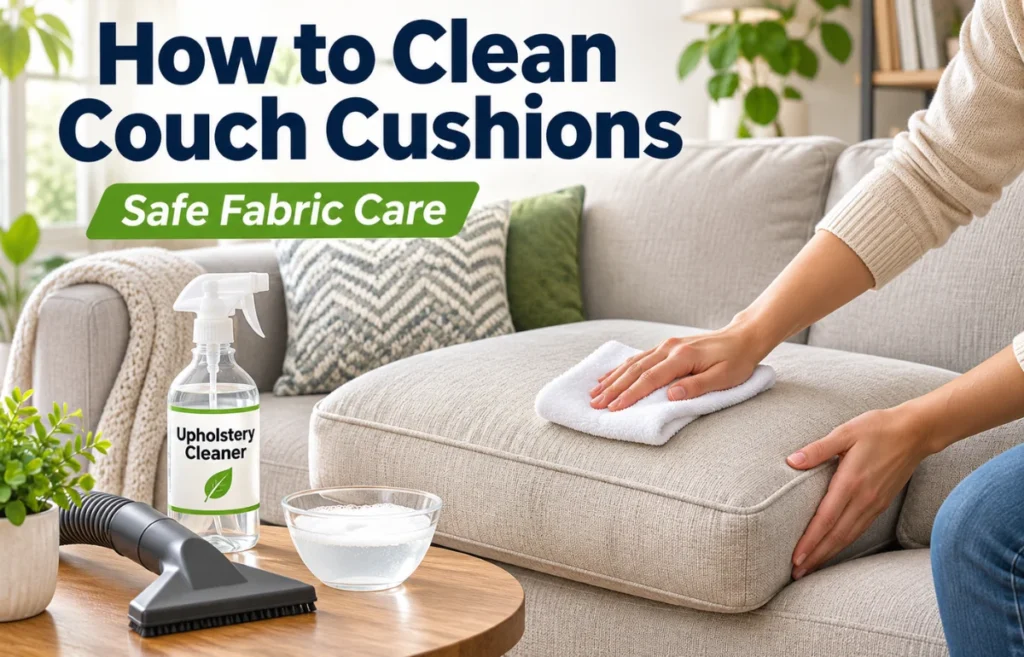
Learning how to clean couch cushions starts with three things: checking the upholstery care label, removing loose dirt, and choosing a cleaning method that suits the fabric and cushion filling. For most fabric cushions, I recommend vacuuming first, blotting spills instead of rubbing them, and using a small amount of an approved upholstery cleaner only after testing a hidden spot. Removable covers can go in the washing machine only when their specific care instructions allow it. The foam or stuffing inside usually needs a different approach because trapped moisture can cause lingering odors and mildew.
The goal is to remove dirt without leaving water rings, faded patches, or damp filling. Here’s how I would tackle everyday crumbs and stubborn spills.
Check the Cushion Label Before You Clean Anything
I always make the care tag the starting point, not the color or texture of the couch. Check underneath the sofa, along a cushion seam, or under the seat for the manufacturer’s cleaning code. If you still have the product details, look up the exact model’s care instructions.
What Do the W, S, WS, and X Codes Mean?
| Cleaning code | What it allows | What to avoid |
|---|---|---|
| W | A manufacturer-approved water-based upholstery cleaner | Solvent cleaners, soaking, or assuming the cover is machine-washable |
| S | A suitable water-free upholstery cleaning solvent | Water and homemade water-based mixtures |
| WS or SW | Approved water-based or solvent-based spot cleaning | Saturating the cushion or mixing cleaners together |
| X | Vacuuming or gentle brushing only | Liquid, foam, and solvent cleaners |
These codes describe cleaning options for the upholstery, not blanket permission to use a washing machine or steam cleaner. For example, La-Z-Boy’s fabric-care instructions specifically advise against steam cleaning and laundering covers on some W-coded furniture. The complete manufacturer’s instructions take priority over any general advice.
If I can’t find a label, I stick to vacuuming and seek the manufacturer’s instructions before introducing liquid. A hidden patch test helps detect problems, but it cannot turn an unknown fabric into a safe candidate for wet cleaning.
Gather a Few Simple Cleaning Supplies
You don’t need a cupboard full of products to refresh a couch. I prefer a vacuum with a soft upholstery attachment and crevice tool, several clean white microfiber cloths, a soft brush, and a dry towel. A small bowl of water and an upholstery cleaner may be useful, but only if the care code permits them.
White cloths reveal dye transfer, while a fan helps with drying. Use a spoon to lift solid messes before they spread.
For water-safe upholstery whose manufacturer allows mild soap, a little neutral, fragrance-free detergent diluted in water may work for small spots. I would not use a generic vinegar-and-baking-soda recipe on every sofa. Acids, powders, and leftover soap can all create new cleaning problems, especially on delicate fabric.
How to Clean Couch Cushions at Home
The safest routine moves from dry cleaning to targeted treatment, with as little moisture as possible. This order keeps loose dirt from turning into muddy residue.
1. Remove the Cushions and Vacuum Thoroughly
Take off loose seat and back cushions, then vacuum both sides using a soft attachment. Follow seams, piping, and zipper edges where crumbs and pet hair collect. Use the crevice tool on the sofa frame and beneath the cushions as well.
Avoid pressing a rotating beater brush into delicate upholstery. Loosen embedded hair with a soft brush before vacuuming so you don’t rub grit deeper into the fibers.
2. Test the Cleaner on a Hidden Area
Choose a small section behind a cushion or along an inconspicuous seam. Apply the cleaner exactly as directed, using a modest amount. Let the test area dry completely before judging it.
Look for fading, color transfer, stiffness, changes in texture, or a pale ring. Some damage appears only after drying.
3. Treat Stains Gently, From the Outside In
For a fresh spill, press a clean white towel against the stain to absorb as much liquid as possible. Don’t scrub. On water-cleanable upholstery, use the approved product on a cloth rather than pouring it straight onto the cushion, unless the product directions specify otherwise.
Work from the outer edge of the stain toward its center. Lightly blot, move to a clean section of cloth, and repeat as needed. This reduces spreading and water rings.
4. Remove Cleaning Residue Without Soaking the Fabric
If the cleaner’s directions call for rinsing and the fabric permits water, use a separate cloth barely dampened with clean water. Blot away any remaining product, then immediately absorb moisture with a dry towel.
More detergent does not mean a cleaner cushion. Residue can attract fresh dirt and leave the area feeling crunchy. For S-coded cushions, don’t use this water-rinsing method; follow the solvent product’s directions or choose a professional upholstery cleaner.
5. Dry Completely Before Putting Everything Back
Place the cushions where air can circulate around them, following the manufacturer’s drying instructions. Use a fan and good ventilation, and turn loose cushions when appropriate. Avoid sitting on them while damp or putting them against a closed wall where moisture escapes slowly.
I wouldn’t use a hair dryer on high heat, a radiator, or intense direct sun to speed things up. Heat can distort some fabrics, foams, and adhesives, while sunlight may fade color. A dry-looking cover isn’t proof that a soaked insert has dried underneath.
How to Wash Removable Couch Cushion Covers
A zipper doesn’t mean the fabric belongs in a washer; some exist only for assembly. Before removing a cover, read its own laundry label as well as the sofa’s upholstery instructions.
If machine washing is explicitly allowed, unzip carefully and check for loose seams. Close the zipper after removing the insert so it won’t snag. Wash compatible covers together, without overcrowding the drum, using the recommended detergent, temperature, and cycle. Cold water and a gentle cycle are sensible only when they match the label.
I avoid bleach, fabric softener, and high-speed drying unless the care instructions specifically permit them. Air-drying is often gentler, but the label decides whether to lay a cover flat, hang it, or use a machine dryer. Refit only as the manufacturer directs; the cover and filling must be thoroughly dry before the couch is used.
Here’s a small trick that prevents an annoying surprise: photograph the cushions before disassembly. Record which cover belongs to each seat, where the zipper faces, and which side was originally on top. Similar-looking pieces can fit differently after washing.
Can You Hand-Wash Cushion Covers Instead?
Only if the manufacturer permits hand washing. A cover labeled “dry clean only” or “do not wash” isn’t safer just because you’re using a sink rather than a machine. If hand washing is allowed, use the specified water temperature, avoid wringing, and support the weight of wet fabric while drying so it doesn’t stretch.
How to Clean Couch Cushions That Cannot Be Removed
For attached cushions or fixed covers, I focus on surface cleaning rather than trying to wet the entire cushion. Vacuum thoroughly, check the upholstery code, and spot-treat marks with an approved cleaner. Keep towels beneath the working area when practical to protect nearby furniture.
For widespread grime, a professional upholstery service is often safer than cleaning random patches one after another. Repeatedly wetting a fixed cushion can drive moisture into the padding, where you can’t easily inspect or dry it. A stain that returns may signal contamination deeper inside, not a need for more soap.
How to Clean Foam Cushion Inserts Safely
Foam requires particular caution. It can absorb liquid beyond the surface and release it slowly, so machine washing or soaking standard sofa foam is usually a bad idea unless the manufacturer specifically permits it. Likewise, don’t assume polyester stuffing, down, or feather blends share the same care instructions.
For an insert that is merely dusty, remove the washable cover if permitted and gently vacuum the insert through a suitable soft attachment or protective screen. If the foam has a minor surface mark, follow the cushion maker’s directions; where damp spot cleaning is explicitly allowed, keep moisture minimal and dry thoroughly before reassembly.
If urine, floodwater, or another liquid has soaked deep into the core, I would seriously consider professional assessment or replacing the insert. Perfume, baking soda, and repeated surface wiping won’t reliably remove contamination trapped at the center. Replacing only a damaged insert may be more economical than replacing an otherwise sound sofa.
How to Remove Common Couch Cushion Stains
Different spills need different responses. The table below assumes the upholstery permits the stated cleaning product; never use it to override an S or X code.
| Stain or problem | First response | What I would avoid |
|---|---|---|
| Coffee, tea, or juice | Blot promptly, then use approved water-based spot cleaner on W/WS fabric | Rubbing or saturating the padding |
| Grease or oily food | Lift solids carefully, then choose an upholstery product rated for oil-based stains | Spreading the oil with a wet sponge |
| Pet urine | Blot immediately; use a fabric-safe enzyme product only if specifically approved | Steam heat, perfume, or soaking the foam |
| Mud | Let it dry, lift loose dirt, vacuum, then treat remaining marks | Scrubbing wet mud into the weave |
| Blood | On approved water-cleanable fabric, blot with cool water before the appropriate cleaner | Hot water, which can make protein stains harder to remove |
| General musty odor | Check for damp filling, improve airflow, and clean as the label allows | Masking persistent moisture with fragrance |
Why Do Water Rings Appear After Cleaning?
A ring can form when moisture moves dissolved dirt, dyes, or cleaning residue toward the edge of a damp patch. This is why I use small amounts of cleaner and dry the area promptly. A second aggressive wet cleaning often makes the ring bigger.
For stubborn halos, check whether the manufacturer approves cleaning an entire upholstery panel to an edge or seam for a more even finish. If not, stop and contact a specialist. Never flood a cushion to “even out” the color.
What About Baking Soda for Smelly Cushions?
Baking soda is sometimes used to absorb surface odors, but it isn’t a universal deodorizer and can be difficult to extract from textured upholstery. I would only use it where the manufacturer allows a dry powder treatment, and only after testing an inconspicuous spot.
If a cushion smells sour or musty after a spill, investigate the insert and the sofa deck. Odor that returns after airing out can point to moisture or contamination below the cover. Fragrance won’t solve that.
Can You Steam Clean Couch Cushions?
Not automatically. A W or WS code may allow certain water-based products while still prohibiting hot-water extraction or steam cleaning. Steam adds heat and moisture, and an extractor can push water into the cushion if it is used incorrectly.
I would use a steam or upholstery-extraction machine only when the sofa manufacturer explicitly approves that process for the exact fabric and cushion construction. Follow the equipment instructions, test first, avoid excessive passes, and plan for thorough drying. For delicate velvet, silk blends, unknown fabrics, or cushions with sensitive backing, professional evaluation is the safer route.
Mistakes That Make Couch Cushions Look Worse
Scrubbing hard can roughen the fabric surface. Pouring cleaner directly onto a stain can spread it through the cushion. Washing every removable cover without checking the label can shrink the fabric enough that it no longer fits.
Another mistake is cleaning only the visible top while ignoring the underside, sofa deck, and cushion seams. When I think about long-term freshness, I treat those hidden areas as part of the cleaning job. They hold crumbs, hair, and odor-producing debris that can quickly make freshly cleaned cushions feel dirty again.
Finally, I never mix cleaning chemicals. In particular, don’t combine bleach with ammonia or acidic cleaners. Use one manufacturer-approved product at a time, follow its safety directions, and keep children and pets away until treated surfaces are dry and safe to use.
Keep Couch Cushions Cleaner for Longer
A simple routine beats repeated deep cleaning. Vacuum seats, backs, and crevices about once a week, or more often if pets shed heavily. Blot fresh spills immediately. Rotate or flip cushions only when their construction and fabric orientation allow it, so wear stays even.
Every month or so, I would also check the hidden spaces: lift cushions, inspect for crumbs and dampness, and look at the underside of the covers. If the sofa sits in strong sun, use curtains or reposition it to reduce uneven fading. Throws can protect frequently used seats, provided they don’t transfer dye onto light upholstery.
One practical habit is to save a photo of the care label on your phone alongside the sofa’s model name. When a spill happens months later, you won’t have to turn the furniture upside down to figure out whether water is safe.
When Is Professional Cushion Cleaning Worth It?
I would call a qualified upholstery cleaner when the fabric is valuable or unidentified, the sofa has extensive staining, a solvent-only material needs treatment, or moisture has penetrated the stuffing. Persistent odors, bleeding dye, and previous cleaning attempts that created rings also deserve a specialist’s attention.
Before booking, share the care code, stain type, and any products used. Ask how the cleaner handles the filling and checks for dryness.
A Cleaner Couch Starts With the Right Method
The best way to clean couch cushions isn’t the strongest product or the wettest treatment. It’s matching the method to the fabric, treating stains early, and giving every layer enough time to dry. Start today by finding your sofa’s care tag and vacuuming the cushions. Once you know what the upholstery allows, you can clean with far more confidence.
Frequently Asked Questions
Can I put couch cushions in the washing machine?
Only wash removable covers or inserts when their specific care labels allow it. Most foam cushion inserts should not be machine-washed.
What is the best homemade solution for cleaning couch cushions?
If the manufacturer permits mild water-based detergent, a weak soap solution may work. No homemade mixture is safe for every upholstery fabric.
How long do couch cushions take to dry after cleaning?
Drying may take several hours or longer, depending on moisture, filling, and ventilation. Use the cushions only when both fabric and interior are completely dry.
How do I clean couch cushions without a machine?
Vacuum thoroughly, check the cleaning code, and blot spots using an approved cleaner and a soft white cloth. Keep moisture minimal.
How often should couch cushions be cleaned?
Vacuum roughly weekly and spot-clean spills immediately. Schedule deeper cleaning according to the manufacturer’s advice and the amount of use.