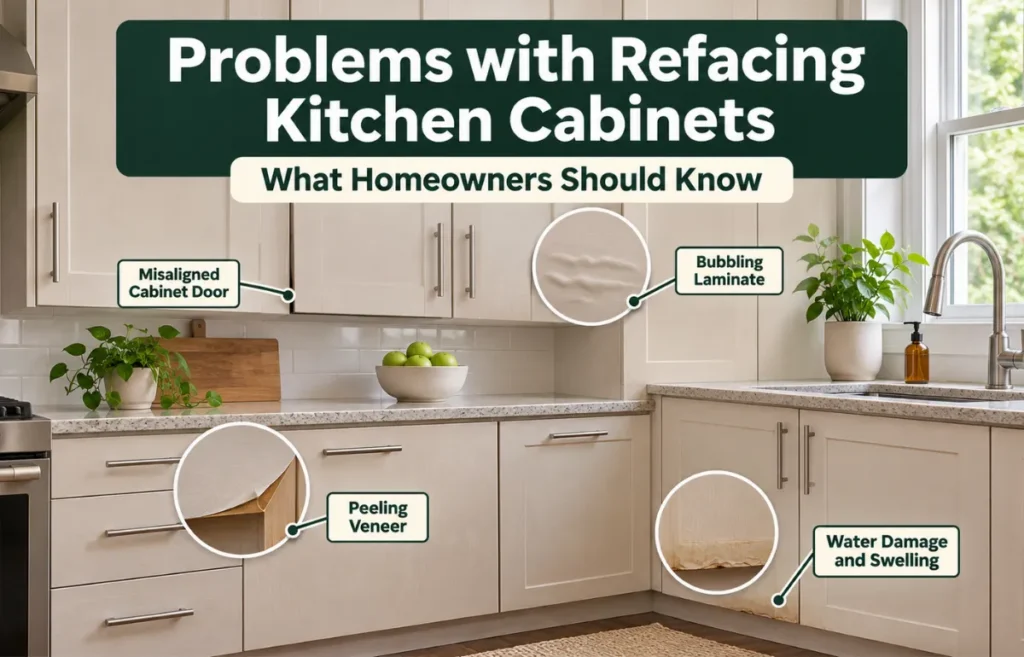
The most common problems with refacing kitchen cabinets include peeling veneer, moisture damage, limited design flexibility, hidden structural issues, uneven finishes, and unexpected installation costs. Cabinet refacing is a kitchen remodeling method that involves replacing cabinet doors and drawer fronts while covering the exposed surfaces of existing cabinet boxes with new veneer, laminate, or other decorative materials.
Although refacing can improve the appearance of an outdated kitchen without a complete renovation, it doesn’t repair damaged cabinet boxes, correct poor layouts, or automatically improve storage functionality.
I consider cabinet refacing a worthwhile investment only when the existing cabinetry is structurally sound and the kitchen layout already meets your needs.
Before spending thousands of dollars on a cosmetic upgrade, I recommend understanding where cabinet refacing can go wrong, what causes premature failure, and whether your kitchen is actually a suitable candidate.
15 Common Problems With Refacing Kitchen Cabinets
Cabinet refacing has some attractive benefits, but its disadvantages aren’t always obvious when you’re looking through samples or browsing kitchen makeover photos.
Here are the problems I would pay particular attention to before starting a refacing project.
1. Refacing Doesn’t Fix Structural Cabinet Damage
One of the biggest disadvantages of cabinet refacing is that it improves the exterior without rebuilding the underlying structure.
If your cabinets already have weakened joints, damaged frames, loose shelves, or deteriorating wood, installing new doors won’t solve those problems.
Common signs of structural deterioration include:
- Sagging cabinet shelves
- Loose cabinet frames
- Swollen particleboard
- Cracked cabinet panels
- Damaged hinge mounting areas
- Separating cabinet joints
I recommend inspecting the cabinets underneath your kitchen sink first. This area is particularly vulnerable to unnoticed plumbing leaks and moisture exposure.
Covering damaged cabinetry with decorative materials may temporarily hide the problem, but the underlying deterioration can continue.
2. Veneer Can Peel, Bubble, or Separate
Peeling veneer is one of the most frustrating problems with refacing kitchen cabinets.
During refacing, thin decorative sheets are bonded to the existing cabinet surfaces. When adhesion fails, these sheets may develop bubbles, lifted corners, or visible separation.
Common causes include grease contamination, incompatible adhesives, inadequate installation pressure, moisture exposure, and insufficient surface preparation.
Cabinet corners and edges deserve particular attention because they experience frequent contact during everyday use.
I would be cautious about any installation that leaves slightly raised seams. What appears to be a minor finishing imperfection can become an entry point for moisture and further peeling.
3. Moisture and Water Damage Can Shorten Cabinet Life
Kitchen cabinets are regularly exposed to water splashes, cooking steam, condensation, and occasional plumbing leaks.
Although many refacing materials are moisture-resistant, they aren’t necessarily waterproof.
Water can penetrate damaged seams and exposed edges, particularly around sinks and dishwashers. If the underlying cabinet material is particleboard or medium-density fiberboard (MDF), moisture penetration may cause permanent swelling.
Once engineered wood swells significantly, drying it generally won’t restore its original dimensions or strength.
I suggest addressing even minor plumbing leaks before refacing begins. Investing in attractive new cabinet surfaces makes little financial sense if moisture continues damaging the material underneath.
4. Your Existing Kitchen Layout Remains Unchanged
Standard cabinet refacing retains the existing cabinet arrangement.
That means awkward corners, narrow walkways, inconvenient storage locations, and poorly positioned appliances will generally remain where they are.
Imagine having a kitchen where opening the dishwasher blocks access to your most frequently used drawers. New Shaker-style doors might make the room more attractive, but they won’t eliminate that daily inconvenience.
I would evaluate how the kitchen functions before deciding how it should look.
If your biggest frustration is an inefficient layout rather than outdated cabinet finishes, cabinet replacement or selective remodeling may provide better value.
5. Cabinet Refacing Can Cost More Than Expected
Refacing is generally less expensive than installing comparable new cabinetry, but the savings aren’t guaranteed.
A basic estimate may increase considerably once additional materials, hardware, repairs, and finishing work are included.
Frequently overlooked expenses include:
- Custom-sized cabinet doors
- Replacement drawer boxes
- Decorative molding
- Cabinet end panels
- Soft-close hinges and drawer slides
- Structural repairs
- Appliance clearance adjustments
According to Angi’s 2026 cost data, the average cost of resurfacing kitchen cabinets in the United States is approximately $7,234.
I recommend comparing detailed, fully installed quotes for refacing and replacement rather than relying on advertised starting prices.
When the price difference becomes relatively small, retaining old cabinet boxes may no longer be the best investment.
6. Heat Can Damage Certain Refacing Materials
Kitchen cabinets near ovens, cooktops, dishwashers, and countertop appliances face greater exposure to heat and steam.
Thermofoil cabinet doors are particularly susceptible to excessive heat. Their decorative vinyl covering can separate from the underlying material when exposed to temperatures beyond the manufacturer’s recommended limits.
Other finishes may discolor, warp, or experience adhesive failure under unsuitable conditions.
I would pay particular attention to cabinets surrounding a self-cleaning oven, coffee maker, toaster oven, or electric kettle.
Check the cabinet manufacturer’s heat restrictions and appliance installation requirements. Where specified, appropriate heat shields or additional clearances can reduce the risk of damage.
7. New Cabinet Doors May Not Align Properly
Installing new cabinet doors on older cabinet boxes can create alignment problems that aren’t apparent during the initial design consultation.
Older cabinets may have shifted slightly, developed uneven openings, or become out of square.
These irregularities can result in inconsistent gaps, overlapping doors, crooked drawer fronts, or hinges that require repeated adjustment.
Modern full-overlay doors can make these inconsistencies particularly noticeable because their appearance depends heavily on uniform spacing.
I suggest checking the cabinet openings and frame alignment before ordering replacement doors.
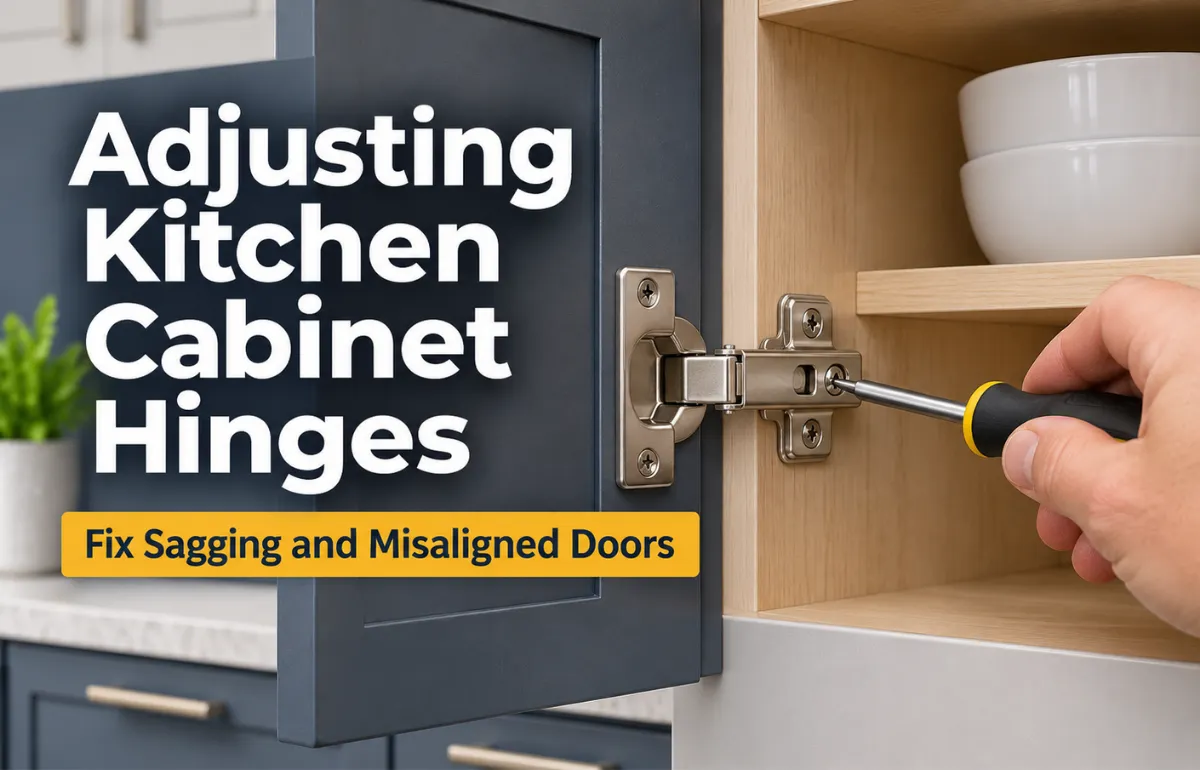
Adjustable hinges can correct minor positioning problems, but they cannot compensate for every structural irregularity.
8. Color and Texture Differences Can Look Unnatural
A professionally refaced kitchen should have a reasonably consistent appearance across its doors, drawer fronts, face frames, and exposed side panels.
However, matching different materials isn’t always straightforward.
A painted MDF door may reflect light differently from a matching laminate cabinet panel. Natural wood veneer can also vary in grain pattern and color.
These differences become more noticeable under direct sunlight or strong under-cabinet lighting.
My recommendation is to compare physical samples of the actual door and refacing materials together in your kitchen.
Don’t rely entirely on showroom lighting or digital color samples. A seemingly perfect match in a catalog can look surprisingly different at home.
9. Refacing Doesn’t Automatically Improve Cabinet Storage
Many homeowners assume that a cabinet makeover will also improve the usability of their kitchen.
Unfortunately, refacing addresses appearance primarily.
Deep, inaccessible shelves, undersized drawers, and inefficient corner cabinets may remain unchanged unless functional upgrades are specifically included.
Features such as pull-out shelves, drawer organizers, and rotating corner organizers can sometimes be retrofitted, but they require sufficient space and suitable cabinet construction.
I prefer identifying storage requirements before selecting cabinet door styles.
Otherwise, you could spend a substantial amount refreshing cabinets that still make everyday cooking and organization unnecessarily difficult.
10. Old Cabinet Boxes Can Fail Before the New Doors
This is an overlooked financial risk of cabinet refacing.
Your replacement doors may be brand-new, but the supporting cabinet boxes could already have decades of wear.
The new and old components essentially have different remaining service lives.
For example, if a cabinet side panel deteriorates several years after refacing, replacing that cabinet may require removing adjacent finishing materials or ordering another matching door.
By then, the original finish might have been discontinued.
I would judge the expected lifespan of a refacing project according to its weakest retained component, rather than the advertised durability of the new doors alone.
11. Poor Installation Can Ruin Expensive Materials
Even high-quality wood veneer and laminate can fail when installed incorrectly.
Cabinet refacing requires careful cleaning, surface preparation, accurate measurements, precise trimming, and compatible bonding materials.
Common workmanship problems include uneven seams, visible adhesive residue, poorly trimmed edges, and incorrectly positioned hinges.
Wood veneer manufacturer WiseWood Veneer’s installation guidance also emphasizes appropriate application pressure and material preparation for successful bonding.
I wouldn’t choose a refacing contractor based solely on the lowest quotation.
Inspect close-up photographs of completed projects, particularly corners, cabinet edges, and exposed side panels. Those details often reveal more about workmanship than wide-angle kitchen photographs.
12. DIY Cabinet Refacing Is Less Forgiving Than It Appears
Refacing kitchen cabinets yourself can reduce labor expenses, but it requires considerably more precision than painting them.
Incorrect measurements can result in replacement doors that don’t fit. Poorly positioned adhesive-backed veneer may be difficult to reposition without damaging it.
Cutting around hinges, corners, and irregular cabinet openings also requires patience and appropriate tools.
For someone without woodworking experience, correcting mistakes can consume much of the anticipated savings.
I recommend practicing on a spare piece of cabinetry or comparable scrap material before applying veneer to a prominent kitchen surface.
13. Cabinet Repairs Can Become Difficult Later
Refaced cabinets may be harder to repair than expected because replacement materials aren’t always readily available.
A scratched panel or damaged door might require an exact match for its color, thickness, texture, and finish.
Even if the original product remains available, existing surfaces may have changed color slightly through sunlight exposure and aging.
This is particularly problematic with discontinued laminate patterns or custom decorative finishes.
I suggest keeping the manufacturer’s details, finish codes, supplier information, and suitable leftover material after installation.
Ordering a spare door or retaining a small matching veneer sheet may also make future repairs considerably easier.
14. Warranty Coverage May Be More Limited Than Expected
Not every cabinet refacing warranty covers every part of the installation.
A manufacturer might guarantee the replacement doors while excluding the original cabinet boxes, installation labor, moisture damage, or failures associated with excessive heat.
A separate workmanship warranty may apply to the contractor’s installation.
I recommend obtaining written answers about adhesive failure, peeling veneer, replacement labor, and product availability.
Ask whether both materials and labor are covered when a component fails.
A lengthy warranty isn’t particularly valuable if its exclusions prevent coverage for the problems you’re most likely to encounter.
15. Future Kitchen Remodeling Can Become More Complicated
Refacing works best when you intend to retain the current cabinetry for a reasonable period.
If you’re planning to install larger appliances, change the countertop arrangement, relocate the sink, or redesign the kitchen island soon, refacing may create unnecessary expenses.
Removing a recently refaced cabinet could damage adjacent panels or decorative trim. New cabinet dimensions might also prevent you from reusing the replacement doors.
I recommend planning the next several years of kitchen improvements before investing.
Completing structural and layout changes first helps prevent paying twice for the same decorative work.
Which Cabinet Refacing Materials Have the Most Problems?
Material selection influences durability, maintenance requirements, appearance, and repairability.
Here’s how common cabinet refacing materials compare.
| Refacing Material | Common Problems | Durability Potential | Relative Cost |
|---|---|---|---|
| Real wood veneer | Peeling, moisture sensitivity, color variation | Good | Medium to high |
| High-pressure laminate | Edge chipping, seam separation | Good to high | Medium |
| Thermofoil | Heat-related peeling and discoloration | Moderate | Low to medium |
| Painted MDF doors | Paint chipping, swelling if water penetrates | Good in suitable conditions | Medium |
| Solid wood doors | Seasonal movement, cracking, finish wear | High with proper care | High |
These ratings are general comparisons rather than guaranteed performance levels. Installation quality, product specifications, and kitchen conditions can significantly affect durability.
I generally favor repairable materials and durable finishes over decorative options selected purely for appearance.
Hidden Problems With Refacing Kitchen Cabinets Most Homeowners Overlook
Beyond the usual concerns about peeling and moisture, several smaller details can influence whether a kitchen makeover succeeds.
Added Material Thickness Can Affect Clearances
Refacing adds material to existing surfaces.
Although this increase is usually small, it can become significant around tightly fitted appliances, adjacent doors, and narrow cabinet openings.
A cabinet door beside a refrigerator may no longer open completely if its thickness or overlay changes.
I recommend checking appliance clearances, door swing paths, and corner drawer operation before finalizing measurements.
Old Cabinet Surface Imperfections Can Show Through
Thin veneer doesn’t necessarily conceal every defect underneath it.
Raised seams, old adhesive residue, dents, and uneven patches can become visible through the new surface. This is sometimes called telegraphing.
Dark or glossy finishes can make these imperfections especially noticeable under directional lighting.
Thorough surface preparation matters just as much as the quality of the decorative material.
Cabinet Interiors May Look Older Than the Exterior
A beautifully refaced kitchen can still have stained shelves, outdated interiors, worn drawer boxes, and damaged shelf edging.
The contrast becomes obvious every time you open a cabinet.
I recommend including interior improvements in the original budget if these surfaces already bother you. Otherwise, the finished kitchen may feel only partially renovated.
How to Tell If Your Kitchen Cabinets Are Suitable for Refacing
Before requesting a quotation, I recommend conducting a simple inspection of your existing cabinetry.
Perform a Five-Point Cabinet Condition Check
- Inspect the sink base for staining, swelling, musty odors, or active leaks.
- Check whether cabinet frames and panels feel stable.
- Look for loose laminate, peeling finishes, and deteriorating edges.
- Test hinges, drawers, and frequently used cabinet openings.
- Decide whether the existing storage arrangement meets your needs.
Minor cosmetic damage doesn’t necessarily disqualify cabinets from refacing.
However, active moisture damage, widespread structural deterioration, persistent mold, or unstable cabinet construction should be addressed before any decorative work begins.
If several cabinet boxes need major repairs, I would seriously consider replacement instead.
Cabinet Refacing vs. Replacement vs. Painting
Refacing isn’t the only way to update an outdated kitchen.
Depending on your budget and cabinet condition, painting or complete replacement may provide better results.
| Feature | Cabinet Refacing | Cabinet Replacement | Cabinet Painting |
|---|---|---|---|
| Relative cost | Medium to high | Generally high | Generally low |
| Changes kitchen layout | No, in standard projects | Yes | No |
| Resolves structural damage | No | Yes, when damaged units are replaced | No |
| Provides new cabinet doors | Usually | Yes | No |
| Improves storage options | Limited without additional work | Extensive | Minimal |
| Renovation disruption | Low to moderate | High | Low to moderate |
| Best suited for | Sound but outdated cabinetry | Damaged or inefficient kitchens | Sound cabinets needing a color refresh |
I would choose painting when the existing doors are attractive and structurally sound, refacing when the doors need a complete style change, and replacement when the cabinets themselves are the problem.
A hybrid renovation is another option. Replacing a damaged sink cabinet while refacing the remaining sound cabinets can sometimes offer a sensible compromise.
How Long Do Refaced Kitchen Cabinets Last?
Well-installed cabinet refacing can potentially last 10 to 20 years under suitable conditions.
However, that estimate depends on the condition of the original cabinets, the selected materials, installation quality, moisture exposure, and everyday maintenance.
To extend the life of refaced cabinetry, I recommend:
- Drying water splashes promptly.
- Cleaning with manufacturer-approved products.
- Preventing excessive heat and steam exposure.
- Repairing plumbing leaks immediately.
- Addressing loose edges and hinges early.
Refacing should be viewed as an extension of your existing cabinetry’s useful life rather than a complete reset of its age.
Is Refacing Kitchen Cabinets Worth It?
Cabinet refacing is worth considering when your existing cabinet boxes are strong, your layout works well, and you want a significant visual improvement without extensive demolition.
It can also be a practical option when you want to preserve an existing countertop and backsplash.
However, I wouldn’t recommend refacing cabinets with widespread water damage, failing structural components, or a layout that needs substantial changes.
The best decision depends on what you’re trying to solve. If the problem is appearance, refacing may be suitable. If the problem is functionality or structural condition, spending more on replacement may prevent future expenses.
Frequently Asked Questions
What is the biggest downside of refacing kitchen cabinets?
The biggest disadvantage is retaining the existing cabinet structure. Refacing cannot resolve major structural damage, inefficient layouts, or inadequate storage without additional remodeling.
Do refaced kitchen cabinets peel?
Yes, refaced cabinets can peel because of poor adhesion, inadequate surface preparation, moisture penetration, or excessive heat. Proper installation significantly reduces this risk.
Is it cheaper to reface or replace kitchen cabinets?
Refacing is generally cheaper than comparable cabinet replacement, although premium materials, extensive repairs, and hardware upgrades can reduce the savings considerably.
Can old particleboard cabinets be refaced?
Yes, provided the particleboard is dry, stable, undamaged, and suitable for the selected refacing system. Swollen or crumbling particleboard should be repaired or replaced first.
Is it better to paint or reface kitchen cabinets?
Painting is usually better for an affordable color update, while refacing is more suitable when you want new door styles and a substantial appearance change.
Final Thoughts
Understanding the problems with refacing kitchen cabinets can help you avoid an expensive renovation mistake.
Although refacing offers an attractive alternative to complete cabinet replacement, its success depends on the condition of your existing cabinetry, material selection, and installation quality.
My advice is to inspect your cabinet boxes carefully, identify your actual storage needs, and obtain detailed quotations for both refacing and replacement.
Choose the renovation that solves your kitchen’s underlying problems rather than simply making them less visible.