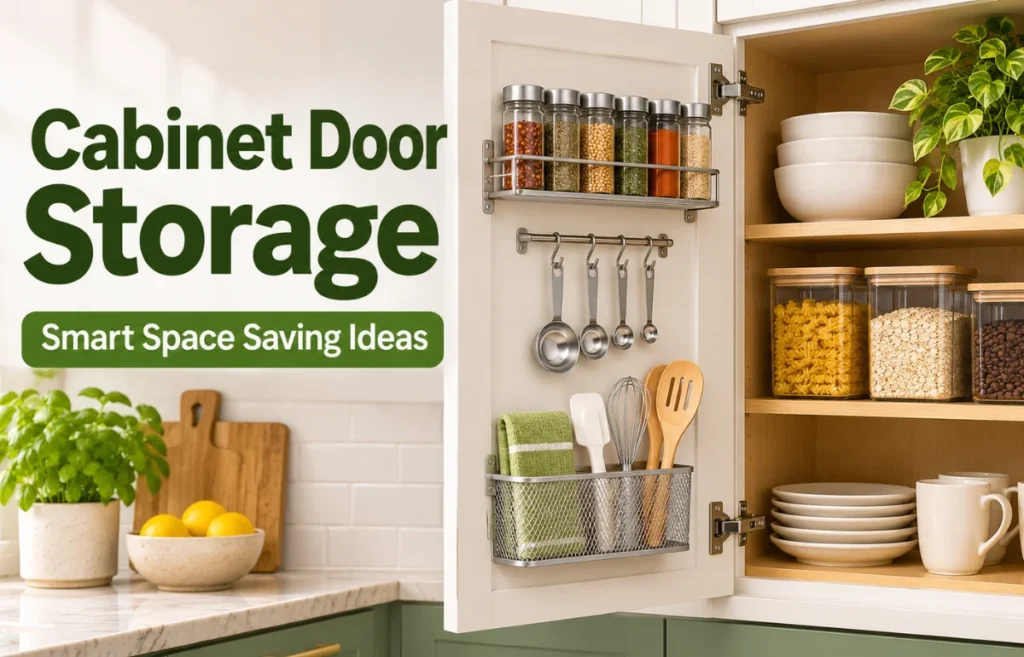
Cabinet door storage means using the inside of a cabinet door to hold items with hooks, slim racks, baskets, pockets, or other organizers. It turns an often-empty surface into useful storage without adding another cupboard or taking up counter space. The idea works especially well for lightweight, shallow items such as spices, measuring spoons, food wraps, cleaning cloths, and small toiletries.
A good setup keeps everything visible and within reach while allowing the door to close fully without hitting shelves, hinges, or plumbing. I see cabinet door storage as a way to make existing cabinets more convenient, not a reason to pack them tighter. The real advantage is giving everyday essentials a place that feels natural to use.
Why the Inside of a Cabinet Door Is Worth Using
Most people organize the shelves first and forget the doors. Yet a shelf can become crowded with little things that are hard to find, even when plenty of vertical space is available. Moving a few of those things onto the door clears the view and makes the cabinet easier to navigate.
The biggest improvement is often accessibility rather than capacity. A measuring spoon on a hook takes one motion to retrieve. The same spoon buried beneath loose utensils takes several. That small difference matters when you repeat it every day.
Still, not every cabinet is a good candidate. A narrow door beside a wall, a cabinet with tightly fitted shelves, or an older door with loose hinges may have little usable space. I would rather leave a door empty than install something that causes rubbing, rattling, or sagging.
Measure the Space Before Choosing an Organizer
Check the Door’s Usable Width and Height
Measure the flat area on the inner side of the door, excluding hinges, raised panels, trim, and handles with through-bolts. On framed doors, the center panel may be thinner than the surrounding rails. That matters if you plan to use screws.
For a rack, measure the entire installed footprint, not just the basket. Brackets and mounting clips may extend beyond the advertised storage area. Leave enough room to reach the contents without catching your fingers against the frame.
Find the Real Depth, Not the Empty-Looking Gap
Close the door slowly while looking from the side. Identify the nearest obstacle: the front of a shelf, a container, a pipe, or the cabinet frame. That obstacle determines how far an organizer and its contents can project inward.
My favorite low-cost check is a cardboard mock-up. Cut a piece to the organizer’s stated width and depth, tape it temporarily in place, and swing the door through its full movement.
Then repeat the test with an object roughly the size of what you intend to store. A bare rack may fit while a bottle inside it does not.
Account for the Door’s Swing
Think beyond the final closed position. A basket near the hinge may brush the cabinet side as the door opens, even if it fits when shut. Similarly, an over-the-door hook can prevent a flush-fitting door from closing if its metal lip is too thick.
Check both the opening arc and the closed position. If the door is next to a wall, appliance, or another cabinet, confirm that the extra organizer does not limit access. Manufacturers such as Rev-A-Shelf also advise accounting for hinges, shelves, and other obstructions when measuring.
Which Cabinet Door Storage Type Is Best?
There is no universal winner. I choose the mounting style according to the door finish, the item weight, how often I need access, and whether permanent holes are acceptable.
| Organizer type | Best for | Main advantage | Main drawback |
|---|---|---|---|
| Adhesive hooks or clips | Measuring spoons, cloths, light tools | No drilling; minimal bulk | Surface and weight limitations |
| Slim adhesive baskets | Sponges, packets, small toiletries | Easy to reposition with suitable products | Can loosen on unsuitable finishes |
| Over-the-door racks | Wraps, cloths, lightweight supplies | Removable without screw holes | Top hooks may stop the door closing |
| Screw-mounted racks | Spices and regularly used supplies | Secure attachment when correctly installed | Holes and careful placement required |
| Door-mounted pockets | Flat packets and soft accessories | Flexible, visible compartments | Can look messy when overfilled |
Adhesive or No-Drill Options
Removable hooks are an appealing choice for renters and anyone hesitant to drill into cabinetry. But “damage-free” is not a guarantee for every finish. Adhesive compatibility depends on the product, surface condition, application method, and removal technique.
For example, Command recommends using its products on suitable clean, smooth surfaces, following the specific weight rating, and removing pull tabs in the instructed direction. I would be especially cautious with peeling paint, unfinished timber, or delicate veneer.
Screw-Mounted Racks
A properly fitted screw-mounted rack can be useful for a more permanent arrangement. The critical detail is the door construction. Screws that are too long can pierce the front, while poorly positioned screws may grip only a thin recessed panel.
Rev-A-Shelf’s door-mounted rack instructions emphasize fastening into a thicker portion of the door and checking for internal obstructions. Follow the instructions supplied with your exact product rather than guessing at screw length or load capacity.
Cabinet Door Storage Ideas That Work in the Kitchen
Keep Everyday Spices in a Shallow Rack
A narrow spice organizer behind an upper cabinet door gives frequently used seasonings a predictable home. I prefer a single row of smaller jars rather than deep baskets where one bottle hides another. Arrange them by how often you cook with them, not alphabetically, if that feels more natural.
Keep seasonings away from excessive heat and moisture. If the cabinet is directly above a hot cooking area, another location may protect their quality better. And if glass jars make the door noticeably heavier, reduce the number or move the rack inside the cabinet instead.
Give Foil, Parchment, and Food Wraps Their Own Slot
Long, narrow wrap boxes are awkward on ordinary shelves. A door-mounted holder can keep them upright and stop the familiar avalanche when you pull one out.
Measure the longest box before buying; some organizers are designed for only shorter packaging.
Hang Measuring Spoons and Small Utensils
A row of modest hooks can free a surprising amount of drawer space. Measuring spoons, a silicone spatula, and a lightweight pastry brush are practical choices.
If the tools have different lengths, stagger the hooks so the lower ends do not tangle.
Store Cutting Boards Vertically
One or two slim cutting boards can sit in a purpose-made door holder inside a lower cabinet. This makes them easy to select while keeping them off the worktop. The board must be dry before storage, and the holder should allow airflow rather than trap moisture.
This is one idea I would reserve for a sturdy door and lightweight boards. Thick wooden boards often belong on a fixed shelf or in a vertical divider secured to the cabinet body, not the moving door.
Create a Small Cleaning Station Under the Sink
A shallow basket on the inside of an under-sink door can hold clean sponges, reusable gloves, or folded microfiber cloths. It separates small supplies from the bottles and plumbing inside the cabinet and makes the cleaning routine less frustrating.
I would not hang a collection of full spray bottles on a weak door. Keep household chemicals in their original containers and out of children’s reach, ideally in appropriately secured storage. Check for leaks before adding any organizer near pipework.
Use One Door for Small Pantry Packets
Flat packets of yeast, gelatin, seasoning mixes, or reusable food-storage bags can disappear into a crowded pantry.
A divided pocket organizer keeps categories apart without demanding a whole shelf. Choose wipeable material if you expect crumbs or spills.
Cabinet Door Storage Beyond the Kitchen
Bathroom Vanity Doors
Small vanity cabinets are ideal for a slim basket holding hair ties, spare toothbrush heads, combs, or sealed travel-size products.
Choose a material that tolerates humidity and can be wiped clean. Avoid storing electrical devices where they could become wet or interfere with plumbing.
Laundry and Utility Cabinets
Adhesive clips can hold a lint brush, a small laundry mesh bag, or lightweight cleaning cloths. A shallow holder is also useful for dryer sheets or stain-treatment instructions, as long as the location stays dry and accessible.
Keep detergent pods and other hazardous laundry products secured away from children and pets. An easy-to-open door pocket is not a safe substitute for protected storage.
Entryway and Craft Cabinets
The inside of a utility cabinet can hold spare keys on labeled hooks, a tiny notepad, measuring tape, or rolls of painter’s tape.
In a craft cabinet, soft pockets work for brushes, glue sticks, and small templates.
How to Install a Cabinet Door Organizer Without Regrets
Start with an empty door and clean the mounting area using a method safe for the finish. Set the organizer in place temporarily before making holes or applying adhesive. Open and close the door a few times, then put the intended contents into the trial position.
For adhesive products, use the cleaner, pressure, waiting period, and removal technique specified by the manufacturer. Do not assume adding more adhesive strips increases a product’s rated capacity. If the finish is damaged or the surface is unsuitable, choose another mounting method.
For screw-mounted products, inspect the door from both sides. Identify thicker structural areas, confirm the screw length, and use the provided mounting template or instructions. If you cannot establish safe screw depth, ask a cabinet installer rather than risk a visible puncture.
After installation, load the organizer gradually. Listen for rattles, check for scuff marks, and confirm the door still closes without extra pressure.
A slight hinge misalignment that appears only when the rack is full is a reason to lighten the load, not force the door shut.
Make the Storage Easy to Live With
My rule is to organize around actions, not just objects. Put items near the task they support: wraps by food prep, measuring spoons by baking supplies, and cloths by the sink.
That saves more effort than simply fitting the maximum number of things onto the door.
I also use a simple five-second test. After arranging a cabinet, I ask whether I can find and remove the most-used item in about five seconds without shifting anything else. If not, the storage looks organized but is not actually serving me.
Noise is another overlooked detail. Loose metal tools and glass jars can knock against a moving door. A fitted liner, suitable non-slip insert, or fewer items may solve the problem.
Any padding must stay clear of hinges and avoid adding enough thickness to block closure.
Common Mistakes That Waste Space or Damage Doors
The first mistake is buying a deep rack because it appears roomy online. Cabinet depth is not the same as space behind the door. Shelves, stored containers, and hinges all compete for that gap.
Another is treating the door like a load-bearing wall. Heavy pots, canned goods, large glass bottles, and stacks of thick boards create unnecessary stress on moving hardware.
No single weight limit applies to every cabinet; door size, hinge design, mounting points, and product instructions all matter.
The third is forgetting the contents during measurement. A basket may fit perfectly until a tall bottle or protruding utensil is added. Always test the complete loaded depth and height.
Choose the Right Setup for Your Budget and Cabinet
Price alone is a poor shortcut. A low-cost hook that solves a daily annoyance may outperform an elaborate rack.
Before spending, decide which objects need a home and whether the cabinet is a suitable mounting surface.
| Your situation | Sensible starting option | Check before buying |
|---|---|---|
| Rented home or temporary setup | Removable hooks or compatible over-door holder | Finish safety and top-edge clearance |
| Small cabinet with tight shelves | Flat clips or a very shallow pocket | Full closing and swing clearance |
| Frequently used spice collection | Adjustable door-mounted spice rack | Jar depth, door construction, loaded weight |
| Under-sink cabinet | Compact wipeable basket | Pipes, leaks, and child-safe storage |
| Decorative or delicate cabinet front | Organizer mounted to cabinet interior instead | Risk of adhesive or screw damage |
A Simple Cabinet Door Reset You Can Do Today
Choose the cabinet that frustrates you most, not necessarily the largest one. Empty it, wipe it down, and identify three to five lightweight items that you reach for often but struggle to find. Then check the door’s flat area and available depth.
Before buying anything, try grouping the chosen items in a small container on an existing shelf. If that solves the problem, you may not need door hardware at all. If the group still gets buried, test a cardboard organizer template on the door.
Once your organizer is installed, use the cabinet normally for a week. Watch for friction points: bottles tipping, tools knocking, shelves blocking access, or the door feeling heavier.
Adjust early. A system that is easy to change is more valuable than one that looks perfect on the first day.
Frequently Asked Questions
What can I store on the inside of cabinet doors?
Lightweight, slim items work best, including spices, measuring spoons, food wraps, cleaning cloths, and small toiletries, provided they clear the cabinet interior.
Can I add cabinet door storage without drilling?
Yes. Compatible adhesive hooks, baskets, and over-the-door organizers offer no-drill options, but you still need to check finish safety and door clearance.
How much weight can a cabinet door organizer hold?
There is no universal limit. Follow the organizer’s rated capacity and consider the cabinet door, hinges, and mounting surface before adding weight.
Will a cabinet door spice rack stop the door from closing?
It can if the rack or jars hit a shelf, frame, or hinge. Measure the loaded depth and test the door’s full swing before installation.
Is cabinet door storage good for small kitchens?
Yes, especially when shallow organizers make frequently used items easier to reach without filling worktops or taking over existing shelf space.
The Bottom Line
Cabinet door storage works best when it solves one specific problem with the least extra hardware. Measure the real clearance, keep the load sensible, and choose a mounting method suited to the door.
I would start with one cabinet and one frequently used category, then expand only if the change genuinely makes everyday tasks easier. The best storage idea is the one you stop noticing because everything is right where you need it.