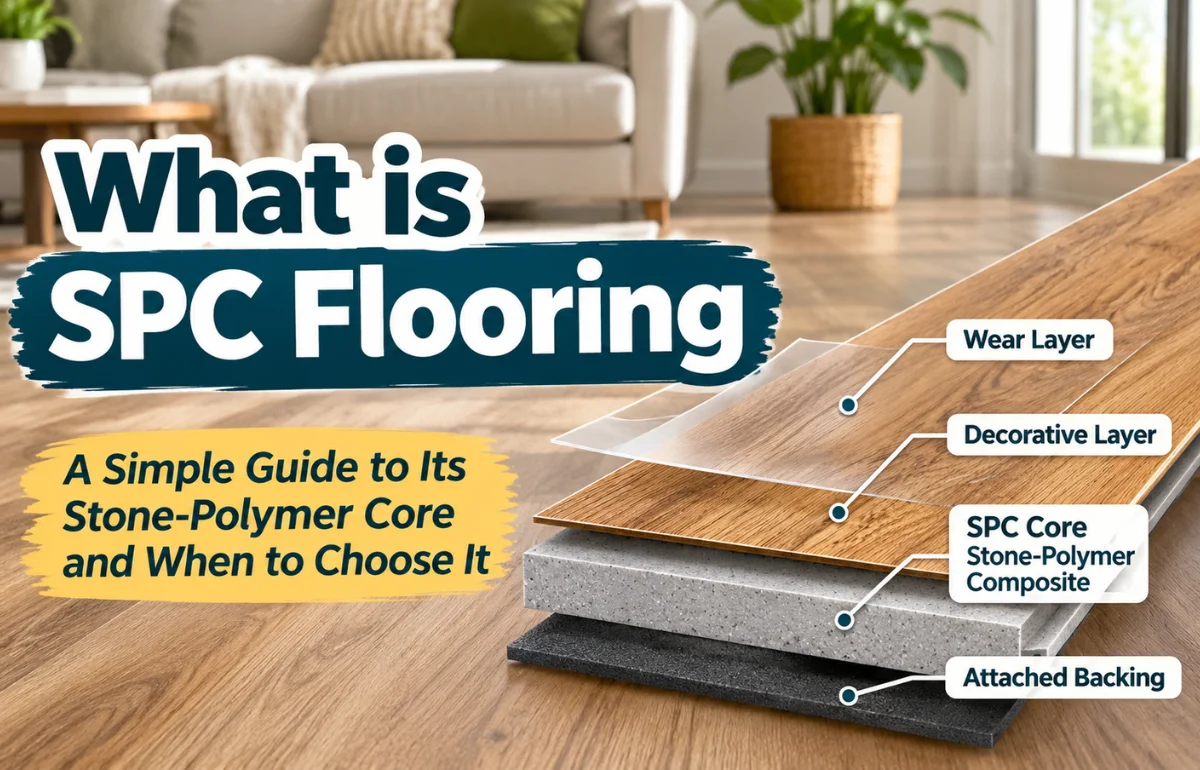
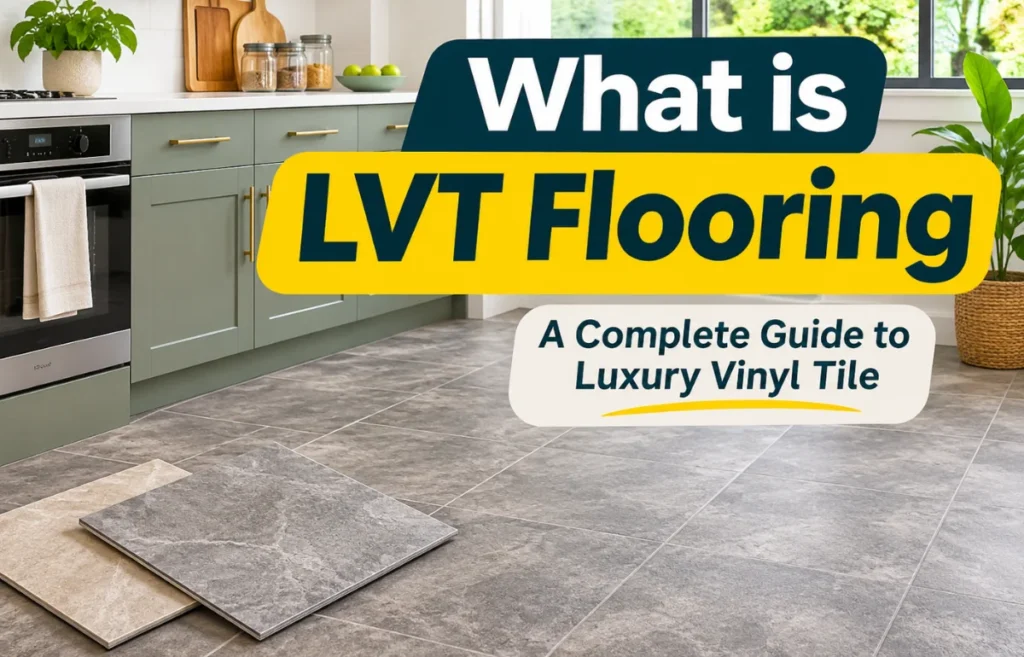
What is LVT flooring? LVT stands for luxury vinyl tile, a layered, manufactured floor covering designed to look like stone, ceramic, concrete, or other hard surfaces without using those materials. It comes as individual tiles rather than one continuous sheet. Most products combine a protective transparent wear layer, a printed design, a vinyl-based body or rigid core, and a backing.
For homeowners, the attraction is straightforward: LVT offers the appearance of expensive tile with a surface that generally feels warmer and softer underfoot. It also resists everyday spills and requires little routine maintenance. But the details matter. Tile construction, wear-layer thickness, subfloor condition, and installation method can make two similar-looking LVT floors perform very differently.
What Does LVT Mean in Flooring?
The full form of LVT is luxury vinyl tile. The word “luxury” refers to the product’s more detailed visual design and layered construction compared with basic vinyl tile, not a guarantee that every product is premium quality.
You’ll sometimes see retailers use LVT as an umbrella term for luxury vinyl flooring, including planks. Technically, that is common industry shorthand. In this article, I’m focusing on tile-format LVT: square or rectangular pieces intended mainly to recreate stone, porcelain, terrazzo, or concrete floors.
Its surface image supplies the appearance, while protective layers handle everyday wear. Some versions have bevelled edges or compatible grout-effect strips.
How Is Luxury Vinyl Tile Made?
LVT is not simply a picture stuck onto plastic. The layers work together, and their exact composition varies by brand and product line.
Protective Finish and Wear Layer
The uppermost finish helps resist stains and scuffs. Beneath or within that protective system is a transparent wear layer that shields the printed pattern. It is often measured in mils, with one mil equal to one-thousandth of an inch, not one millimetre.
A 20-mil wear layer is approximately 0.5 mm thick. That sounds small, but it is separate from the tile’s overall thickness. More wear-layer material can offer additional protection against wearing through; it does not make a floor impossible to scratch or dent.
Printed Decorative Layer
This film creates the marble veining, slate texture, terrazzo chips, or concrete shading you see. Higher-quality ranges use several variations of the image so identical-looking tiles are less obvious across a room.
Core and Backing
The body provides structure and stability. Traditional flexible LVT uses vinyl-based layers; some newer tile-shaped products use rigid cores, often sold as SPC or WPC constructions. Backings may be designed for adhesive bonding or may include an attached cushion, depending on the system.
LVT vs. LVP: What’s the Difference?
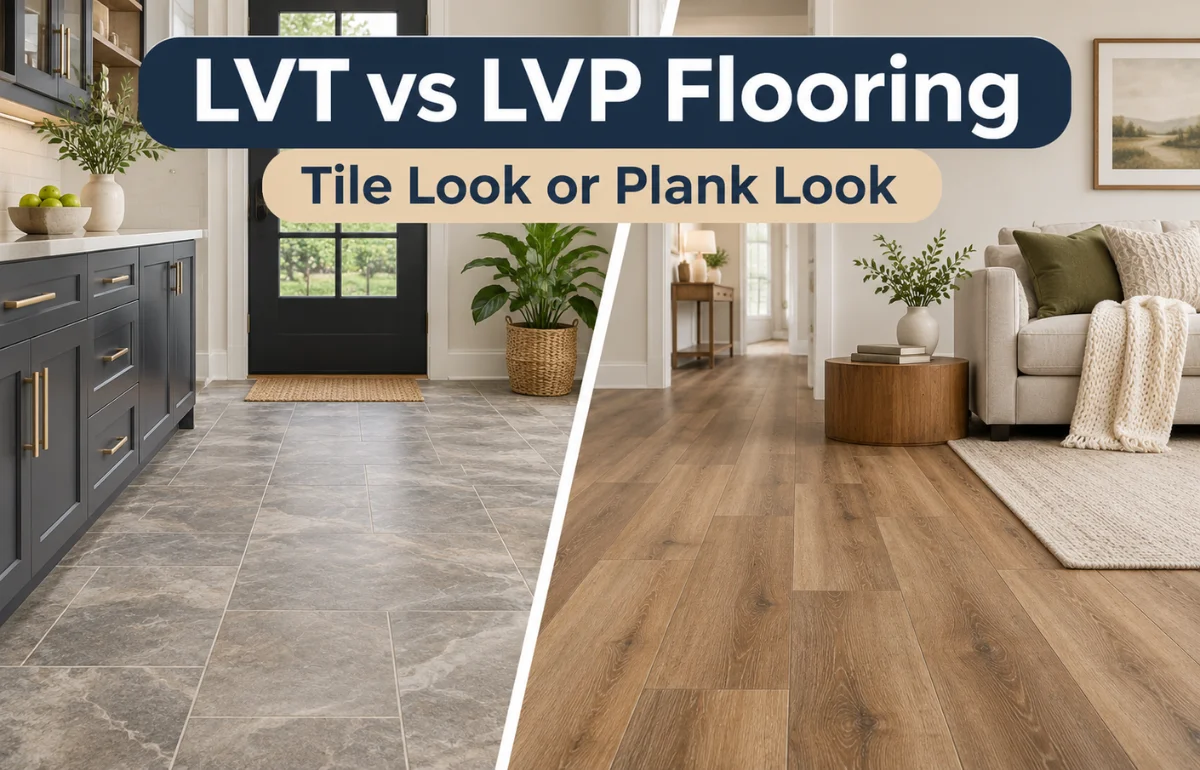
This is where shopping terminology gets confusing. LVT and luxury vinyl plank (LVP) can share similar materials, protective layers, and even installation systems. Their clearest practical difference is usually the shape and design they’re intended to imitate.
| Feature | Luxury vinyl tile (LVT) | Luxury vinyl plank (LVP) |
|---|---|---|
| Typical shape | Square or shorter rectangular tile | Long, narrow plank |
| Common appearance | Stone, porcelain, terrazzo, concrete | Hardwood and timber boards |
| Layout emphasis | Grid, offset tile, or patterned arrangements | Board-like staggered layouts |
| Grout-style detailing | Available on selected systems | Generally not part of the look |
| Best visual match | Kitchens, bathrooms, entries, stone-look rooms | Spaces seeking a wood-floor appearance |
Neither format is automatically more waterproof, durable, or expensive. Those characteristics depend on the individual product. A rigid-core tile and a flexible glue-down tile, for example, may behave differently even when both are labelled LVT.
What Does LVT Flooring Look and Feel Like?
A large-format limestone-look tile can make a small kitchen feel calm and continuous. A terrazzo print adds movement without the upkeep of a porous material.
Texture matters as much as colour. Some products have smooth, matte surfaces; others have embossed grain or subtle pitting that follows the design. If you want realistic stone, look at a sample from standing height and in natural light, not just under bright showroom lamps.
Tight joins create a contemporary look, while bevelled edges emphasise the tile pattern. Choose according to whether you want a visible grid.
Types of LVT Flooring
Glue-Down LVT Tiles
Also called dryback LVT, these tiles are bonded to a properly prepared subfloor with a specified adhesive. They are often thin and well suited to detailed layouts or areas with frequent traffic, provided the adhesive and substrate meet the manufacturer’s requirements.
The advantage is a stable, low-profile floor. The trade-off is more demanding surface preparation and less forgiving installation.
Click-Lock LVT Tiles
These pieces connect at their edges to form a floating floor. Many are rigid-core products. The method can be appealing for renovation work, but the floor needs room to move according to installation instructions, and not every product tolerates heavy fixed cabinetry or uneven substrates.
Loose-Lay and Groutable LVT
Some ranges use a specialised backing and installation system that allows easier tile replacement. Others are designed for compatible grout or decorative strips. Do not assume ordinary ceramic-tile grout will work: use only the materials specifically approved for that floor.
Main Benefits of LVT Flooring
A Convincing Tile Appearance for Less Disruption
LVT can reproduce marble, slate, and porcelain without the weight, cutting dust, and setting process associated with many traditional tile installations. It is useful when a renovation calls for a new finish but not a major rebuild.
Better Everyday Comfort
Compared with ceramic or stone, vinyl tile generally feels less cold and slightly more forgiving underfoot. It can also reduce the sharp impact sound of hard-soled footsteps, although acoustic performance depends on the floor assembly.
Water-Resistant Material and Simple Cleaning
Most modern luxury vinyl tiles are waterproof as individual products. Spilled water won’t normally soak into the tile body the way it can affect some wood-based floors. Sweeping and occasional damp mopping are usually enough for routine care.
Flexible Design and Localised Repairs
Tile format makes it possible to plan borders, alternating stone effects, or a deliberate grid. With some glue-down and loose-lay systems, a damaged tile may be replaced individually, although colour matching and removal can still take work.
Disadvantages of LVT Flooring You Should Know
LVT is durable, but it is not indestructible. Sharp grit under shoes, dragging furniture, and concentrated pressure from narrow legs can scratch or indent the surface. A thicker wear layer helps with wear-through resistance, not every kind of impact damage.
Direct sunlight and heat are another concern. Some products expand, shrink, discolour, or develop gaps when exposed to temperatures outside their approved range. Large sun-facing windows, conservatories, and underfloor heating deserve a close reading of the manufacturer’s instructions.
The biggest misunderstanding involves water. The tile itself may be waterproof, but joints and perimeter gaps are not automatically watertight. Water can reach the subfloor through those openings. As Tarkett explains, a waterproof LVT product does not make the whole installation waterproof.
LVT also cannot be sanded and refinished like some timber floors. Once its surface is badly damaged, repair normally means replacing affected pieces. And because most LVT is vinyl-based, buyers concerned about plastic content or end-of-life disposal should ask for product-specific environmental information rather than assuming every option is equally sustainable.
LVT vs. Ceramic Tile, Laminate, and Sheet Vinyl
| Flooring type | Main strength | Main limitation | Most useful when |
|---|---|---|---|
| LVT | Stone-like appearance with warmer, softer feel | Can indent; seams need attention | You want a practical tile look |
| Ceramic or porcelain | Very hard surface and excellent heat tolerance | Cold, rigid feel; more involved installation | You prioritise long-term hard-surface performance |
| Laminate | Strong wood-look choices and rigid feel | Many products are less tolerant of standing water | You want a wood appearance in a drier room |
| Sheet vinyl | Few seams and often a lower material cost | Individual damaged areas may be awkward to repair | You need an economical continuous surface |
I would choose between LVT and porcelain based on the room’s demands. For a family kitchen where comfort and quick cleaning matter, LVT is attractive. For a shower floor or a space exposed to persistent standing water, a properly specified waterproof tile assembly is a more appropriate starting point.
Where Does LVT Flooring Work Best?
Kitchens are a natural fit because LVT tolerates routine splashes and is easier on your feet during cooking. Bathrooms and laundry rooms can also work, provided the exact product is approved for the location and water is prevented from reaching the substrate.
In hallways and entryways, choose a finish that conceals minor scuffs and has suitable traction.
I would be more cautious in wet rooms, unheated outdoor spaces, and areas regularly exposed to pooled water. A standard LVT installation is not a substitute for a waterproofing system. If you are considering stairs or radiant heating, check the approved nosing, temperature limit, and installation details first.
How Thick Should LVT Flooring Be?
When comparing samples, separate two measurements: total thickness and wear-layer thickness. The first affects floor build-up, transitions, and sometimes comfort or stability. The second indicates the thickness of the transparent layer protecting the print.
For many homes, a 12-mil wear layer is worth considering; a 20-mil option provides a greater wear margin for busy areas. These are shopping reference points, not universal performance guarantees. Surface coating, construction, warranty terms, and intended use matter too.
Don’t select the thickest tile automatically. A low-profile glue-down floor may suit a doorway better than a thicker floating system. Check whether an attached pad is included, and never add an extra underlay unless the manufacturer approves it.
How Is LVT Flooring Installed?
The actual fitting method varies, but the quality of the subfloor is critical. Small ridges and old adhesive marks can show through flexible LVT, a problem installers call telegraphing. A floating tile may hide minor texture, yet excessive unevenness can stress its locking joints.
Before fitting, the installer should check that the base is sound, clean, flat, and dry enough for the chosen system. Concrete can require moisture and alkalinity testing. Wood floors may need boards secured or a suitable smoothing layer. Existing floor coverings should only remain if the LVT manufacturer permits the installation.
The layout deserves attention before any tile is fixed. I recommend checking the centreline, doorway sightlines, and the width of the final cuts. A narrow strip along one prominent wall can make an otherwise expensive-looking floor feel poorly planned.
Mixing tiles from several boxes, rotating compatible stone patterns, and examining the print repeats can also prevent obvious clusters of identical veining. Follow the approved directions for acclimation, adhesive, rolling, expansion spaces, and the time before normal traffic or washing resumes.
If an older floor or adhesive may contain asbestos, do not sand or disturb it until a qualified professional has assessed it.
How to Clean and Maintain LVT Tiles
Start with the simplest habit: remove grit before it acts like sandpaper. A soft broom, microfiber dust mop, or vacuum suitable for hard floors handles most daily debris.
For deeper cleaning, use a lightly damp mop with a manufacturer-approved, pH-neutral cleaner. Avoid abrasive powders, harsh solvents, excess water, and steam mops unless your product instructions expressly allow them. Armstrong Flooring’s care guidance also warns that some rubber- or latex-backed mats can stain vinyl.
I would add felt protectors under chairs, use suitable mats at entrances, and lift rather than drag heavy furniture. These small precautions do more for appearance than frequent aggressive cleaning.
How Much Does LVT Flooring Cost, and How Long Does It Last?
In the United States, a broad 2026 material-price reference for luxury vinyl tile is about $1.50–$12 per square foot, depending on construction, design, and brand. Installation is additional and varies with local labour rates, removal of the old floor, subfloor repairs, and layout complexity. These figures are a budgeting guide, not a quote; markets outside the US will differ. Angi’s 2026 cost data provides a useful comparison point.
A well-chosen and properly installed floor may last around 10–25 years, but service life varies considerably with traffic, maintenance, exposure, and product quality. A lifetime warranty should not be read as a promise that the appearance will remain unchanged forever. Read what it actually covers, including exclusions for moisture problems, scratches, installation errors, and commercial use.
What I Would Check Before Buying LVT
First, take a full-sized sample home. Put it beside your cabinets and walls, then inspect it in morning and evening light. A convincing grey slate in a showroom may look unexpectedly blue under your own lighting.
Next, compare the technical sheets, not just the labels. I would check the wear layer, core type, approved rooms, slip-resistance information, adhesive or click-system requirements, and product-specific warranty. For indoor air quality, look for independent low-emission certification such as FloorScore. That verifies compliance with defined VOC-emission criteria; it does not mean the material is entirely chemical-free or tested for every possible substance. You can verify the programme through SCS Global Services.
Finally, ask for a written installed quotation that separates tiles, preparation, adhesive or underlay, trims, and labour. Keep a few extra matching tiles for future repairs. This is especially useful with patterned LVT because the same design or dye lot may not remain available indefinitely.
Frequently Asked Questions About LVT Flooring
Is LVT flooring completely waterproof?
Most LVT tiles themselves are waterproof, but joints and edges can allow water underneath. The whole floor is not automatically a waterproof system.
Is LVT flooring better than ceramic tile?
LVT is usually warmer and softer underfoot; ceramic is harder and generally more heat-resistant. The better choice depends on the room.
Can LVT flooring be installed over existing tiles?
Sometimes, if the existing tiles are stable and the surface is properly prepared. Follow the specific LVT manufacturer’s instructions.
Does LVT flooring scratch easily?
It resists everyday scuffs, but sharp grit, furniture movement, and pet claws can cause marks. Surface finish and care make a difference.
How long does luxury vinyl tile last?
Many installations provide around 10–25 years of service, depending on quality, traffic, maintenance, and installation conditions.
Final Thoughts
LVT makes the most sense when you want the visual rhythm of stone or ceramic tiles without their weight, temperature, or installation demands. It is a versatile surface, not a miracle material, and the best results come from choosing the right construction for the room.
Before ordering, compare two or three tile samples at home and ask your supplier to confirm subfloor preparation, moisture suitability, and warranty details in writing. That small amount of checking can prevent an expensive mismatch later.