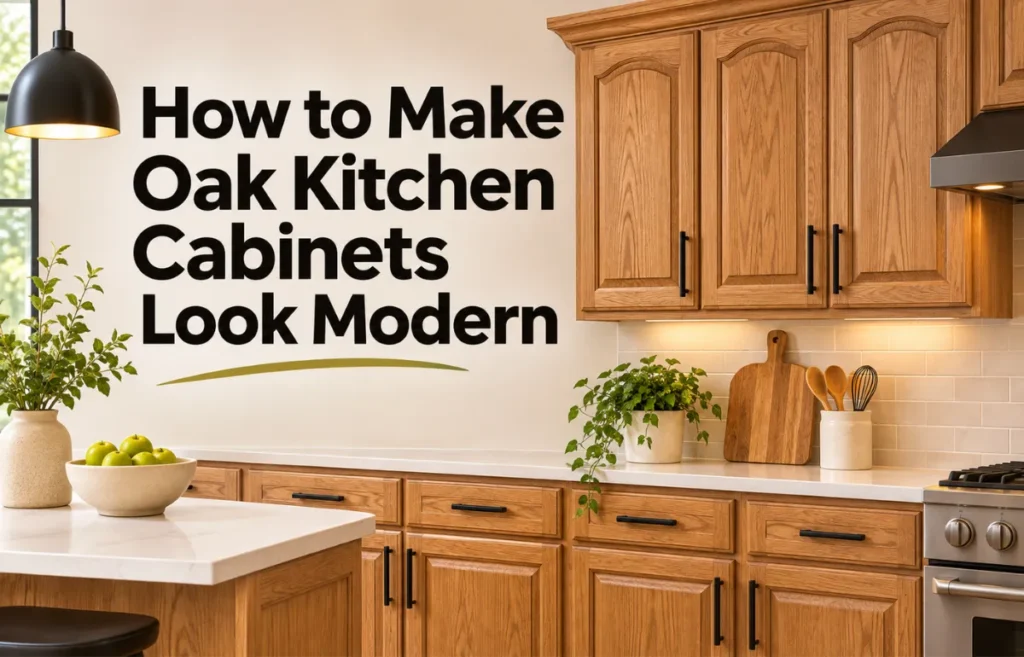
If you’re wondering how to make oak kitchen cabinets look modern, start by updating the hardware, reducing orange or yellow undertones, introducing neutral colors, and improving kitchen lighting. Replacing outdated countertops, simplifying decorative details, and choosing a low-sheen finish can also give traditional oak cabinets a contemporary appearance without a complete kitchen remodel.
Even raised-panel oak cabinets can look modern when paired with the right materials, colors, and accessories. The secret is creating visual balance rather than trying to hide every natural characteristic of the wood.
I recommend evaluating your existing cabinet doors, wood grain, finish, and surrounding décor before spending money on major upgrades. Sometimes, a few carefully chosen changes can make more difference than repainting the entire kitchen.
Why Do Oak Kitchen Cabinets Look Outdated?
Oak itself isn’t outdated. The problem is often how it was finished and incorporated into older kitchen designs.
Many kitchens built during the 1980s, 1990s, and early 2000s combined honey oak cabinets with glossy finishes, decorative brass knobs, patterned countertops, and ornate wooden trim.
Raised-panel cabinet doors added another layer of visual detail.
Individually, these features aren’t necessarily unattractive. When combined, however, they can make a kitchen feel excessively warm, crowded, and traditional.
The most common features that date oak cabinets include:
- Orange, yellow, or golden wood stains.
- Excessively glossy protective finishes.
- Decorative handles and exposed hinges.
- Cathedral-style raised-panel cabinet doors.
- Ornate crown molding and wooden valances.
- Busy backsplashes and heavily patterned countertops.
I prefer to identify which elements are making the kitchen look dated before deciding whether the cabinets themselves need refinishing.
Can Raised-Panel Oak Cabinets Look Modern?
Absolutely. Raised-panel oak cabinets can work beautifully in contemporary, transitional, modern farmhouse, and organic modern kitchens.
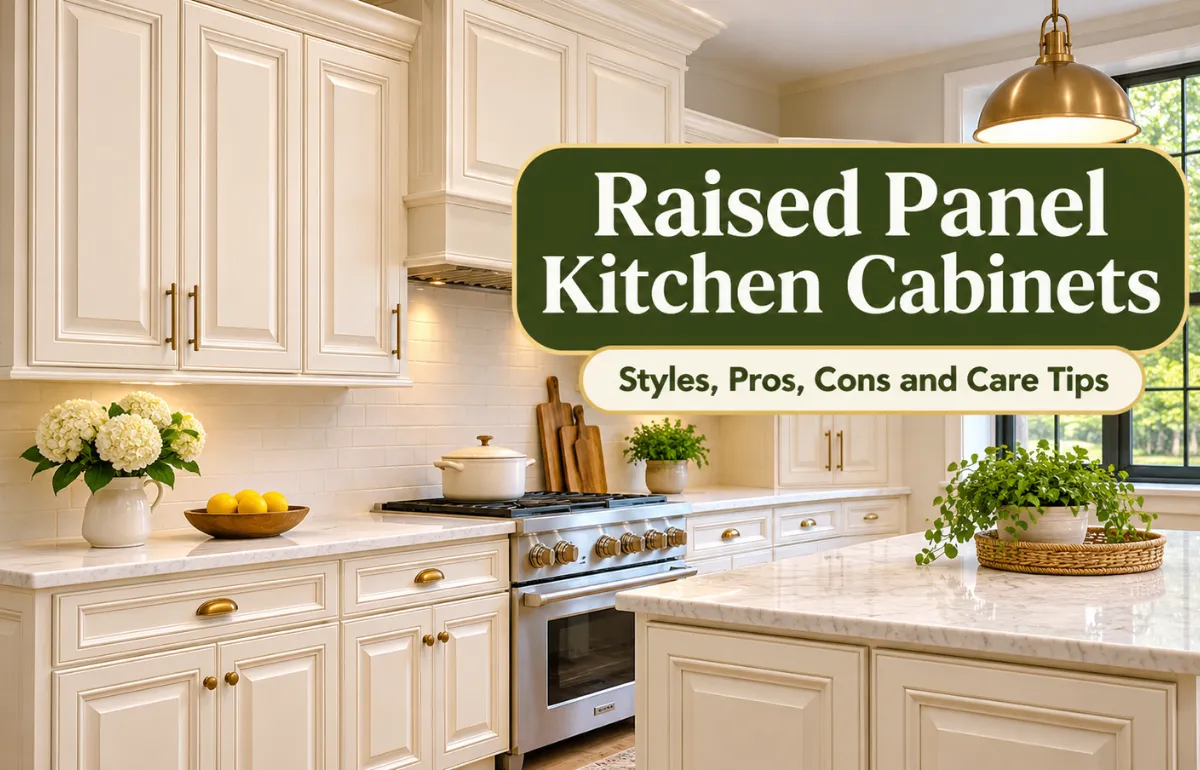
Unlike flat-panel cabinet doors, raised-panel doors feature an elevated center section surrounded by a decorative frame. This construction creates depth, texture, and natural shadows.
The challenge is preventing those details from overwhelming the room.
I would pair raised-panel cabinetry with simple hardware, understated surfaces, and a restrained color palette. This allows the door profile to become an intentional architectural feature rather than an outdated design element.
Which Raised-Panel Cabinet Styles Are Easiest to Modernize?
Not every raised-panel door requires the same approach. The shape and depth of its detailing influence how contemporary it can look.
| Cabinet door style | Suitability for modern kitchens | Recommended update |
|---|---|---|
| Square raised-panel | Excellent for transitional designs | Minimal hardware and neutral finishes |
| Arched raised-panel | Good for modern farmhouse kitchens | Muted stain and simple backsplash |
| Cathedral raised-panel | More suited to traditional-modern interiors | Paint or simplify surrounding décor |
| Flat-panel oak | Excellent for minimalist kitchens | Natural finish and streamlined handles |
| Shaker-style oak | Highly versatile | Satin finish and contemporary hardware |
Square raised-panel doors are particularly adaptable because their straight lines complement modern architectural elements.
Highly decorative cathedral doors may retain a traditional character even after refinishing, which isn’t necessarily a disadvantage if you enjoy a softer, more inviting kitchen.
10 Ways to Make Oak Kitchen Cabinets Look Modern
1. Replace Outdated Cabinet Hardware
New hardware is one of the simplest ways to modernize oak kitchen cabinets without painting them.
Decorative brass handles, ceramic knobs, and ornate pulls can exaggerate the traditional appearance of raised-panel doors.
I recommend considering these hardware finishes:
- Matte black for a clean, defined contrast.
- Brushed nickel for a soft contemporary appearance.
- Satin brass for understated warmth.
- Brushed bronze for a sophisticated, natural finish.
- Stainless steel for a streamlined industrial look.
Simple bar pulls work particularly well with square raised-panel cabinetry.
Before purchasing new hardware, measure the distance between existing screw holes. Choosing compatible replacement handles can save you from drilling additional holes and repairing visible marks.
Also, check the width of the door’s outer frame. Oversized hardware may look awkward when installed on a narrow frame or curved decorative profile.
2. Tone Down Orange and Yellow Undertones
Honey oak often develops a strong golden or orange appearance because of its original stain, clear coating, and exposure to light over time.
I suggest determining whether the unwanted color comes primarily from the wood, the stain, or an aging protective finish.
If the cabinets are structurally sound, a professionally applied toner, compatible stain, or complete refinishing treatment may create a more subdued appearance.
Muted brown, mushroom, light beige, and neutral oak finishes generally work well in contemporary kitchens.
However, applying a lighter stain over an existing dark or orange finish rarely produces genuinely lighter wood. Achieving that result usually requires removing the old coating and, where possible, the existing stain.
Always test your preferred finish on an inconspicuous area before treating every cabinet.
3. Choose a Matte or Satin Cabinet Finish
Shiny oak cabinets can make an entire kitchen feel dated, particularly when sunlight or overhead lighting reflects across raised panels.
A matte or satin finish creates a softer appearance while allowing the natural wood grain to remain visible.
I generally favor satin finishes for frequently used kitchens because they offer an attractive balance between understated appearance and practical maintenance.
A quality washable matte cabinet finish can also work well, although durability depends on the specific coating rather than its sheen alone.
Avoid simply applying a matte topcoat over an unknown glossy finish. The existing coating must be properly prepared, and the new product must be compatible to prevent peeling or poor adhesion.
4. Update the Countertops and Backsplash
The surfaces surrounding oak cabinets can either emphasize their age or make them look considerably more modern.
Busy granite patterns, small decorative tiles, and strongly colored grout often compete with oak’s pronounced grain and raised-panel detailing.
I would introduce quieter materials, such as:
- Warm white quartz countertops.
- Cream or beige stone-look surfaces.
- Subtle marble-inspired quartz.
- Simple off-white subway tiles.
- Large-format porcelain backsplashes.
For heavily detailed cabinet doors, a backsplash with fewer visible grout lines can help reduce visual clutter.
Avoid choosing countertops based solely on photographs. Bring physical samples home and compare them with your cabinetry under natural daylight and evening lighting.
A warm white that looks beautiful in a showroom may appear unexpectedly yellow beside honey oak.
5. Use Modern Paint Colors Around the Cabinets
You don’t have to paint oak cabinets to transform their appearance. Changing the surrounding wall color can significantly influence how the wood is perceived.
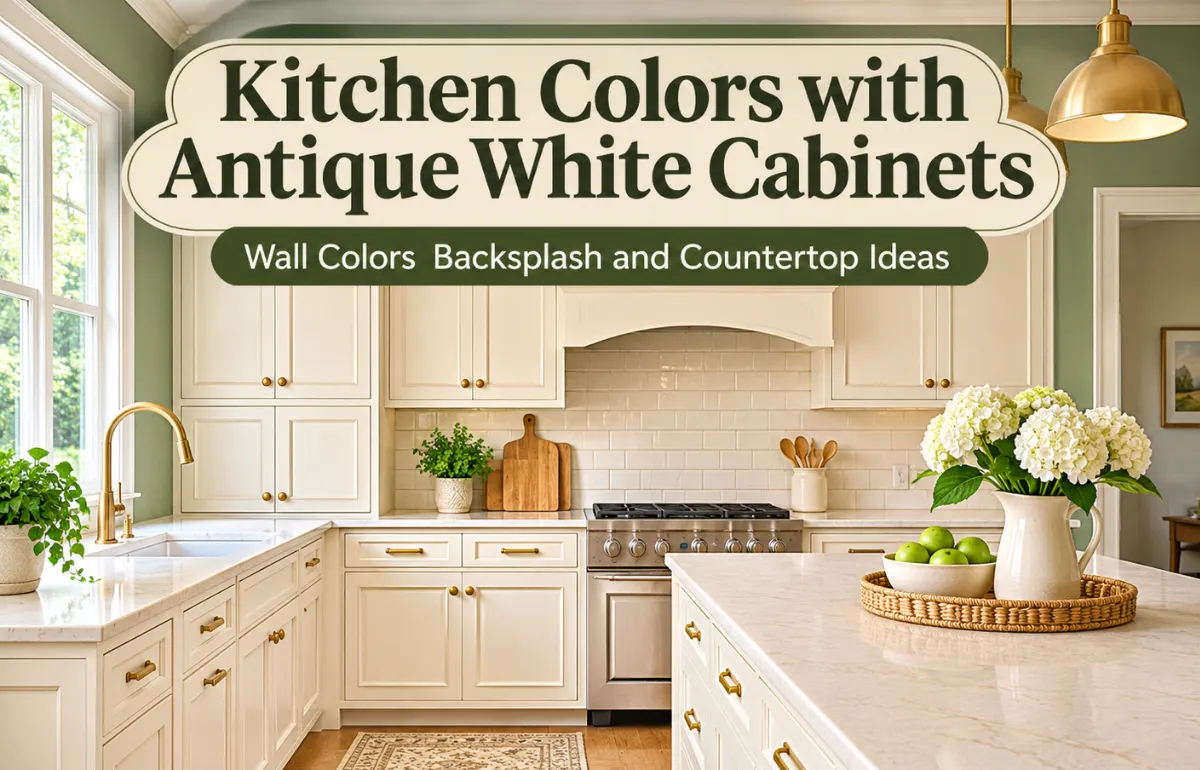
Some of my preferred wall colors for oak cabinetry include warm white, creamy off-white, muted sage green, soft greige, mushroom, and earthy beige.
These shades can create a balanced backdrop without competing with the cabinet grain.
Color contrast deserves special attention. Blue and cool gray shades may make orange oak appear more saturated because of their contrasting undertones.
If your goal is to soften the wood’s warmth, test muted neutrals with gentle beige or green undertones.
I recommend painting sample boards instead of testing tiny patches directly on the wall. Move the boards around the kitchen to see how the colors behave beside different cabinet doors.
6. Improve Kitchen Lighting
Lighting can dramatically influence the appearance of natural oak.
Old fluorescent fixtures, excessively yellow bulbs, and poorly positioned spotlights may exaggerate the color and texture of raised-panel cabinetry.
Modern LED lighting can create a brighter, more balanced environment.
I recommend starting with under-cabinet lighting, simple pendant fixtures, and bulbs with a consistent color temperature.
Lighting around 3000K is a useful starting point for warm, inviting oak kitchens, while a slightly more neutral temperature may suit brighter contemporary spaces.
Choose bulbs with a high color rendering index, preferably CRI 90 or above, for more accurate color representation.
Position under-cabinet lights to illuminate the countertop rather than directing harsh beams across the cabinet doors.
7. Simplify Decorative Cabinet Details
If your kitchen contains ornate wooden valances, decorative corbels, elaborate crown molding, or carved trim, removing unnecessary embellishments can make a noticeable difference.
Raised-panel doors already provide plenty of architectural interest. They rarely need additional decorative elements to stand out.
I would retain simple crown molding where it provides a neat transition to the ceiling and remove purely decorative pieces where practical.
Check how trim is attached before removing it. Some pieces conceal unfinished surfaces, wiring, mounting points, or gaps.
Another worthwhile improvement is adjusting loose hinges and uneven doors. Consistent spacing between cabinet fronts creates a more organized, professionally finished appearance without changing the cabinet design.
8. Introduce a Two-Tone Kitchen Cabinet Design
If a kitchen contains too much visible oak, a two-tone cabinet design can reduce its visual weight without eliminating the wood entirely.
One approach is retaining natural oak lower cabinets while painting the upper cabinets warm white.
Alternatively, a muted green, charcoal, or deep taupe kitchen island can create contrast while preserving the original perimeter cabinets.
This works especially well in kitchens with extensive raised-panel cabinetry.
I prefer keeping wood finishes concentrated in clearly defined areas rather than alternating painted and unpainted doors randomly.
A consistent division makes the design feel deliberate and gives each finish enough space to establish its own character.
9. Paint Oak Cabinets for a Complete Color Transformation
Painting is worth considering when the existing wood color no longer suits your interior design preferences.
Oak has relatively open pores, meaning its distinctive grain can remain visible beneath paint.
If you want a smoother appearance, use a compatible wood grain filler as part of the preparation process. For a textured, painted-wood finish, grain filling may be unnecessary.
Proper painting involves removing hardware, cleaning away grease, preparing the existing coating, applying a suitable primer, and finishing with durable cabinet-grade paint.
Oak also contains tannins that may bleed through certain coatings. Choose a primer specifically suitable for blocking these stains.
I recommend following the coating manufacturer’s drying and curing instructions rather than rushing the doors back into everyday use.
For older painted cabinetry, investigate potential lead-paint hazards before sanding or stripping.
10. Reface Cabinet Doors Instead of Replacing Everything
Cabinet refacing is an excellent alternative when the existing cabinet boxes are in good condition but the raised-panel door style no longer appeals to you.
Refacing typically involves replacing doors and drawer fronts while updating exposed cabinet surfaces to match.
You can choose contemporary Shaker doors, slab-style fronts, or modern white oak cabinet doors without completely rebuilding the kitchen.
However, I wouldn’t recommend sanding or routing an existing raised panel flat as a casual DIY project. Doing so can damage the panel, expose unfinished materials, or compromise the door’s construction.
Purpose-built replacement doors are usually a more dependable solution when changing the actual cabinet profile.
How to Make Oak Kitchen Cabinets Look Modern Without Painting
If preserving natural wood is your priority, I recommend focusing on the kitchen as a complete composition rather than treating the cabinets as an isolated feature.
Start with contemporary hardware, neutral wall colors, improved lighting, and less decorative countertop accessories.
A muted backsplash and streamlined window treatments can help the natural oak become the room’s main feature.
If the original finish is worn or excessively orange, consider restaining the cabinets instead of covering them with paint.
Painting vs. Restaining vs. Refacing Oak Cabinets
Each renovation method offers different benefits depending on your budget, preferred appearance, and cabinet condition.
| Update method | Relative cost | Preserves visible wood grain | Best suited for |
|---|---|---|---|
| Hardware replacement | Low | Yes | Quick cosmetic updates |
| Restaining | Moderate | Yes | Reducing unwanted wood tones |
| Painting | Moderate | Optional visible texture | Complete color changes |
| Cabinet refacing | Moderate to high | Depends on door material | Changing outdated door profiles |
| Full replacement | High | Depends on cabinet selection | Damaged cabinets or poor layouts |
I would reserve full cabinet replacement for kitchens with extensive structural damage, inadequate storage, or layouts that no longer meet the household’s needs.
Actual renovation costs depend on cabinet quantity, materials, labor, and preparation requirements.
A Simple Three-Zone Test Before Modernizing Oak Cabinets
Before committing to an expensive makeover, I recommend evaluating three separate parts of your kitchen.
The first is the cabinet surface itself. Look at the wood color, sheen, grain, and condition.
The second is the immediate surroundings, including the countertop, backsplash, hardware, and flooring.
The third is the wider visual environment, particularly lighting, wall colors, furniture, and decorative accessories.
Try temporarily changing one element in each zone.
For example, place a new hardware sample against a door, position a neutral countertop sample nearby, and switch on a better-quality light bulb.
If the oak suddenly looks more attractive, the surrounding design may have been the bigger problem.
This small experiment can help prevent unnecessary refinishing and reduce renovation expenses.
Are Raised-Panel Oak Cabinets Suitable for Everyday Kitchens?
Raised-panel oak cabinets remain a practical choice for households that appreciate durable wood cabinetry and traditional craftsmanship.
Their layered construction provides decorative depth, while natural grain can help disguise minor surface marks.
However, the recessed edges surrounding the raised panel can collect dust, cooking grease, and food residue more easily than flat-panel doors.
Solid wood center panels may also expand and contract as humidity changes. On painted doors, this movement can produce small visible lines near panel joints.
I recommend avoiding rigid filler or caulk around floating center panels because these components are designed to accommodate natural wood movement.
For minimalist kitchens where effortless cleaning is a priority, flat-panel doors may be more suitable. For homeowners who value warmth and architectural character, raised-panel oak remains an attractive option.
How to Maintain Modern Oak Kitchen Cabinets
Updating oak cabinetry is only part of the process. Proper maintenance helps preserve its appearance and reduces premature finish deterioration.
Clean Cabinet Grooves Regularly
Use a soft microfiber cloth slightly dampened with water or a mild, finish-compatible cleaning solution.
A soft-bristled brush can help remove dust from decorative grooves and raised-panel corners.
Avoid abrasive sponges, steam cleaners, and aggressive chemical products unless specifically approved by the cabinet manufacturer.
Dry the surfaces immediately after cleaning.
Protect Cabinets From Heat and Moisture
Pay particular attention to cabinets surrounding sinks, dishwashers, ovens, and kettles.
Repeated exposure to moisture and concentrated heat can damage protective coatings, discolor wood, and contribute to swelling or peeling.
Use an exhaust fan while cooking, address plumbing leaks promptly, and avoid positioning steam-producing appliances directly underneath wooden cabinets.
Maintain Stable Indoor Humidity
Natural wood responds to changes in environmental moisture.
Excessively dry conditions may cause shrinkage, while prolonged high humidity can contribute to swelling and movement.
Maintain reasonably consistent indoor humidity and follow any specific recommendations provided by your cabinet manufacturer.
Repair Small Finish Problems Early
Check periodically for loose hardware, chipped paint, worn edges, and areas where the protective finish has deteriorated.
Raised-panel doors often experience wear around handles and projecting corners.
Addressing small problems before they become widespread can help extend the useful life of your cabinetry.
Common Mistakes to Avoid When Modernizing Oak Cabinets
One mistake I would avoid is purchasing new countertops or flooring before deciding which cabinet finish to retain.
These larger surfaces are expensive to change and may introduce undertones that clash with the oak.
Other common mistakes include painting over greasy surfaces, using oversized handles on narrow door frames, combining too many competing wood tones, and filling natural movement joints.
I would also avoid copying a modern white oak kitchen exactly when working with older red oak cabinetry. Different species, grain patterns, and cutting methods produce different visual results.
The goal should be improving the cabinets you already own rather than forcing them to imitate an entirely different material.
Conclusion
Learning how to make oak kitchen cabinets look modern begins with understanding what makes the existing design feel dated.
Updated hardware, balanced colors, understated finishes, and improved lighting can transform even traditional raised-panel oak cabinets into an attractive contemporary feature.
I recommend starting with affordable, reversible changes before considering painting, restaining, or refacing.
Take a few photographs of your kitchen, collect finish and hardware samples, and evaluate them together. You may discover that your existing oak cabinets have much more design potential than you originally imagined.
Frequently Asked Questions
How can I modernize oak cabinets without painting them?
Replace outdated hardware, introduce neutral countertops and wall colors, improve lighting, and simplify decorative trim while preserving the natural wood finish.
Are oak kitchen cabinets outdated in 2026?
No. Natural oak remains suitable for contemporary kitchens, particularly when paired with understated finishes, modern hardware, and balanced color schemes.
What color hardware looks best on honey oak cabinets?
Matte black, brushed nickel, satin brass, and brushed bronze are attractive choices that complement honey oak cabinetry.
Can raised-panel cabinet doors look contemporary?
Yes. Simple hardware, subdued finishes, neutral surroundings, and minimal decorative accessories can give raised-panel doors a contemporary appearance.
Is it cheaper to paint or reface oak kitchen cabinets?
Painting is generally less expensive than refacing, although extensive grain filling, surface repairs, and professional finishing can increase the overall cost.