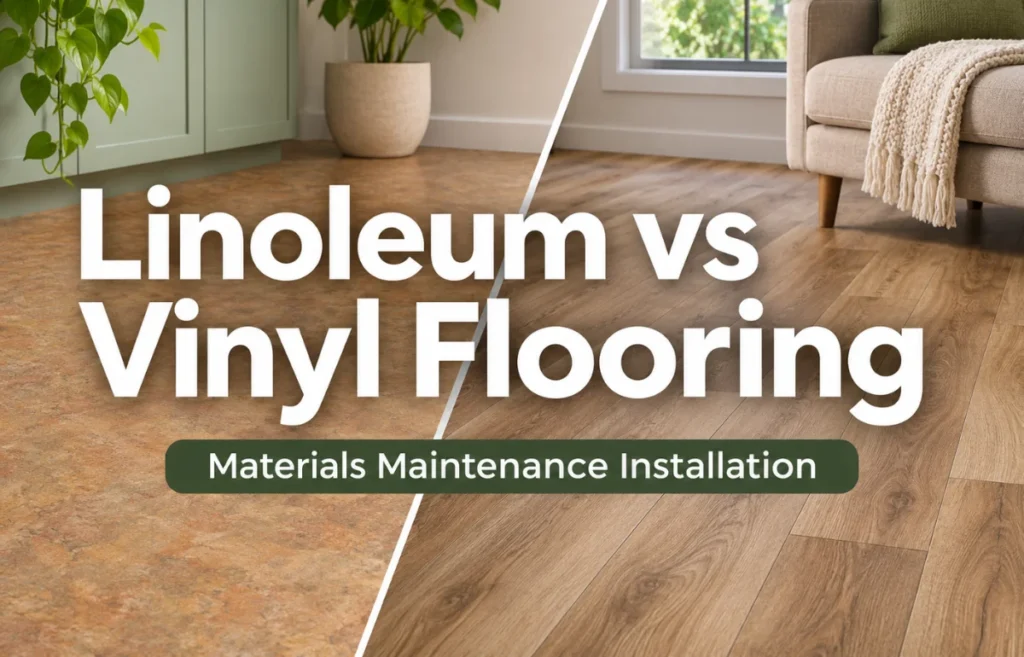
Linoleum vs Vinyl flooring is a comparison between two resilient flooring materials that look similar but differ in composition, water resistance, maintenance, and installation. Linoleum is made primarily from natural ingredients, including linseed oil, wood flour, limestone, and jute. Vinyl flooring is manufactured from synthetic polyvinyl chloride (PVC) and is available in sheets, tiles, and planks.
Both materials provide a practical alternative to hardwood, ceramic tile, and other hard flooring surfaces. However, vinyl generally handles moisture better and offers more design choices, while linoleum appeals to homeowners who prefer natural materials and long-term durability.
When comparing these floors, I focus on more than their appearance or purchase price. Understanding how they’re constructed, cleaned, installed, and repaired makes it easier to choose flooring that suits your home and lifestyle.
Linoleum vs Vinyl Flooring: Quick Comparison
Before examining the details, here’s how these flooring options compare.
| Feature | Linoleum Flooring | Vinyl Flooring |
|---|---|---|
| Main materials | Linseed oil, wood flour, limestone, natural resins, and jute | PVC and other manufactured components |
| Water resistance | Water-resistant, but sensitive to prolonged moisture | Highly water-resistant; many products are waterproof |
| Appearance | Natural colors and distinctive patterns | Realistic wood, stone, tile, and decorative designs |
| Installation | Often requires professional fitting | Many DIY-friendly options |
| Maintenance | Gentle cleaning with suitable products | Generally simple routine cleaning |
| Durability | Can last for decades with proper care | Varies considerably by product quality |
| Environmental impact | Primarily natural, renewable ingredients | Primarily synthetic materials |
| Typical cost | Often higher initial investment | Available across more budget levels |
| Best suited for | Dry living areas, kitchens, and sustainability-focused homes | Kitchens, bathrooms, laundry rooms, and busy households |
What Is Linoleum Flooring Made Of?
Linoleum has existed for more than 150 years, yet many homeowners still mistake it for vinyl. Its composition is what makes it different.
Traditional linoleum contains linseed oil extracted from flaxseed, wood flour, natural resins, limestone, and pigments. Manufacturers blend these ingredients and press them onto a backing, commonly made from jute.
The result is a flexible, resilient flooring material with color distributed throughout much of its thickness rather than printed on a decorative surface.
According to Forbo Flooring Systems, these natural ingredients form the foundation of its Marmoleum linoleum products.
What Makes Linoleum Different?
One advantage I appreciate about linoleum is how its material construction affects visible wear.
With many traditional linoleum products, minor surface scratches are less noticeable because the color extends through the material. This differs from decorative vinyl, where the printed pattern sits beneath a protective wear layer.
Linoleum is commonly available in sheets and tiles. Some manufacturers also offer click-together flooring with a linoleum surface attached to a supporting core.
However, linoleum isn’t completely immune to damage. Sharp objects, excessive moisture, and unsuitable cleaning chemicals can still affect its appearance and performance.
What Is Vinyl Flooring Made Of?
Vinyl flooring is manufactured primarily from PVC, a synthetic plastic material.
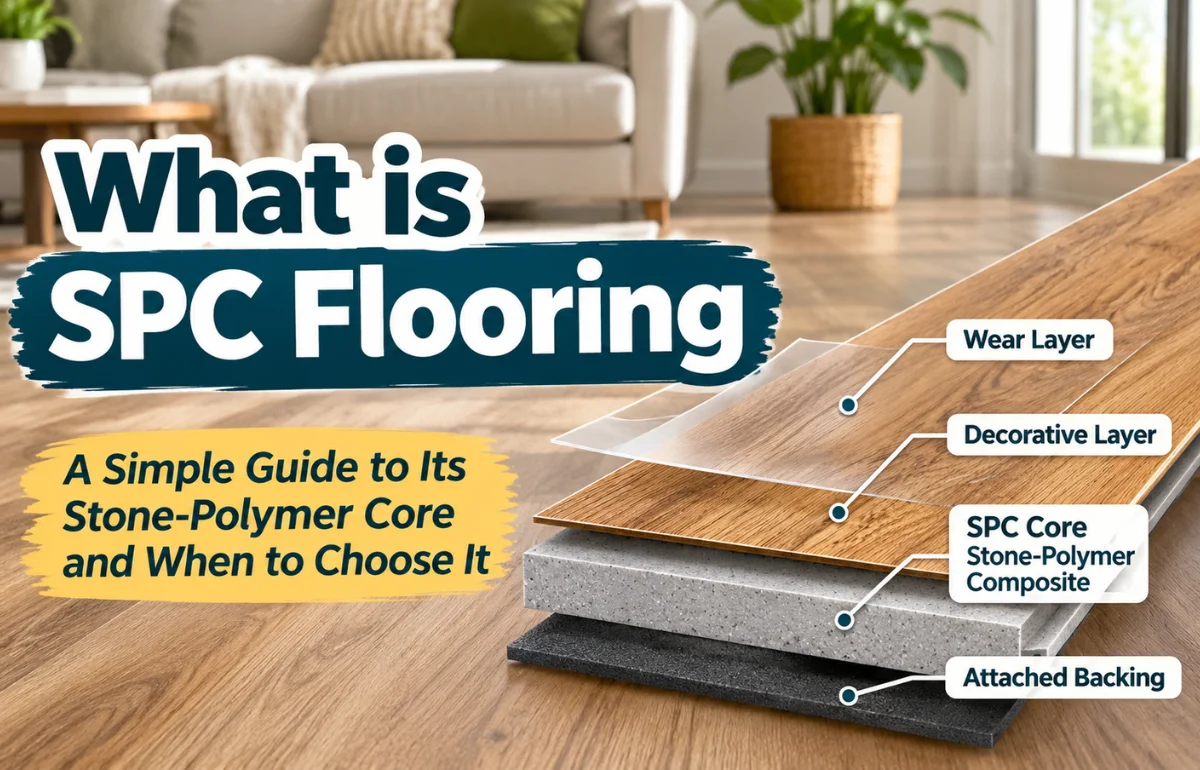
Unlike traditional linoleum, most residential vinyl flooring uses multiple layers. These may include a backing, core, printed decorative layer, and transparent protective wear layer.
The exact construction depends on the product.
Common types include:
- Sheet vinyl: Supplied in rolls, making it useful for rooms where fewer seams are desirable.
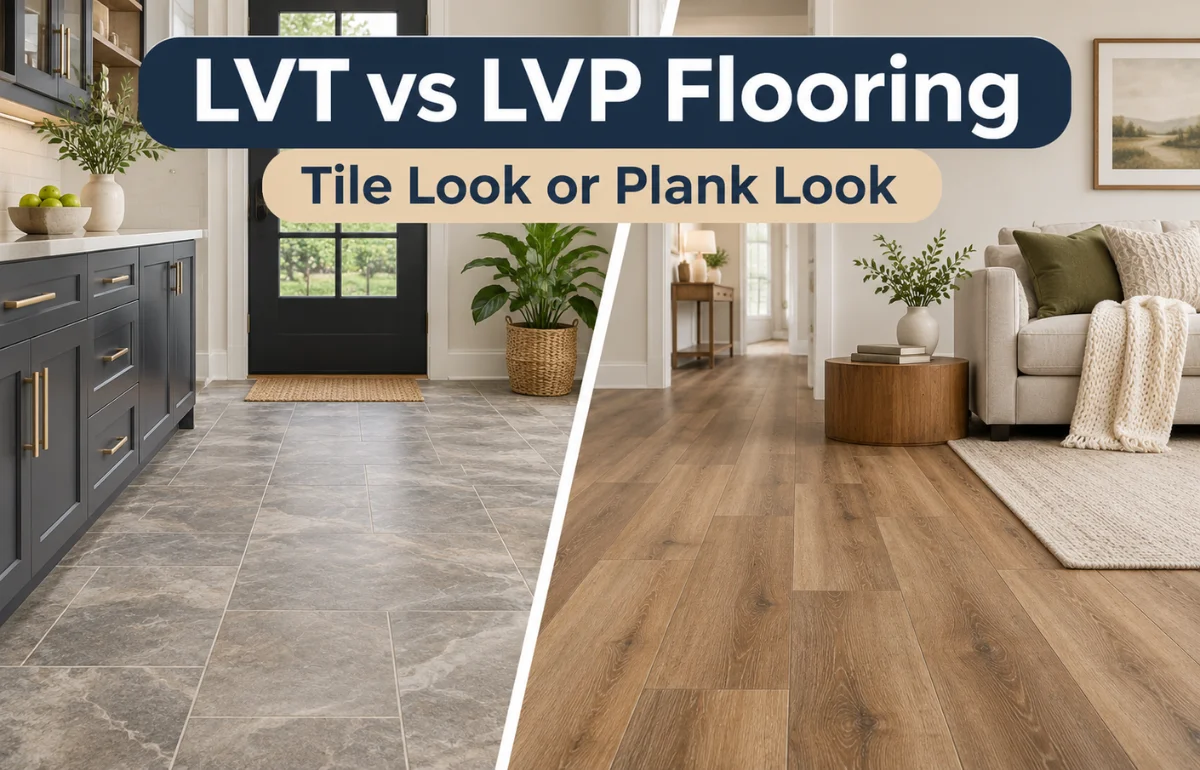
- Luxury vinyl plank (LVP): Designed mainly to imitate hardwood flooring.
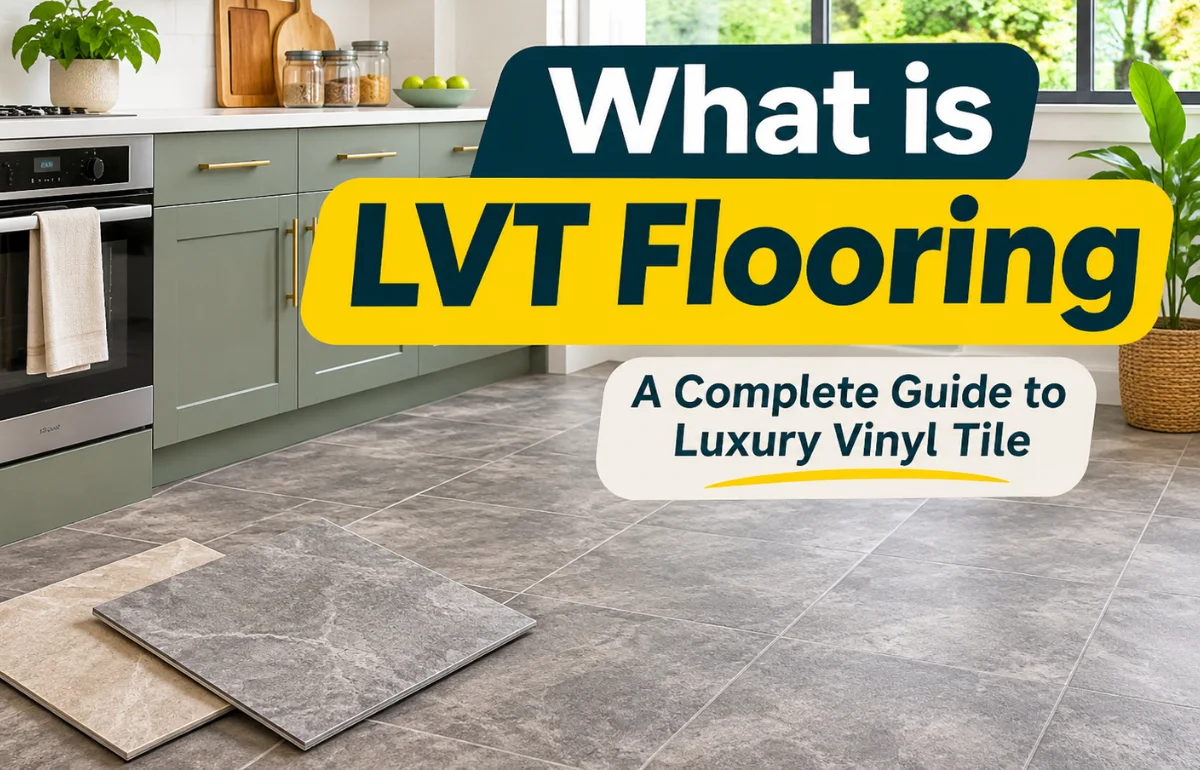
- Luxury vinyl tile (LVT): Often resembles ceramic tile, marble, or natural stone.
- Rigid-core vinyl: Uses a more dimensionally stable core, commonly classified as SPC or WPC.
The biggest attraction is versatility. Vinyl can recreate expensive flooring styles without requiring the same installation methods or maintenance.
Still, not all vinyl floors perform equally. A low-cost sheet and a premium rigid-core plank may have very different wear resistance, installation requirements, and warranties.
Linoleum vs Vinyl Flooring: Appearance and Design Differences
Appearance often influences the first decision, especially when flooring needs to complement existing cabinets, furniture, and wall colors.
Linoleum Offers a Natural, Consistent Look
Linoleum usually features solid colors, subtle marbling, and softly blended patterns.
I particularly like its suitability for vintage-inspired kitchens, minimalist interiors, and spaces where a natural-looking surface is more appealing than imitation wood.
Its patterns generally have a consistent appearance because the pigments are incorporated into the material.
However, homeowners seeking extremely realistic oak grain or marble veining may find the selection limited.
Vinyl Provides More Decorative Freedom
Vinyl offers a much broader selection of decorative finishes.
Modern manufacturing can reproduce wood grain, stone texture, geometric patterns, and ceramic tile appearances in considerable detail.
Some luxury vinyl products even feature embossed textures that follow the printed design.
For homeowners planning an affordable visual makeover, vinyl often provides more flexibility without sacrificing everyday practicality.
Which Flooring Handles Water and Moisture Better?
Water resistance is one of the most significant differences between linoleum and vinyl flooring.
Linoleum Is Water-Resistant, Not Fully Waterproof
Linoleum can tolerate normal cleaning and occasional spills when properly installed and maintained.
However, prolonged exposure to standing water may damage seams, edges, or the flooring material itself.
Moisture entering beneath the surface can also interfere with adhesives or cause installation problems.
I would consider linoleum for a kitchen where spills are cleaned promptly, but I’d be cautious about using it in a bathroom with frequent standing water.
Vinyl Is Better Suited to Wet Areas
Many vinyl flooring products are marketed as waterproof because the flooring material itself does not readily absorb water.
This makes vinyl particularly attractive for bathrooms, laundry rooms, and kitchens.
However, waterproof flooring doesn’t make the entire installation waterproof.
Water can still enter through perimeter gaps, joints, damaged seams, or plumbing leaks and become trapped underneath.
That distinction matters because moisture can damage the subfloor even when the vinyl surface remains unaffected.
Linoleum vs Vinyl Flooring Installation: What Should You Expect?
Installation is where material selection starts affecting labor costs, project timelines, and long-term performance.
Although both materials require appropriate subfloor preparation, their fitting methods differ.
Installing Linoleum Flooring
Traditional sheet linoleum is usually glued to a properly prepared subfloor.
The surface must be clean, dry, smooth, and suitable for the adhesive specified by the manufacturer.
Because linoleum is relatively stiff, handling large sheets and cutting accurate seams can be challenging.
Professional installers may use specialized tools to spread adhesive, position the material, roll the floor, and finish seams correctly.
Some installations use heat-welded seams, although welding is not necessary for every residential application.
For sheet linoleum, I generally favor professional installation, especially in rooms with awkward corners or multiple doorways.
Click-together linoleum products may be more accessible to confident DIY homeowners, but their installation instructions still need careful attention.
Installing Vinyl Flooring
Vinyl offers more installation choices, particularly for homeowners who enjoy tackling smaller renovation projects.
Floating luxury vinyl planks are popular because their locking edges connect without being glued directly to the subfloor.
Glue-down vinyl requires an appropriate adhesive and careful positioning. Sheet vinyl may be installed using different methods depending on its backing and manufacturer specifications.
Peel-and-stick tiles can simplify smaller projects, although their success depends heavily on subfloor preparation.
Even DIY-friendly flooring is not completely forgiving.
I recommend checking the exact installation instructions rather than assuming every vinyl product can be fitted the same way.
Subfloor Preparation Matters for Both
A common flooring mistake is concentrating on the visible finish while ignoring the surface underneath.
Uneven subfloors may create visible bumps beneath sheet flooring or place stress on vinyl plank joints.
Concrete requires particular attention because moisture problems may be difficult to detect without testing.
Manufacturers may also specify temperature requirements, approved underlayments, and expansion spaces.
Shaw Floors’ installation guidance emphasizes subfloor preparation and suitable expansion gaps for its vinyl products.
Installation Comparison
| Installation Factor | Linoleum | Vinyl |
|---|---|---|
| DIY suitability | Moderate for some click products; difficult for sheet flooring | Generally easier with click-lock products |
| Subfloor preparation | Essential | Essential |
| Adhesive requirements | Commonly required for sheets | Depends on flooring format |
| Seam treatment | Accurate fitting; welding for certain applications | Depends on product and installation method |
| Cutting and handling | Often more demanding | Usually easier, especially with planks |
| Professional installation | Recommended for large sheet projects | Helpful for sheet and glue-down products |
How to Clean and Maintain Linoleum Flooring
Linoleum maintenance isn’t particularly complicated, but choosing suitable cleaning products matters.
Routine care generally involves removing loose dirt and wiping spills promptly.
I recommend sweeping or vacuuming regularly because trapped grit can gradually scratch the finish.
For deeper cleaning, use a lightly damp mop and a pH-neutral cleaner approved for the specific flooring product.
Avoid leaving puddles behind, particularly around seams and edges.
Does Linoleum Need Regular Waxing?
One outdated assumption is that every linoleum floor needs frequent waxing.
Modern factory-finished linoleum products often come with protective finishes that don’t require routine waxing or additional sealing.
For example, Forbo’s Marmoleum maintenance guidance explains that its factory-finished products are ready for use without an initial coating.
Older linoleum or products with different finishes may have other maintenance requirements.
I would always check the manufacturer’s care instructions before applying wax, polish, or restorative treatments.
How to Clean and Maintain Vinyl Flooring
Vinyl generally requires less specialized maintenance.
For everyday cleaning, sweeping, vacuuming with an appropriate floor setting, and occasional damp mopping are usually sufficient.
A manufacturer-approved cleaner helps remove dirt without leaving unwanted residue.
I would avoid abrasive scrubbing pads, harsh chemicals, and excessive cleaning solution unless the manufacturer specifically allows them.
Steam cleaning is another concern. Although vinyl resists water, some products can be damaged by heat or by moisture entering joints.
For instance, Karndean advises against steam cleaners on its luxury vinyl flooring.
Preventing Scratches and Furniture Damage
Neither flooring option is completely scratch-proof.
Chair legs, furniture movement, pet claws, and tracked-in grit can gradually damage the surface.
Simple precautions make a difference:
- Attach suitable protective pads beneath furniture.
- Place entry mats where grit and dirt accumulate.
- Lift heavy furniture instead of dragging it.
- Clean spills before they become stubborn stains.
- Avoid unsuitable rubber-backed mats that may discolor certain vinyl products.
These small habits can preserve a floor’s appearance without requiring complicated maintenance.
Which Flooring Is More Durable?
Durability depends on the material, product quality, installation, and household conditions.
Well-maintained linoleum can remain functional for several decades. Its through-body coloring can help disguise minor wear, and some products allow professional surface restoration.
Vinyl durability varies more widely.
Premium luxury vinyl may offer excellent resistance to household traffic, while inexpensive products can show wear sooner.
The thickness and quality of the protective wear layer are particularly relevant when comparing decorative vinyl products.
However, a thick wear layer doesn’t automatically guarantee protection against dents, heat damage, or broken locking joints.
I would compare actual product specifications and warranty exclusions rather than relying solely on advertised lifespan claims.
Repairing Linoleum vs Vinyl Flooring
Repair options can affect the long-term cost of either flooring material.
Minor scratches on suitable linoleum products may be less visible or potentially repairable using manufacturer-approved methods.
More extensive damage might require a patch or replacement tile.
Vinyl repairs depend on the format.
Individual damaged planks or tiles may be replaceable, although removing one from a locked floating floor isn’t always straightforward.
Sheet vinyl often requires careful patching, and matching the printed design can be difficult.
A practical tip: Keep spare flooring from the original installation. Replacement batches may differ slightly in color or texture, especially after the installed floor has aged.
Which Flooring Feels More Comfortable Underfoot?
Both materials belong to the resilient flooring category, but their comfort depends partly on what’s underneath.
Traditional linoleum offers a relatively firm surface with some resilience.
Vinyl flooring ranges from thin, firm products to cushioned sheets and planks with attached underlayment.
Rigid-core vinyl may feel harder than expected, especially when installed over concrete.
Sound transmission also depends on the subfloor, backing, and installation system.
I recommend comparing samples on a firm surface rather than judging comfort by squeezing them between your fingers.
Linoleum vs Vinyl Flooring Cost: Which Offers Better Value?
Vinyl usually provides more low-cost purchasing options, particularly in basic sheet and tile formats.
Linoleum often has a higher material price, and professional sheet installation can increase the total expense.
However, premium luxury vinyl can cost considerably more than entry-level products.
The cheapest material isn’t necessarily the most economical long-term choice.
When comparing quotes, I would include subfloor repairs, adhesives, underlayment, installation labor, transitions, waste allowance, and future maintenance.
For a short-term renovation, affordable vinyl may make financial sense.
For homeowners intending to keep the same floor for many years, durable linoleum may justify its higher initial investment.
Environmental Impact and Indoor Air Quality
Linoleum generally has an advantage when the priority is renewable raw materials.
Its ingredients include plant-derived oils, wood-based materials, and minerals. Some manufacturers also publish environmental product declarations detailing their products’ impacts.
Vinyl relies primarily on synthetic PVC, and recycling can be more complicated because of its layered construction and additives.
However, environmental performance varies between individual products.
Transport, manufacturing processes, service life, adhesives, and end-of-life handling also influence the overall impact.
For indoor air quality, I recommend looking for verified low-emission certifications rather than assuming natural materials are always emission-free or synthetic materials are automatically unsafe.
The FloorScore certification program evaluates volatile organic compound emissions from eligible flooring products, including linoleum and vinyl.
Which Flooring Is Best for Different Rooms?
The best choice depends on how the room is used.
Kitchens
Both options can work well in kitchens.
I would choose linoleum for its natural appearance and long-term appeal in a kitchen where spills are managed promptly.
Vinyl makes more sense where frequent water exposure, easy cleanup, and realistic wood or stone patterns are priorities.
Bathrooms and Laundry Rooms
Vinyl is generally the stronger choice because of its higher moisture tolerance.
Sheet vinyl can be particularly practical when minimizing seams is important.
However, waterproof flooring should never replace proper leak prevention and subfloor protection.
Living Rooms and Bedrooms
Either flooring works in dry living spaces.
Linoleum suits homeowners seeking a distinctive natural finish, while luxury vinyl provides greater flexibility in wood-inspired designs.
Comfort, noise, and visual style may matter more here than moisture resistance.
Hallways and Busy Family Areas
I would prioritize wear resistance, easy cleaning, and repairability.
High-quality linoleum and appropriately rated vinyl can both perform well, provided furniture protection and regular cleaning are part of the routine.
Three Overlooked Details Before Choosing Your Floor
1. Natural Linoleum May Temporarily Change Color
New linoleum sometimes develops a yellowish tint during manufacturing and storage.
This phenomenon, often called drying-room yellowing, typically fades with exposure to light.
It’s worth understanding before rejecting a newly installed floor because its initial color looks slightly different from the sample.
2. Flooring Thickness Doesn’t Tell the Whole Story
A thicker vinyl plank isn’t automatically more durable than a thinner one.
Core construction, wear-layer quality, locking strength, and installation conditions all affect performance.
Likewise, linoleum thickness alone doesn’t determine how well the finished floor handles moisture or traffic.
3. Replacement Planning Matters
If a flooring pattern is discontinued, repairs several years later may become difficult.
I recommend retaining spare pieces, recording the product name and batch information, and keeping the installation and warranty documents.
These details are easy to overlook during a renovation but can save considerable frustration later.
How I Would Choose Between Linoleum and Vinyl
I would start by considering the room’s moisture exposure, expected traffic, maintenance requirements, and overall budget.
For a dry room where natural materials and long service life are the main priorities, linoleum deserves serious consideration.
For a moisture-prone space, a DIY-friendly makeover, or a project requiring realistic wood and stone designs, vinyl is usually more practical.
I would also request actual product samples and detailed installation quotes before making the final decision.
The best flooring is the one that performs reliably in your specific space, not simply the product with the most impressive marketing claims.
Final Thoughts
The Linoleum vs Vinyl flooring decision comes down to choosing between natural material construction and greater flexibility in moisture resistance, design, and installation.
Linoleum offers lasting appeal, renewable ingredients, and strong long-term potential. Vinyl provides easier maintenance, broader design options, and practical solutions for moisture-prone areas.
Before purchasing, compare samples, review product specifications, and check the condition of your subfloor. Those three actions can help you avoid costly flooring mistakes.
Frequently Asked Questions
1. Is linoleum flooring the same as vinyl flooring?
No. Linoleum is made primarily from natural ingredients, while vinyl is a synthetic PVC-based flooring material.
2. Is linoleum or vinyl better for bathrooms?
Vinyl is generally better because it tolerates moisture more effectively. Linoleum is less suitable for areas exposed to frequent standing water.
3. Does linoleum flooring need to be sealed?
Not always. Many modern factory-finished linoleum floors don’t require routine sealing or waxing, but older products may need additional care.
4. Can I install linoleum or vinyl flooring myself?
Click-lock vinyl is generally more DIY-friendly. Sheet linoleum usually requires greater installation skill and is often best handled by professionals.
5. Which lasts longer, linoleum or vinyl flooring?
Quality linoleum can last several decades with proper maintenance. Vinyl lifespan varies widely depending on its construction, wear layer, installation, and use.