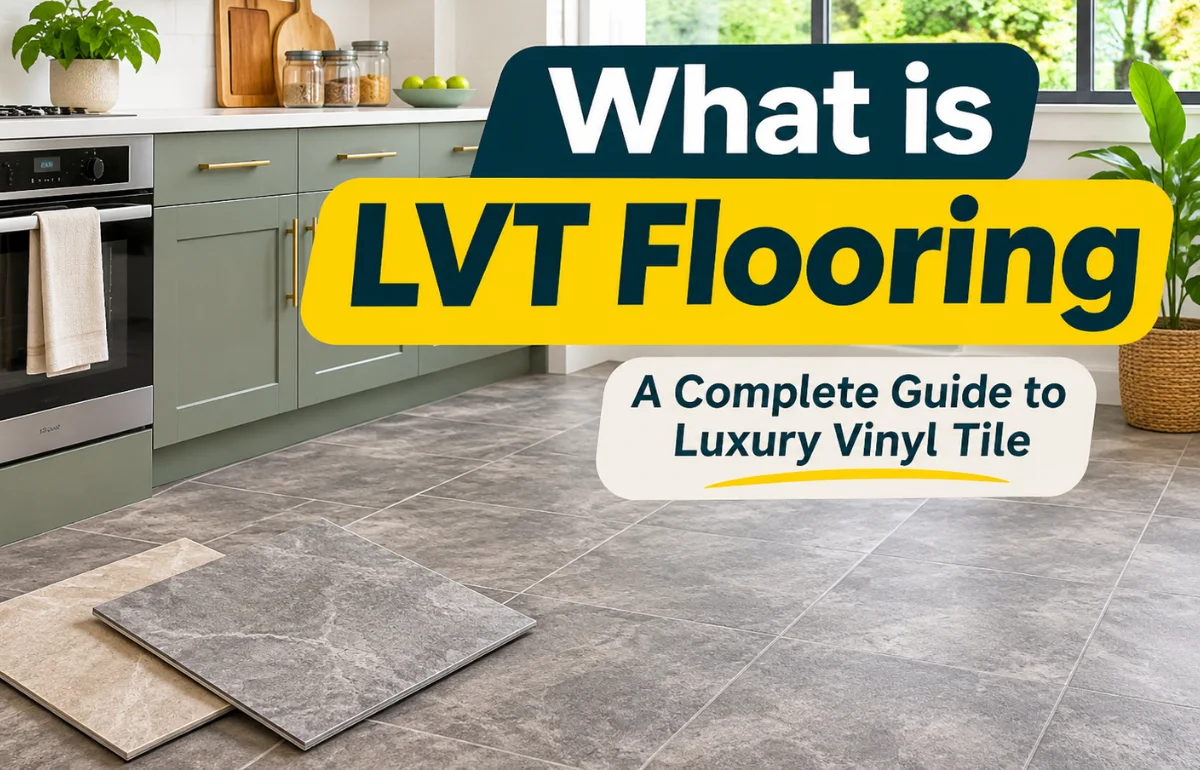
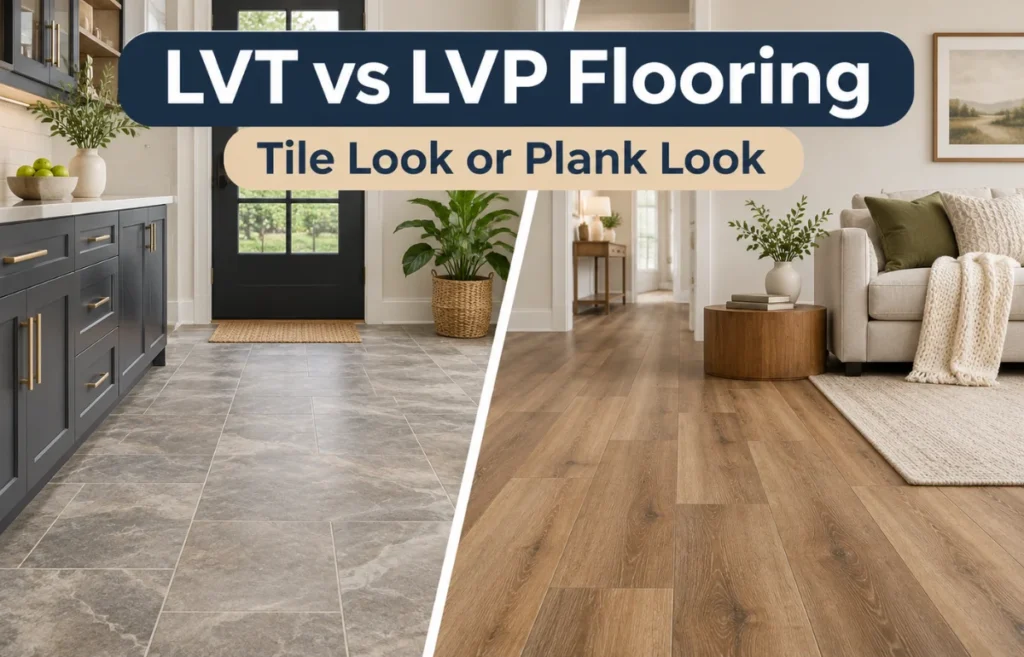
LVT vs LVP flooring is primarily a comparison of shape and appearance, not two entirely different materials. LVT (luxury vinyl tile) is usually sold in square or rectangular pieces designed to resemble stone, ceramic, or concrete. LVP (luxury vinyl plank) comes in longer, narrower boards that imitate hardwood. Both can have similar protective layers, waterproof or water-resistant constructions, and installation options. Neither is automatically tougher, cheaper, or more waterproof simply because it is called tile or plank. Some sellers also use LVT as an umbrella term for both formats, so check the product dimensions.
If I were choosing between them, I would start with one question: Do I want the room to read as stone or wood? Then I would compare the specifications on the actual products. That order avoids a surprisingly common mistake—choosing a format for its supposed performance when the real difference is the look and layout.
LVT vs LVP Flooring: Quick Comparison
| Feature | LVT (Luxury Vinyl Tile) | LVP (Luxury Vinyl Plank) |
|---|---|---|
| Typical appearance | Stone, porcelain, concrete, terrazzo | Oak, walnut, pine, other wood looks |
| Usual shape | Squares or shorter rectangles | Long, narrow boards |
| Overall effect | Defined tile pattern; often more structured | Continuous lines; often warmer-looking |
| Common rooms | Bathrooms, kitchens, laundry rooms, entries | Living rooms, bedrooms, hallways, open plans |
| Water performance | Depends on product and installation | Depends on product and installation |
| Scratch and dent resistance | Depends on wear layer, finish, and core | Depends on wear layer, finish, and core |
| Installation | Click-lock, glue-down, or other approved systems | Click-lock, glue-down, or other approved systems |
| Typical cost | Overlaps substantially with LVP | Overlaps substantially with LVT |
| Biggest design risk | Busy grout-look lines in small spaces | Repetitive wood patterns or awkward short pieces |
What Actually Changes When You Choose Tile Instead of Plank?
Shape Changes the Visual Rhythm
A tile layout creates a grid or staggered pattern. Even when the edges touch closely, visible joints and printed grout lines can make the floor feel organized and architectural. Large stone-look rectangles can give a kitchen a calm, contemporary finish; smaller tiles can create a busier effect.
Planks guide the eye along their length. In a narrow hallway, boards running along the space can reinforce that long perspective. In an open-plan living area, continuous wood-look planks can make adjoining zones feel connected without introducing a new surface at every doorway.
I prefer to test the layout with actual pieces: a dramatic plank can overwhelm a tiny room, while a restrained large-format tile may look spacious.
The Edges Matter as Much as the Color
Some LVT products have subtle seams; others include beveled edges or a printed grout effect. A few systems allow grout, but only when their manufacturer specifically approves it. Standard click-lock vinyl tile should not be treated like ceramic tile and grouted on assumption.
LVP may have micro-bevels intended to outline individual boards. Deep bevels can strengthen the wood-floor illusion, but they may also collect more visible dirt. Smooth edges look quieter, although a completely seamless appearance is not guaranteed.
My practical test is to examine two joined samples from standing height and from floor level. That reveals whether the edges add realism or distract from it.
Pattern Repetition Is an Overlooked Design Issue
Printed floors repeat their designs. A wood-look plank with only a few distinct board images may look artificial across a large room, especially if identical knots appear close together. Stone-look tile can repeat veining just as obviously.
Before ordering, I would ask how many unique plank or tile visuals the collection includes and lay out several cartons if possible. Mixing pieces from different boxes and following the manufacturer’s layout instructions helps prevent obvious clusters. This small check may affect how natural the finished floor looks more than a trendy color choice.
Does LVT or LVP Last Longer?
Compare Wear Layers, Not Labels
The short answer is neither format has a built-in durability advantage. For comparable products, surface protection matters much more than whether the pieces resemble stone or wood.
As Floor & Decor explains, most luxury vinyl specifications list a wear layer in mils. One mil is one-thousandth of an inch, not one millimeter. A 12-mil wear layer is approximately 0.30 mm; a 20-mil layer is about 0.51 mm. That is separate from the overall flooring thickness.
For a quiet guest room, an appropriately warranted lighter-duty product may be enough. For an active family space with pets, sandy shoes, and moving chairs, I would compare well-reviewed 12- to 20-mil options, with greater preference for robust finishes and a suitable warranty in heavier traffic.
A thicker wear layer does not make vinyl scratch-proof. Furniture grit, sharp objects, and dragging appliances can still damage it. A matte, textured surface may simply hide minor marks better than a glossy one.
Core Construction Changes the Feel and Dent Resistance
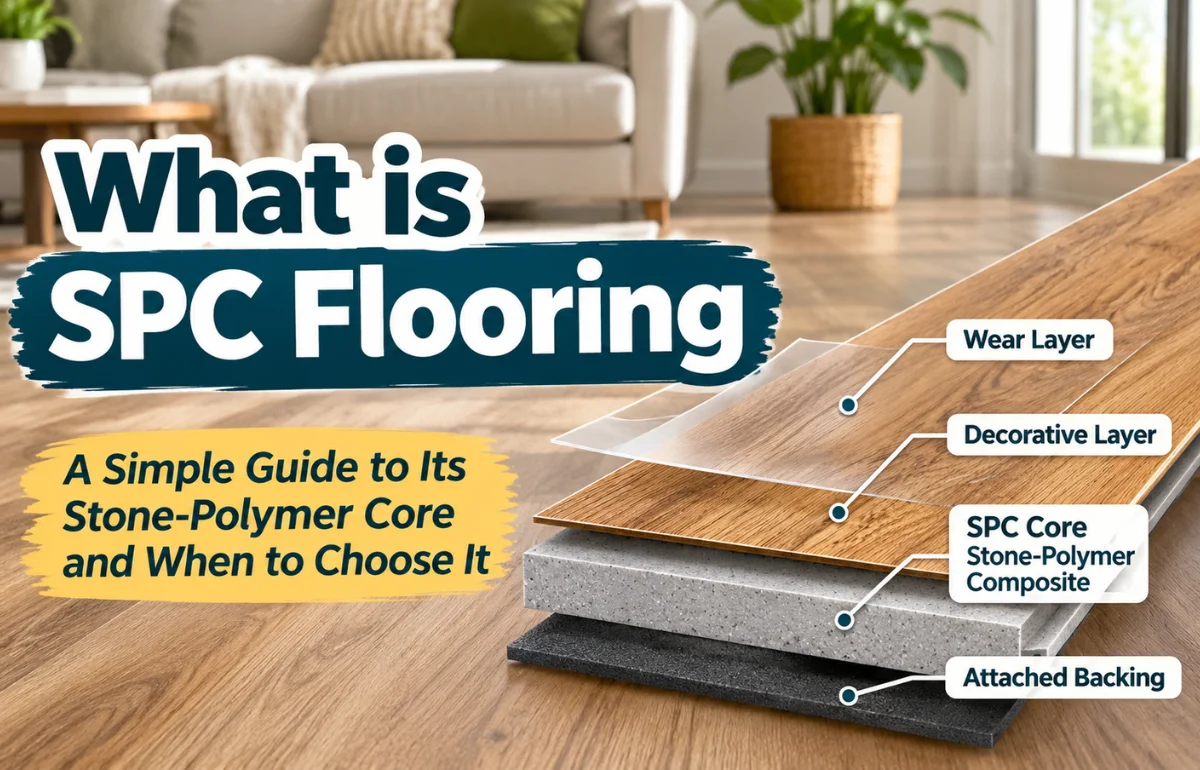
Two products that look alike may have different interiors. Flexible glue-down vinyl follows the prepared subfloor closely. Rigid-core versions commonly use SPC (solid polymer core) or WPC (expanded polymer core) construction.
As the Resilient Floor Covering Institute explains, SPC tends to be denser and more resistant to indentation, while WPC commonly offers a more cushioned, quieter feel. Both appear in tile and plank styles, so it would be misleading to say LVT is softer or LVP is stronger.
On click products, I also check locking-joint quality rather than assuming thicker means better.
Waterproof Material Does Not Mean a Waterproof Room
Many modern vinyl tile and plank products are marketed as waterproof because their material resists swelling when exposed to household spills. That is useful in kitchens, bathrooms, and laundry rooms.
However, water may still reach the subfloor through joints, edges, penetrations, or gaps around fixtures. A leaking dishwasher or persistent damp concrete can cause problems beneath an otherwise undamaged vinyl surface. Neither LVT nor LVP replaces a waterproofing system in a shower or a remedy for an ongoing leak.
I would choose between them based on the room’s look, then confirm the exact product is approved for that location and follow its moisture and sealing instructions.
Which Feels Better Underfoot and Sounds Quieter?
Both floors are generally less cold and unforgiving than real ceramic or stone, but their comfort depends on construction. An attached acoustic pad, the core type, the subfloor, and even the footwear in the house influence the result.
A rigid SPC plank and an SPC tile of similar thickness may feel nearly identical. A cushioned WPC tile could feel softer than a thin flexible plank. Format alone tells you very little about comfort.
In upstairs bedrooms or apartments, I would look for documented acoustic performance for the complete floor assembly rather than assuming a thicker product will be quiet. Adding an unapproved underlayment beneath click flooring can weaken joints or void the warranty. Always check the installation instructions before adding padding.
LVT vs LVP Installation: Where the Real Differences Show Up
Click-Lock Versus Glue-Down
Click-lock products connect at their edges and are often installed as floating floors. This can suit a straightforward renovation when the existing base is approved, stable, and adequately flat. It also means the perimeter generally needs expansion space, and some layouts require transition joints.
Glue-down products adhere to a properly prepared substrate. They can be useful in certain commercial settings, complex layouts, or projects where the manufacturer recommends a bonded installation. But adhesive work demands careful surface preparation and the correct adhesive, moisture conditions, and application method.
Both installation systems are available in tile and plank formats. A square tile does not automatically require adhesive, and a wood-look plank is not always a floating floor.
Layout and Cutting Affect the Labor Bill
Long planks often create an efficient installation path through uncomplicated rectangular rooms. They may require more planning in tight corners, closets, and hallways where short offcuts become noticeable.
Tile formats require attention to centering and joint alignment. A stone-look tile can look awkward if a tiny sliver remains at the most visible wall. A pattern involving offsets, borders, or grout-compatible installation may increase cutting and labor.
I would ask an installer to show the proposed first row, direction, and edge cuts before installation starts. A floor can be technically sound yet visually disappointing when the layout was decided too late.
Subfloor Preparation Is the Non-Negotiable Part
Manufacturer installation guides specify limits for flatness, moisture, temperature, and approved substrates. Those limits vary by product. A flexible tile may reveal bumps and old grout lines, while a rigid plank may bridge some minor surface variation—but neither excuses a badly prepared floor.
A vinyl surface may be waterproof while moisture beneath it still affects adhesives, joints, or the building materials below. Concrete moisture testing and repairs should be included in the plan wherever required.
If the existing floor is old and its composition is unknown, I would avoid sanding or disturbing it until potentially hazardous materials have been assessed. Saving time on preparation is rarely worth the risk of premature failure.
What Does LVT vs LVP Flooring Cost in 2026?
Prices overlap far more than people expect. In the United States, Angi’s 2026 cost breakdown puts both formats around $1.50–$12 per square foot for materials. The final installed price varies widely with local labor, product quality, removal, moisture mitigation, and floor leveling.
Here is how I would compare two quotes rather than deciding on the shelf price alone:
| Cost or Value Question | What I Would Check |
|---|---|
| Material price | Cost per square foot for the exact product and required waste |
| Preparation | Leveling, patching, moisture tests, and removal of existing flooring |
| Installation method | Adhesive and labor versus click-lock labor and accessories |
| Layout complexity | Special tile patterns, tricky plank transitions, and extra cutting |
| Accessories | Underlayment if approved, trims, thresholds, and stair pieces |
| Long-term value | Wear layer, replacement availability, warranty exclusions, and cleaning needs |
For a simple illustration, 200 square feet at $4 per square foot costs $800 for flooring before waste, installation, or accessories. If the layout needs 10% extra material, the flooring order becomes 220 square feet, or $880. Actual waste varies by layout and product; 10% is only a planning example.
I would request itemized quotes for both formats; subfloor repairs, labor, and accessories may outweigh differences in shelf price.
Which Flooring Is Better in Each Room?
Kitchen: Both Work, but Consider the Adjoining Space
Stone-look LVT pairs naturally with cabinetry and makes a kitchen feel distinct. Wood-look LVP can connect the kitchen to a dining or living area, avoiding an abrupt material change across an open floor plan.
Because kitchens face spills, chair movement, and frequent cleaning, I would prioritize the wear layer, finish, approved wet-area use, and floor preparation over the tile-versus-plank label. A waterproof product is still no substitute for addressing an appliance leak promptly.
Bathroom and Laundry Room: LVT Often Wins Visually
I usually lean toward stone-look LVT when the goal is a classic tile appearance without the weight and cold feel of porcelain. Large rectangles can look polished, while restrained seams are easier on the eye in small rooms.
LVP remains a good choice if a warm wood look matches the rest of the home. Either way, check the manufacturer’s bathroom restrictions, perimeter details, and cleaning instructions. Neither belongs inside a shower unless it is part of a specifically approved system.
Living Room and Bedroom: LVP Often Feels More Natural
For a relaxed, continuous interior, wood-look LVP is frequently my first design choice. Long boards create a familiar residential look, and the variety of wood tones works with changing furniture styles.
That said, concrete- or limestone-look LVT can be excellent in minimalist or contemporary spaces. In bedrooms, comfort and acoustics may influence my purchase more than the printed design.
Hallways and Entryways: Durability and Layout Share the Spotlight
Entryways collect grit and moisture, so a tough surface finish, walk-off mat, and easy cleaning matter. Stone-look LVT may hide the transition from outdoors elegantly; LVP can create a continuous route through the home.
For a long, narrow hall, I would dry-lay samples to see where plank ends fall and whether tile joints exaggerate the corridor’s length. The better choice is often whichever format gives cleaner cuts at doors and fewer awkward visual breaks.
Five Checks I Would Make Before Buying Either One
- Read the full product specification. Confirm the wear layer, total thickness, core type, finish, installation method, and warranty—not just “luxury” in the product name.
- Bring samples home. Look at them in morning and evening light. A sample that reads gray in a showroom may appear blue or beige beside your cabinets.
- Test the realistic messes. On a spare sample, follow the manufacturer-approved cleaning method after ordinary dirt and water. Check how the texture holds grit and how visible the seams are.
- Verify indoor-air credentials. FloorScore certification indicates independent assessment against specified VOC-emission criteria; it is not a guarantee that a floor is completely chemical-free. Check adhesives separately when applicable.
- Ask about replacement stock. Save the product code, batch information, and a few spare pieces. If a section is damaged years later, a matching pattern and compatible locking profile may be difficult to find.
I also check sunlight restrictions near large windows: high temperatures and direct exposure can affect some products. The manufacturer’s published limits matter.
So, Should You Choose LVT or LVP?
My recommendation is simple: choose LVT when you want the visual structure of stone or ceramic tile, and choose LVP when you want the flow and warmth of wood-look boards. Then compare products with similar cores, wear layers, finishes, and installation requirements. That gives you a fairer comparison than the label on the box.
Before placing an order, take home full-size samples, sketch the layout, and get an itemized installation quote. The best floor is the one that suits your room visually and holds up to the way you actually use it.
Frequently Asked Questions
Is LVT better than LVP flooring?
Not automatically. LVT usually gives a tile or stone look, while LVP creates a wood-board look; performance depends on each product’s construction and finish.
Is LVT or LVP more waterproof?
Neither format is inherently more waterproof. Check the exact product’s moisture rating, installation instructions, and protections for the subfloor.
Which scratches less, LVT or LVP?
Scratch resistance depends more on the topcoat, wear layer, and surface texture than on whether the flooring is shaped like tile or plank.
Can I install LVT or LVP over existing tile?
Sometimes, if the manufacturer approves the substrate and it is stable, flat, dry, and properly prepared. Grout lines may need filling.
Does LVT cost more than LVP?
Not necessarily. Their material price ranges overlap; brand, core, wear layer, layout complexity, and labor typically influence the final quote more.