

Renter-Friendly Bedroom Makeover Ideas are affordable, reversible decorating changes that make a rented bedroom more comfortable and attractive without painting, drilling, or permanently altering the property. They include rearranging furniture, updating bedding, improving lighting, adding rugs, and organizing storage. The aim is to create a bedroom that feels like home while respecting the lease and making move-out easier.
A rental bedroom can be perfectly functional and still feel temporary. Maybe the walls are plain, the overhead light is harsh, or your dresser seems to occupy half the floor. I wouldn’t begin by shopping for a new bed or covering every empty corner. I’d first look at what the room needs to do better: support sleep, keep everyday things accessible, and feel welcoming when I walk in.
Start With a Rental-Safe Plan, Not a Shopping Cart
Before moving furniture, I would read the lease and photograph the room’s current condition. Rental rules vary: one landlord may allow small picture hooks, while another may prohibit all wall attachments. A removable product isn’t automatically permitted.
I divide possible updates into three groups. The first is completely portable: bedding, lamps, baskets, and rugs. The second relies on existing features, such as a curtain rod or a sturdy headboard. The third touches a surface, including adhesive hooks, peel-and-stick materials, and replacement hardware. That last group deserves written permission or a very careful review of the rules.
Use a simple reversibility check
For each idea, ask: Can I take this with me? Can I remove it without tools? Could it mark paint, floors, or trim? Will I need to store the original piece? And what happens if the product fails?
A slipping tension rod or fallen frame can cause damage. I favor decorations that need no wall attachments.
| Update | Best use | What to check first |
|---|---|---|
| New bedding or pillow covers | Changing the room’s look quickly | Fit, washability, and care labels |
| Rug with suitable pad | Softening a hard floor | Door clearance and flooring compatibility |
| Plug-in table lamp | Better evening lighting | Stable placement and cord routing |
| Tension curtain rod | Adding fabric without drilling | Manufacturer’s span and load limits; secure fit |
| Removable picture strips | Lightweight art on suitable walls | Lease, surface type, weight rating, and removal directions |
Rearrange the Bedroom Before Spending Anything
Furniture placement can change the feel of a bedroom more than a decorative purchase. I start at the doorway. If the first view is a cluttered dresser, an overloaded chair, or a bed squeezed awkwardly into a corner, that’s the place to work on.
The bed usually makes a natural focal point, but it doesn’t have to sit in the exact center of a wall. What matters is that doors, drawers, windows, and walking routes still work. I measure the bed, dresser, and usable floor space before trying a new arrangement. Measurements save unnecessary furniture moving.
Create clear paths around the bed
Try to keep your most-used path—from the door to the bed, closet, and bathroom—free from baskets and furniture legs. Don’t block exits, heating vents, or access to windows. If there is only room for one nightstand, use one; matching pieces aren’t a requirement for a polished bedroom.
In a narrow room, I’d choose one compact bedside table over two bulky cabinets. Check that dresser drawers open fully.
Give the room three jobs
I like assigning the bedroom three simple zones: sleeping, getting dressed, and storing extras. A hamper belongs near where clothes come off. A tray belongs where keys, glasses, or a book tend to land. Seasonal blankets belong away from the daily walking path.
The goal is fewer unnecessary trips across the room, not more organizers.
Refresh the Bed for the Biggest Visual Change

If the budget is limited, bedding is my first place to look. The bed takes up a large share of most bedrooms, so its color, texture, and proportions shape the entire room.
Start with what you own. Wash the duvet cover, remove worn decorative pieces, and try folding a blanket across the foot of the bed. If the colors fight each other, choose one calm base shade and one accent instead of adding more patterns.
Layer texture without piling on pillows
A cotton cover, a soft throw, and one pillow in a contrasting texture can create depth without making the bed a chore to use. For a relaxed room, I’d pair cream fabric with muted green, clay, or navy.
Avoid buying several decorative cushions just to store them on the floor every night. I prefer pieces that earn their place: a washable throw for cold evenings or pillow covers that can be changed without replacing the inserts.
Improve the headboard area without mounting anything
No headboard? A neatly made bed against a clean wall is enough. If you already have a sturdy headboard, draping a lightweight textile over it can add color without touching the wall, provided it cannot slip into your sleeping area.
Skip unstable leaning panels and heavy improvised headboards. Keep anything behind the bed stable and safe from falling.
Make Lighting Feel Softer and More Useful
Of all renter-friendly bedroom makeover ideas, lighting is among the easiest to personalize. One bright ceiling fixture can make even a carefully decorated room feel flat. Instead of changing rental wiring, I add layers of portable light.
A bedside table lamp gives me a useful reading spot. If the fixture supports it, a warm-white bulb—often around 2700K—creates a softer evening atmosphere than a cool-white bulb. Check the lamp’s wattage and bulb compatibility before changing anything.
Think about where the light lands
I put light where it’s useful: beside a book, mirror, or dresser. A shade helps reduce glare.
Plug-in lights are usually more practical for renters than hardwired sconces. Route cords where they won’t be tripped over, pinched by furniture, or tucked under a rug. Don’t overload outlets or rely on extension cords as permanent wiring.
Add Curtains and Rugs Without Altering the Room
Fabric softens a rental bedroom and adds color without changing the walls.
If the rental has an existing curtain rod, use it. If not, a properly fitted tension rod may work for lightweight curtains in a suitable window recess, but only where the manufacturer allows it. Check the rod’s load and width limits, and don’t assume every window frame will hold it securely.
Choose window coverings for privacy and comfort
Sheer curtains filter daylight and soften the window. Room-darkening curtains can help with morning glare, but they don’t guarantee complete darkness. Choose based on how you use the room.
If children live in or visit the room, use cordless window coverings. The U.S. Consumer Product Safety Commission warns that accessible blind and shade cords can create a serious strangulation hazard.
Use a rug to define the bed area
A rug doesn’t have to reach every wall. One positioned partly beneath the bed can visually connect the furniture, while a smaller washable rug beside the bed adds comfort where bare feet land.
Measure before buying. Make sure the rug won’t catch the bedroom door, create a tripping hazard, or interfere with drawer openings. Use a non-slip pad that’s compatible with the actual flooring; some pad materials can discolor certain finishes.
Decorate Blank Walls Without Assuming Adhesives Are Harmless
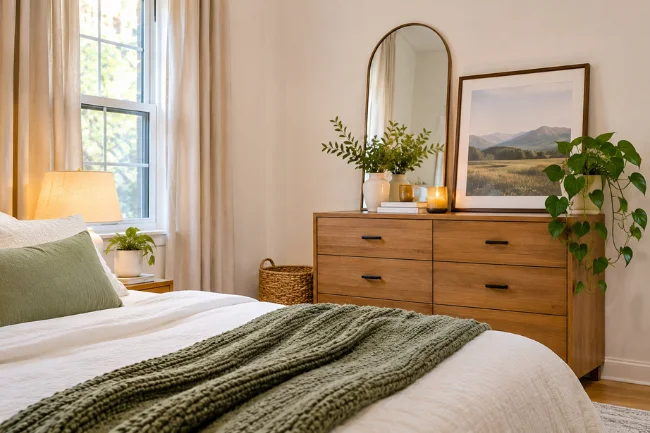
Blank walls don’t require galleries. I prefer a framed print on a dresser or a tabletop mirror to six scattered decorations.
If wall art is allowed, follow the hanging product’s instructions precisely. For example, Command’s guidance says its strips work best on clean, smooth, suitable surfaces; they aren’t recommended for wallpaper or heavily textured walls. Their removal method matters too: the tab is stretched down along the wall, not pulled outward.
Paint that is old, poorly bonded, or damaged may still peel. I wouldn’t describe any adhesive as guaranteed damage-free. For a rental with uncertain paint, choose displayed art that rests securely on furniture, away from edges where it could fall.
Build a focal point at eye level
Look for one visually strong element: a fabric-covered cushion on a chair, a print resting safely on a dresser, or a well-shaped lamp. Repeat its color once elsewhere in the room. Repeating a color ties mismatched pieces together.
Find Storage That Doesn’t Make a Small Bedroom Feel Smaller
Storage is useful only when it solves a specific problem. Before buying another basket, I’d spend ten minutes identifying what causes the mess. Is it clean clothing without a drawer? Extra bedding? Charging cables? Laundry waiting to be washed?
Put the solution near the activity: a hamper by the closet or a tray beside the bed.
Make the most of existing furniture
Use drawer dividers, matching-size storage bags, or labeled boxes inside the closet. Under-bed containers work well for items that aren’t needed every day, as long as they fit the available clearance and don’t block ventilation or floor cleaning.
I avoid filling small rooms with baskets. Concealed storage and one clear bedside surface look calmer than organizers in every corner.
Don’t sacrifice furniture safety for extra storage
Tall dressers and bookcases may need proper anchoring to prevent tip-overs, especially around children. Freestanding does not automatically mean safe. Ask the landlord about approved anchoring rather than substituting adhesive strips or leaving unstable furniture unsecured. If anchoring isn’t possible, consider safer furniture options instead of a tall, top-heavy unit.
Choose Colors That Work With the Rental’s Existing Finishes
You can’t always control the wall color, carpet, or wardrobe doors. I treat those fixed finishes as part of the palette rather than trying to hide every one of them.
If the walls are warm beige, bright icy-white bedding may look disconnected. Cream, warm gray, olive, rust, and natural-looking wood tones can work more comfortably alongside warmer finishes. If the room has cool gray flooring, soft blue, charcoal, white, and muted green may feel more cohesive.
I use a simple three-part approach: one dominant neutral, one supporting color, and one accent. Repeat those colors in bedding, curtains, and accessories without treating the proportions as rules.
Edit before you add
Take a photo of the room in daylight. I find it easier to notice visual clutter in a photograph: five tiny objects on a dresser, mismatched storage bins, or a throw that adds one color too many.
Remove a few things and look again.
Plan a Bedroom Refresh Around a $150 Example Budget
I set a spending limit for each change and check what I own first.
Here’s an illustrative $150 plan, not a claim about current retail prices. Adjust the amounts for your local stores, room size, and what you can reuse.
| Priority | Spending allowance | Intended change |
|---|---|---|
| Bedding or washable pillow covers | $45 | Refresh the largest visual surface |
| Plug-in lamp or suitable bulbs | $30 | Improve evening comfort |
| Rug or curtain savings fund | $45 | Add softness where it’s needed most |
| Baskets, tray, or drawer dividers | $20 | Reduce daily clutter |
| Contingency | $10 | Cover a small extra cost |
| Total | $150 | A focused, reversible refresh |
The smartest version of this plan might cost much less. If a lamp already works, keep it. If the curtains are fine, spend that allowance on a better mattress protector or save it. A budget isn’t a shopping challenge.
Shop with a move-out test
The best renter-friendly bedroom makeover ideas should still be useful after you move. I ask whether an item will fit another bedroom later. Standard bedding, portable lamps, washable rugs, and flexible storage tend to travel better than custom pieces sized for one unusual corner.
Secondhand stores can be good for small tables, lamps, and decorative pieces. Inspect condition and safety labels carefully, especially with electrical items, and avoid damaged wiring or unstable furniture.
For more small-spend projects, browse the Budget Makeovers collection.
Follow a Weekend Refresh Schedule That Leaves Time to Edit
A weekend can be enough if nothing depends on deliveries. I’d work in short sessions instead of emptying every drawer.
On the first morning, photograph the room, measure furniture, and remove things that don’t belong. Later, experiment with the bed layout and return everyday items to their most useful places. On the second day, wash or change bedding, adjust lamps, lay out a rug, and style only the surfaces you actually use.
Before calling the room finished, sit on the bed and check what you can reach. Open every drawer and closet door. Walk the route you take at night. A room that looks lovely but makes daily tasks harder isn’t an improvement.
Keep a move-out envelope
This is one small habit I recommend that doesn’t appear in many decorating checklists. Save the original screws, removable fixtures, instructions, and permission emails together in a labeled envelope or folder. Take photographs before and after any landlord-approved change.
It prevents lost parts and makes restoring the room easier.
What If the Landlord Allows Painting?
Painting can change a room dramatically, but it’s a separate decision from a damage-free refresh. Get the allowed colors, preparation requirements, and move-out expectations in writing before buying supplies. Ask whether you’ll have to restore the original color.
If painting is approved, my room-painting preparation guide explains how to approach cleaning, patching, masking, and rolling carefully. Otherwise, I’d put the money into portable changes that can move with me.
Frequently Asked Questions About Rental Bedroom Makeovers
How can I make a rental bedroom look better without painting?
Start with a better furniture layout, coordinated bedding, warmer portable lighting, and a rug. These can change the room’s appearance without altering the walls.
Are peel-and-stick wallpapers safe for rental walls?
Not always. Some can lift paint or leave residue, especially on weak or unsuitable finishes. Check the lease and product guidance before applying any adhesive.
How do I decorate a bedroom without drilling holes?
Use lamps, textiles, plants on stable furniture, and framed artwork displayed securely on existing surfaces. Only use removable wall products when the lease and surface allow them.
What is the cheapest way to refresh a small bedroom?
Rearrange furniture, declutter visible surfaces, wash bedding, and reuse a throw or lamp. Spend money only after identifying the one change the room actually needs.
Can renters change bedroom light fixtures?
Usually, changes to hardwired fixtures need landlord approval and qualified electrical work. A compatible bulb or portable plug-in lamp is a simpler option.
Make the Bedroom Yours, Without Making Move-Out Harder
The best rental bedroom makeover isn’t the one with the most decorations. It’s the one that feels more comfortable on an ordinary Tuesday and is still easy to restore when you leave.
I’d begin with one free change today: clear the nightstand, move a chair, or rethink the bed’s position. Then choose one portable upgrade that fixes a real annoyance. A bedroom can feel personal long before you touch the walls.

Maya Reed writes about affordable room makeovers and practical DIY home improvements for DIY Home Makeovers. With 6 years of experience in budget-conscious decorating, she focuses on smart spending, creative reuse, and realistic upgrades that help homeowners and renters transform their spaces without overspending.